Wood-Free Boat Construction: Why Rot Still Kills Boats
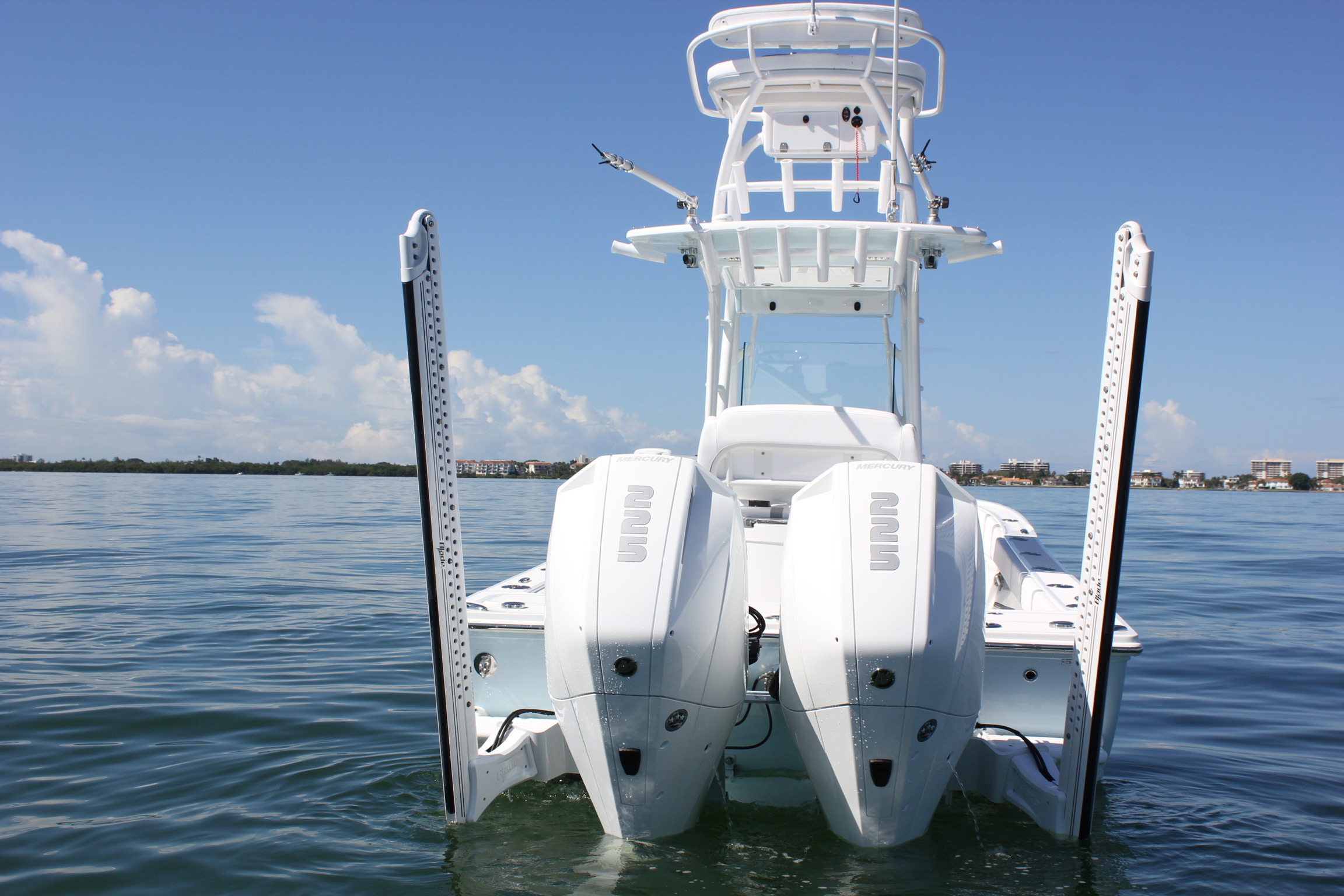
Fiberglass doesn't rot, but wood buried inside it does. Transoms, stringers and deck cores rot when water gets in through fasteners and can't dry out. "Composite" doesn't always mean wood free, since balsa is a common core. The Canyon Bay 18F, 24B and 28H are listed as zero-wood construction, with fiberglass stringers molded to the hull. Check any used boat with a tap test, a moisture meter and a surveyor.
| When wood decays | About 30% moisture, 50 to 100 °F |
|---|---|
| Field inspection limit | 20% wood moisture |
| Most common entry point | Fasteners and hardware holes |
| Wood that hides in "composite" boats | Balsa and plywood cores |
| Canyon Bay stringers | Fiberglass, molded to the hull |
Can a fiberglass boat rot?
The fiberglass can't, but the wood inside it can. For decades, builders used plywood and lumber for stringers, transoms, bulkheads and floor supports, then wrapped it in glass. Many still use balsa or plywood as a core between fiberglass skins in decks and hull sides.
That wood is structural. Stringers are the hull's backbone, and the transom carries the full thrust and weight of the outboard. When either one rots, the boat goes soft right where it needs to be strongest.
BoatUS Magazine puts it plainly: when stringers, decks, bulkheads and transoms go soft, major and costly repairs follow, and traditional wood coring often succumbs to rot once water gets in.
Why does wood inside a fiberglass boat rot?
It rots because water gets in and can't get out. The USDA Forest Service Wood Handbook says decay generally needs wood moisture at or above fiber saturation, usually about 30%, and temperatures between 50 and 100 °F. A bilge on the Gulf Coast sits in that temperature range most of the year.
Wood only gets that wet from liquid water, such as leaks or condensation. The same handbook notes that inspectors often use 20% moisture as a safety limit. It also says that once decay fungi are established, they produce water that keeps conditions right for their own growth.
Inside a boat, the path in is almost always a hole. Soundings reports that water typically enters through hardware that's loose, poorly fitted or badly bedded: seat bases, rod holders, stanchions, hinges and latches. Every screw into a transom or deck is a possible leak.
Fiberglass around the wood then works against it. The glass keeps the wood from drying, so a small leak at a bolt can soak a transom from the inside for years before anything shows on the surface.
Is a "composite" boat always wood free?
No. "Composite" only means fibers and resin bonded together, often around a core, and that core can be wood. End-grain balsa is one of the most common core materials in boatbuilding.
It's a real engineered product, not a shortcut. The BALTEK SB data sheet describes kiln-dried, end-grain balsa certified by classification societies including DNV, Lloyd's Register and the American Bureau of Shipping. Sealed properly, balsa makes a stiff, light panel.
It's still wood, though. Practical Sailor says it directly: "Balsa will rot." So when a listing says "composite construction," ask what's inside the laminate before you assume there's no wood.
The common wood-free cores are foam and foam-and-fiberglass panels. BoatUS notes that by the early 2000s, production builders widely adopted composite cores like Divinycell and Coosa, which are lighter than wood and resist moisture.
Do boats built with wood still last?
Yes, many do. Plenty of respected builders still use encapsulated wood or balsa, and their boats hold up for decades when every penetration is sealed and the owner keeps up with bedding hardware. Wood isn't a death sentence. It's one failure mode that depends on keeping water out forever.
Wood free also doesn't mean water proof. Practical Sailor notes that repeated freezing and thawing can turn foam core to mush and cause delamination. Water in any core is bad news.
The fix is the same for both: seal every hole. The standard method is to drill an oversized hole, fill it with epoxy and redrill, so the fastener passes through a solid plug instead of the core. Practical Sailor calls this the typical solution and notes epoxy plugs can crack over time, so they still need watching.
What a wood-free build removes is the worst outcome. A leak into foam or solid glass can mean a wet patch to repair. A leak into a plywood transom can mean rot that spreads, and a transom replacement.
How do you check a boat for a rotten transom or stringers?
Start with a tap test and a transom flex test, then bring in a surveyor before you buy. You can do the first pass yourself with an inexpensive hammer and 20 minutes.
Fiberglass repair specialist Jeff Perette told Soundings that a solid laminate "gives off a clean, crisp sound when you tap it," while wet core sounds deep and hollow. He carries an architectural hammer, about $10 to $15 at a hardware store, and a moisture meter.
- Transom flex test and survey methods: BoatUS Magazine.
- Tap test and hardware entry points: Soundings.
| Check | How to do it | What a problem looks like |
|---|---|---|
| Tap test | Tap the transom, deck and hull sides every few inches with a small hammer | A dull thud or soft bounce instead of a crisp click |
| Transom flex | On an outboard boat, put your weight on the lower unit and watch the transom | Any visible flex or movement at the transom |
| Soft deck | Walk the deck and sole, especially near hatches and the console | Spongy spots, cracking or a deck that gives underfoot |
| Hardware | Look at every screw, rod holder, cleat and trim tab mount | Rust streaks, cracked sealant, open drill holes |
| Drain plug and transducer | Look at the edges of the drain plug and transducer holes | Dark, wet or crumbly material in the hole |
| Moisture meter | Scan the transom and deck (surveyor or yourself) | High readings over a wide area |
| Core sample | Surveyor drills a small test hole in a suspect area | Wet, dark or soft core material |
Can you trust a moisture meter on a boat?
Use it as a pointer, not a verdict. A meter reads through the gelcoat and gives a relative number, not a direct look at the core. A high reading tells you where to look harder, and it isn't proof of rot on its own.
That's why surveyors combine methods. BoatUS lists the sounding hammer, the moisture meter, core samples and a look for stress cracks as basic structural checks. When the hammer and the meter both point at the same spot, take it seriously.
A wet reading on a wood-free boat still matters, because it means water is getting in somewhere. It just doesn't carry the same rot risk as a wet plywood transom.
What does Canyon Bay use instead of wood?
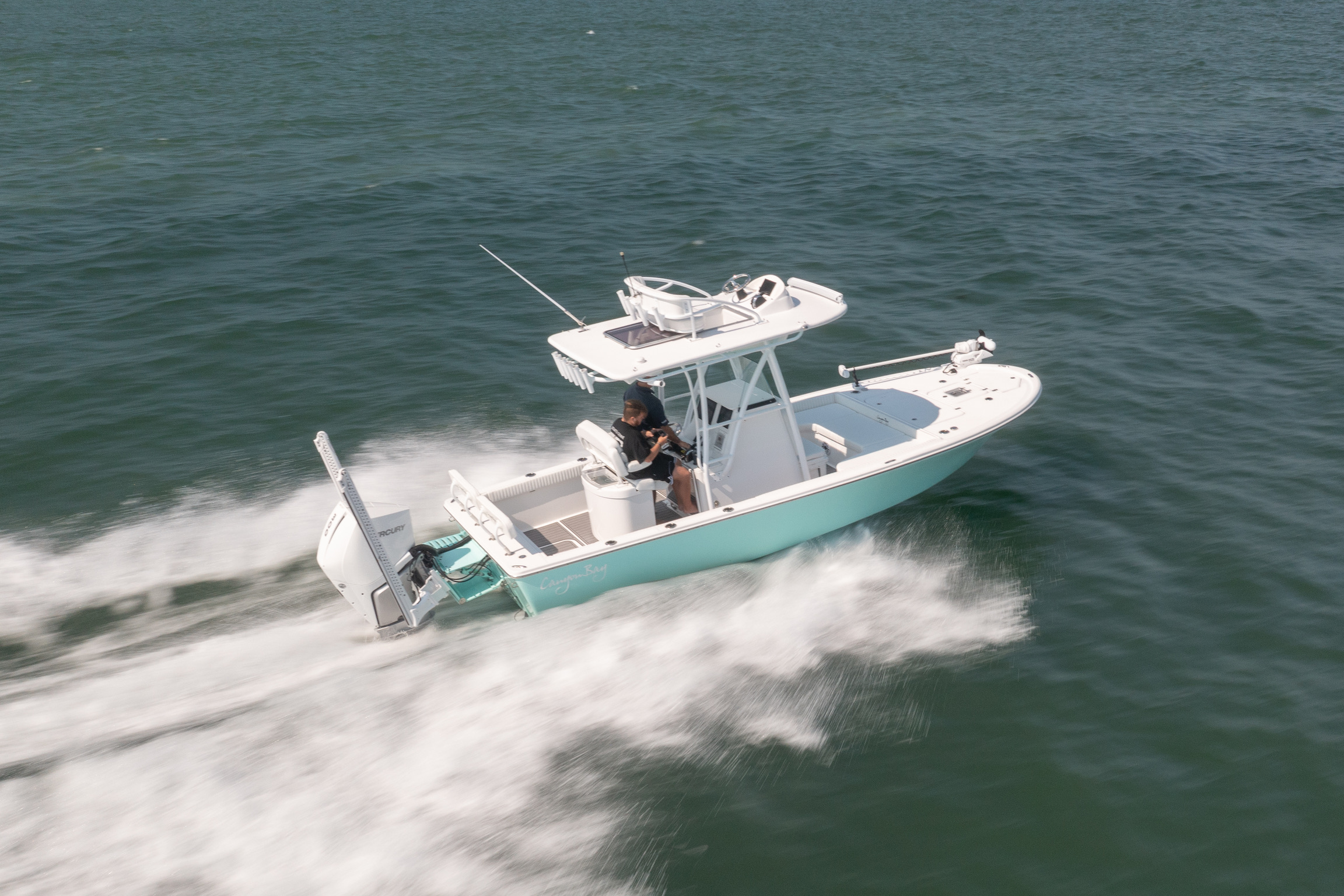
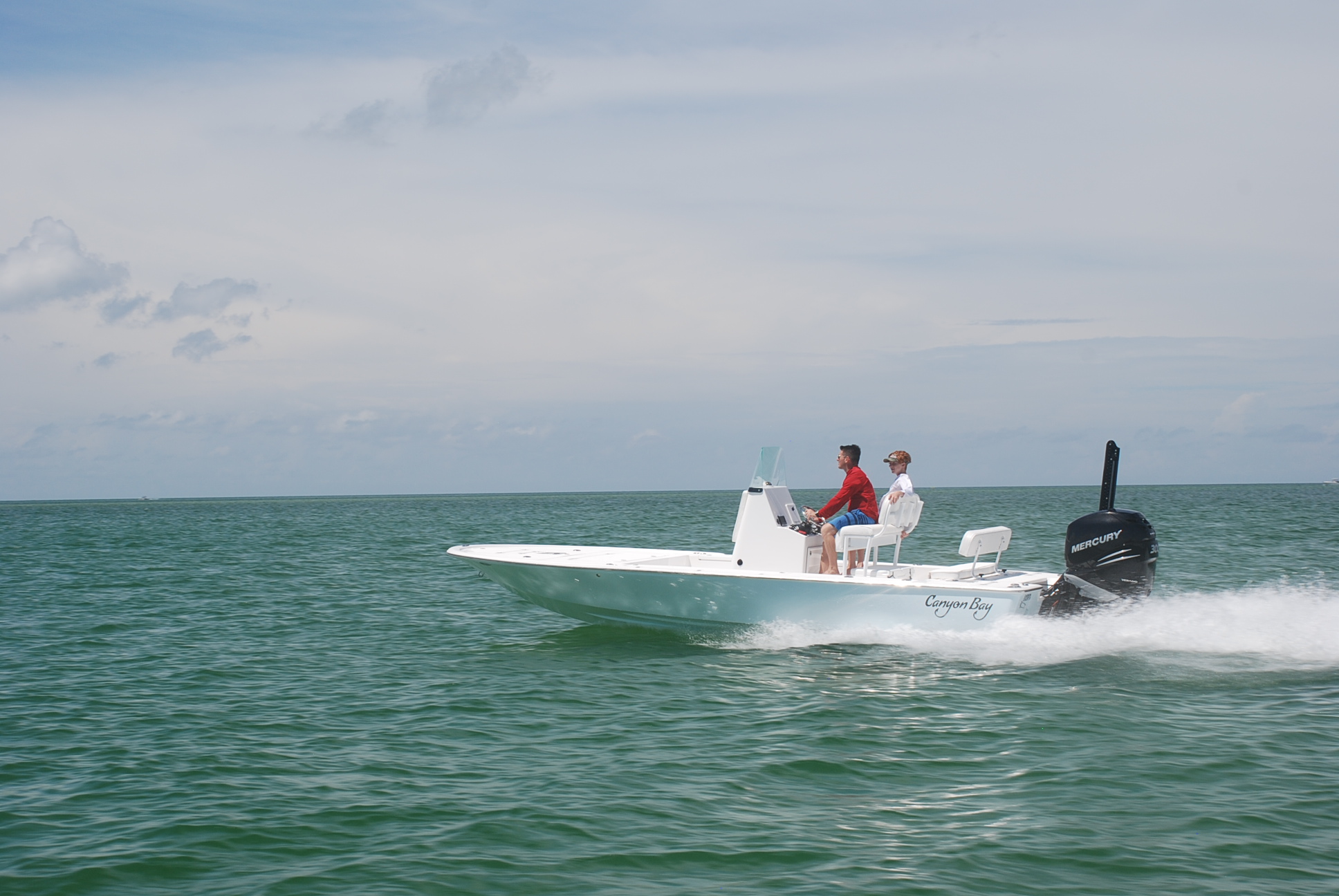
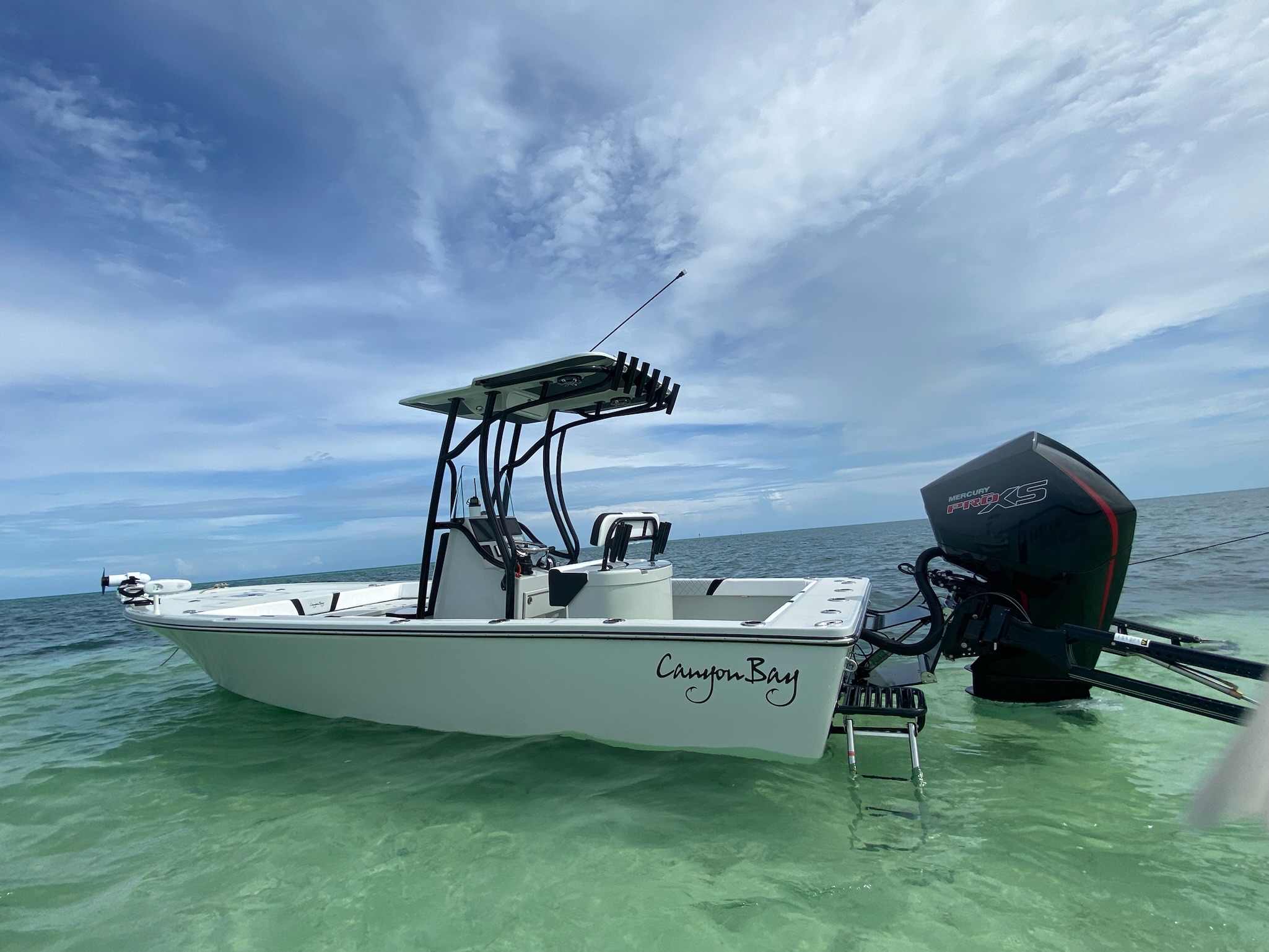
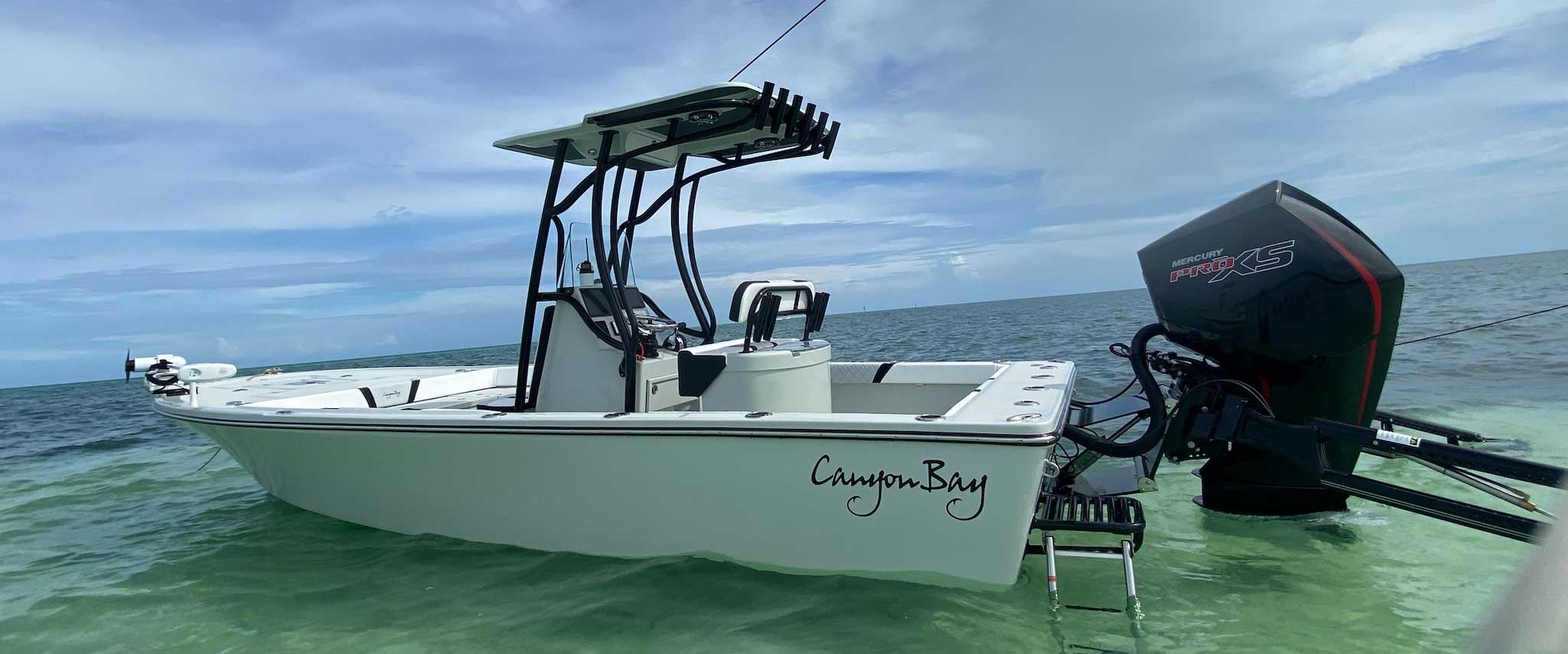
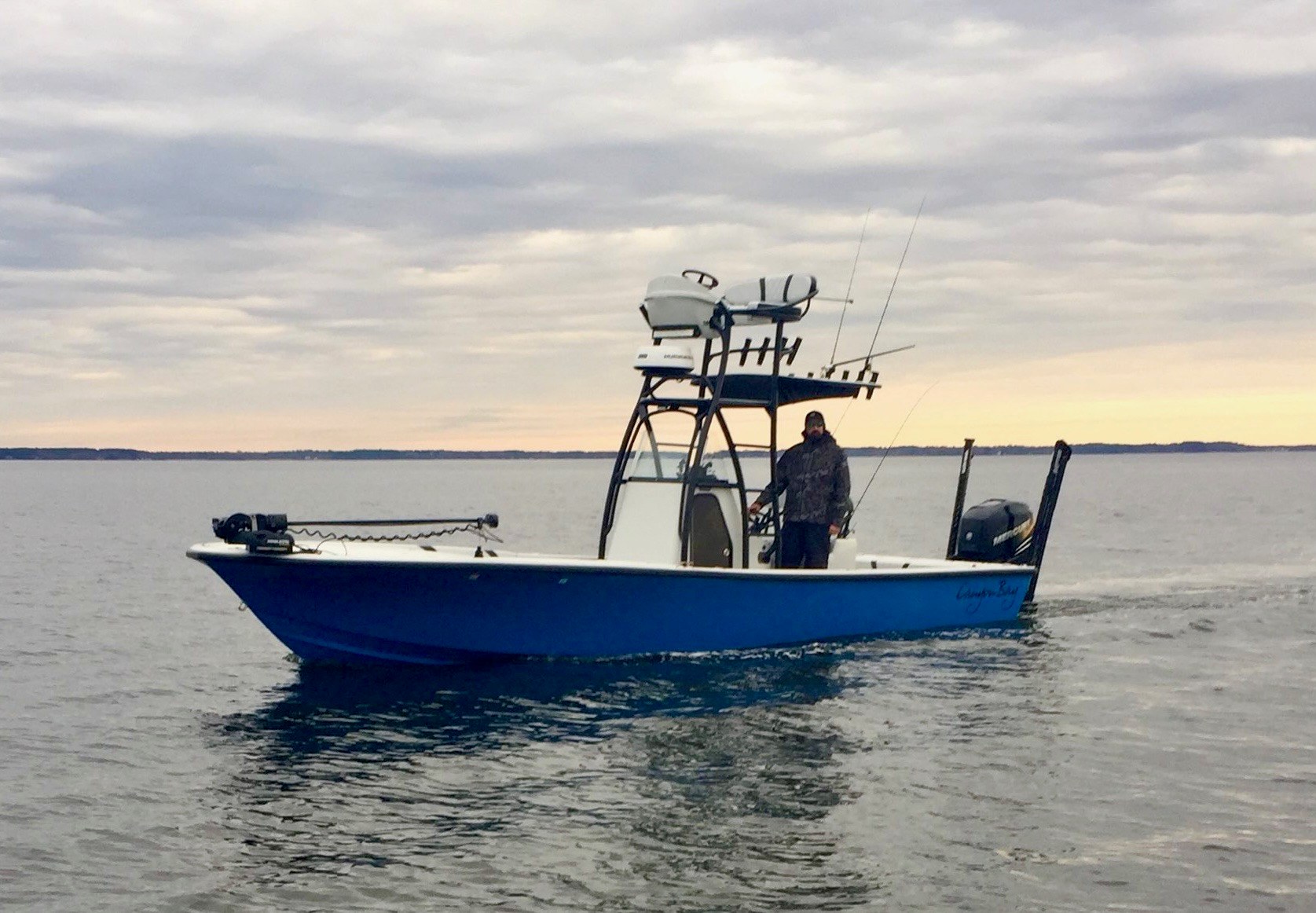
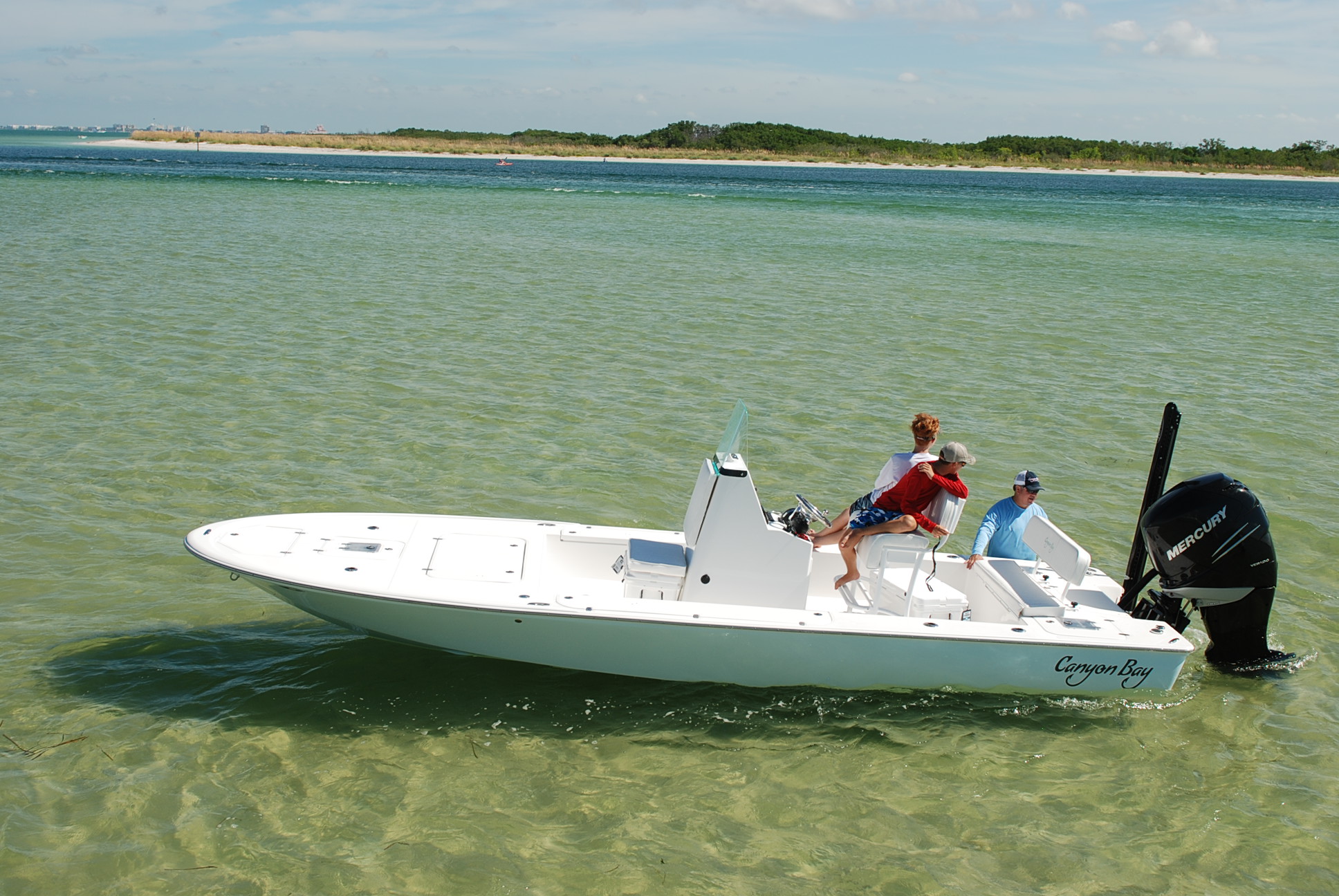
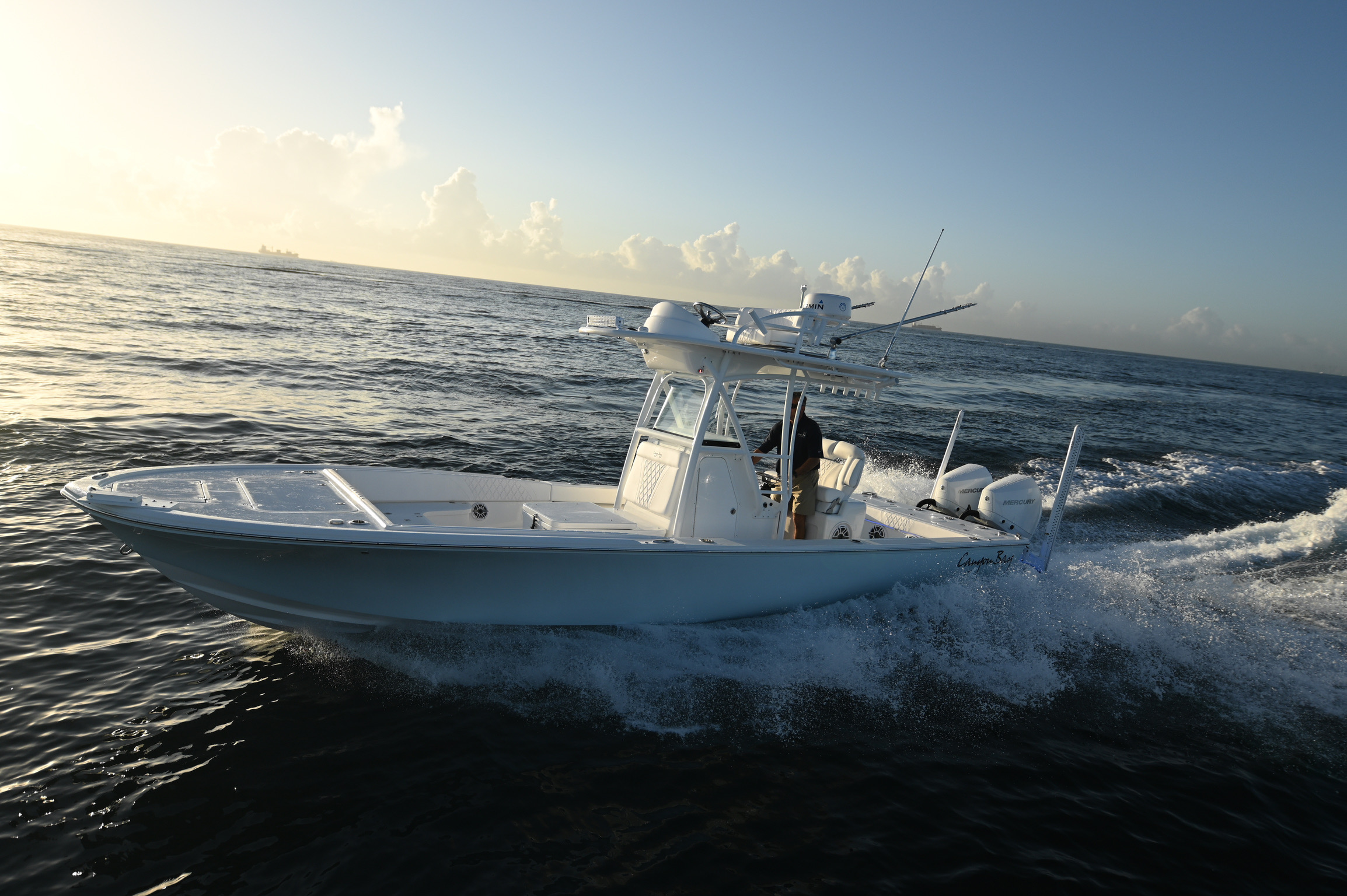
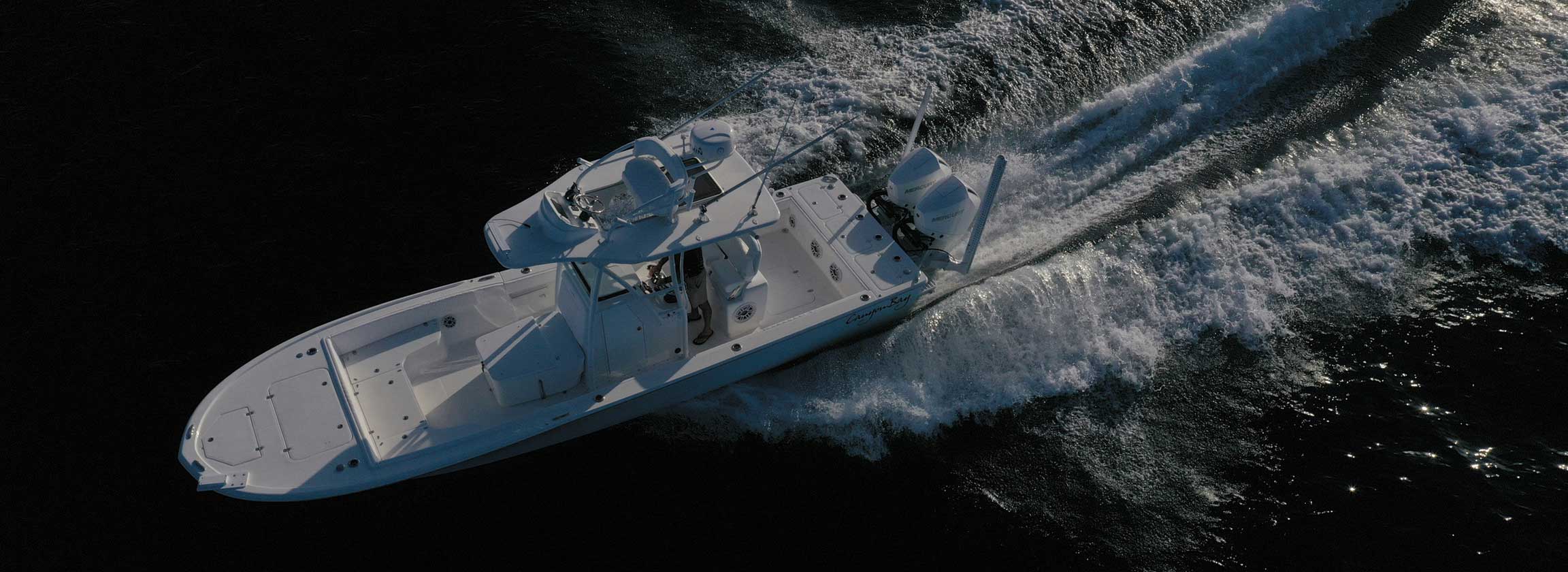
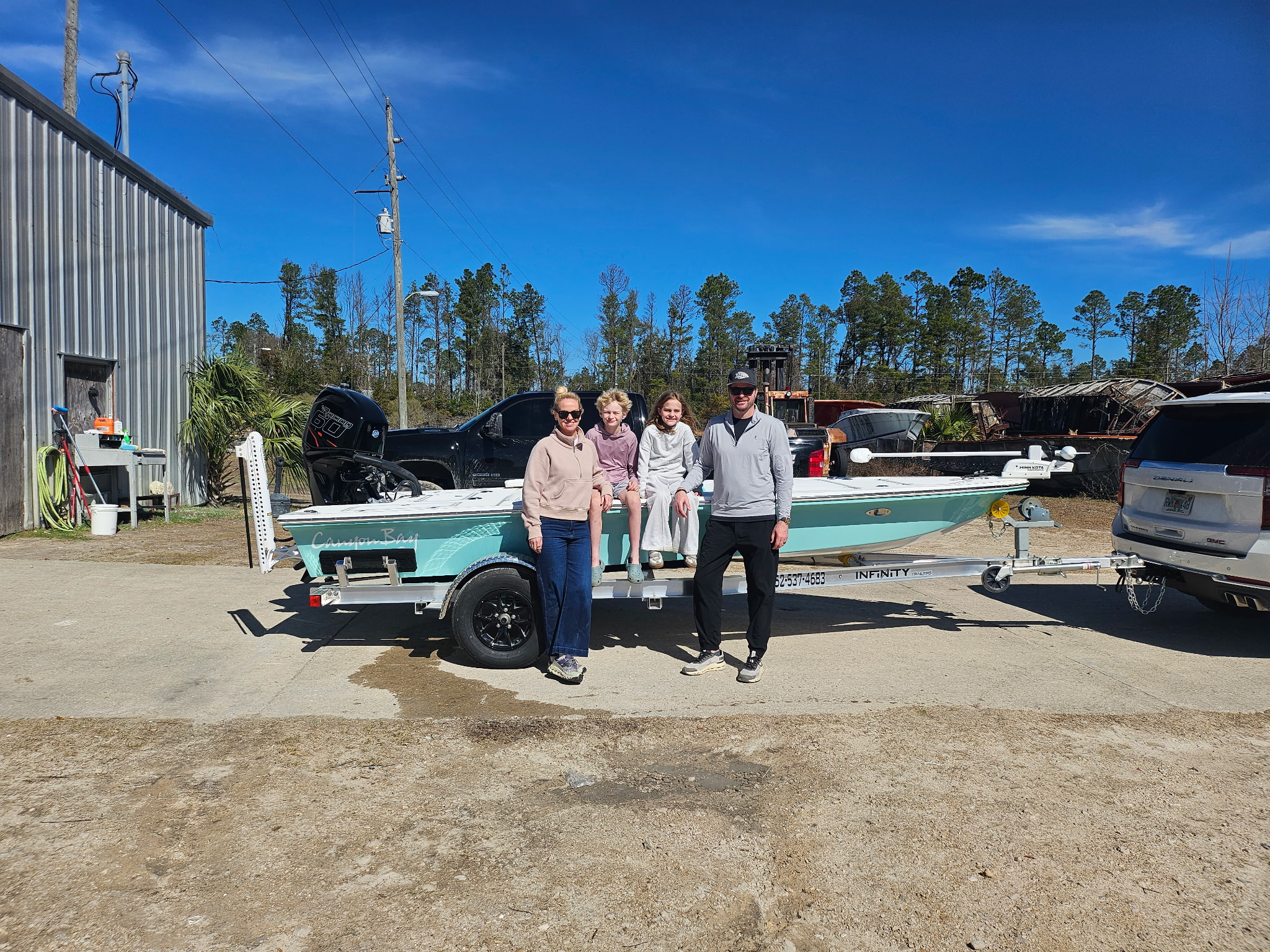
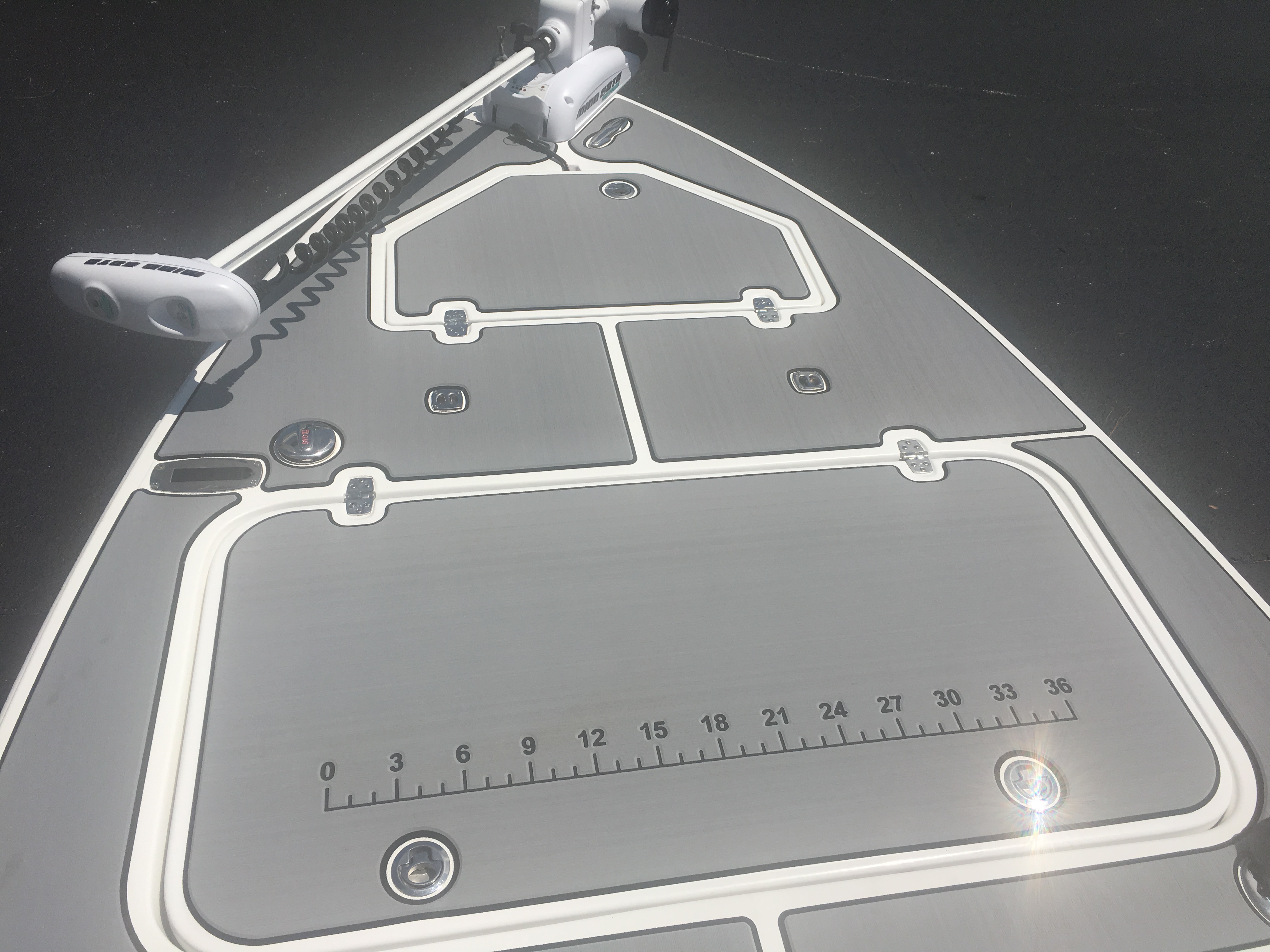
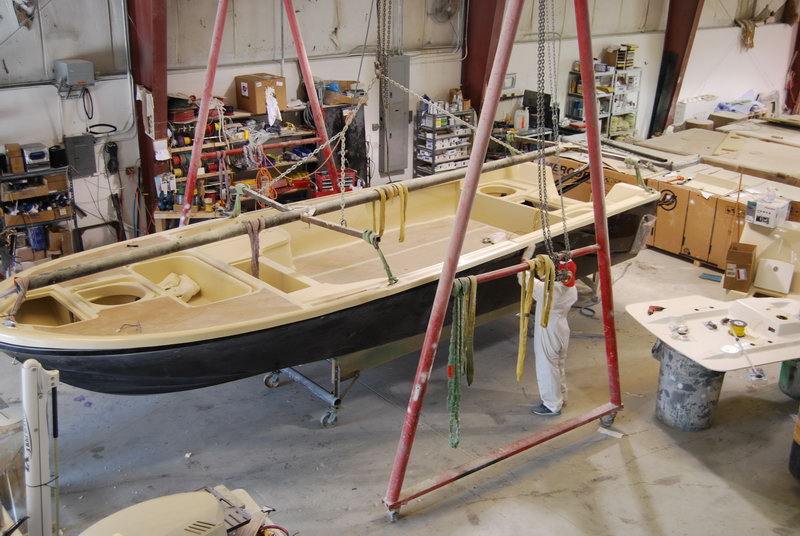
Fiberglass stringers molded to the hull, a Kevlar hull, and carbon fiber sides and deck. The Canyon Bay 18F, 24B and 28H spec sheets list zero-wood construction. The Canyon Bay 22B and 35N spec sheets list fiberglass stringers molded to the hull with no wood.
The 24B, 28H and 35N are also listed with vinyl ester resin and hand-laid bi-axial laminates. The boats are built at Perry Composite Manufacturing in Perry, Florida.
Molding the stringers to the hull matters as much as the material. It ties the backbone into the bottom as one structure, with no wood grid sitting under a glass skin waiting for a leak.
No builder can promise a boat will never take on water. The honest pitch is that one major way boats die has been designed out, and you still bed your hardware well.
What should you ask a builder about wood?
Ask about every part by name, because "no wood" sometimes means "no wood in the stringers." These questions get a straight answer fast.
- Is there wood anywhere: transom, stringers, bulkheads, deck cores, console, leaning post or hardware backing plates?
- What is the transom core made of, and how thick is it?
- Are the stringers molded to the hull, or built separately and glassed in?
- How are screw and bolt holes sealed where they pass through a core?
- What resin is used in the laminate?
Common questions
Do fiberglass boats rot?
Fiberglass itself doesn't rot, but wood inside a fiberglass boat can. Stringers, transoms and deck cores made of plywood or balsa rot when water gets in through fasteners and can't dry out. Wood-free boats replace that wood with fiberglass and foam.
Is a composite boat really wood free?
Not always. "Composite" means fiber and resin, often around a core, and balsa is one of the most common cores. Ask the builder what's in the transom, stringers and deck before you assume a composite boat has no wood.
How do I know if my boat has a rotten transom?
Tap it and flex it. A dull, hollow sound under a small hammer suggests wet core, and an outboard transom that moves when you put your weight on the lower unit is a warning sign. Confirm with a surveyor's moisture meter and core sample.
Are composite stringers better than wood?
They remove the rot risk, which is the main way wood stringers fail. Well-encapsulated wood stringers can last a long time, but one leaking fastener can start decay. Fiberglass stringers molded to the hull, as on the Canyon Bay 24B and 28H, don't rot.
Which Canyon Bay boats are wood free?
The Canyon Bay 18F, 24B and 28H are listed as zero-wood construction. The 22B and 35N spec sheets list fiberglass stringers molded to the hull with no wood.
Sources
- USDA Forest Service, Wood Handbook: Wood as an Engineering Material (FPL-GTR-282)
- BoatUS Magazine: The Value Proposition (June 2026)
- Soundings: The Smart Buyer, How to Tell if That Core Is Wet
- Practical Sailor: A Solid Connection (bedding hardware in cored decks)
- 3A Core Materials: BALTEK SB end-grain balsa technical data sheet