Hybrid Bay Boat vs. Center Console: Which Fits How You Fish
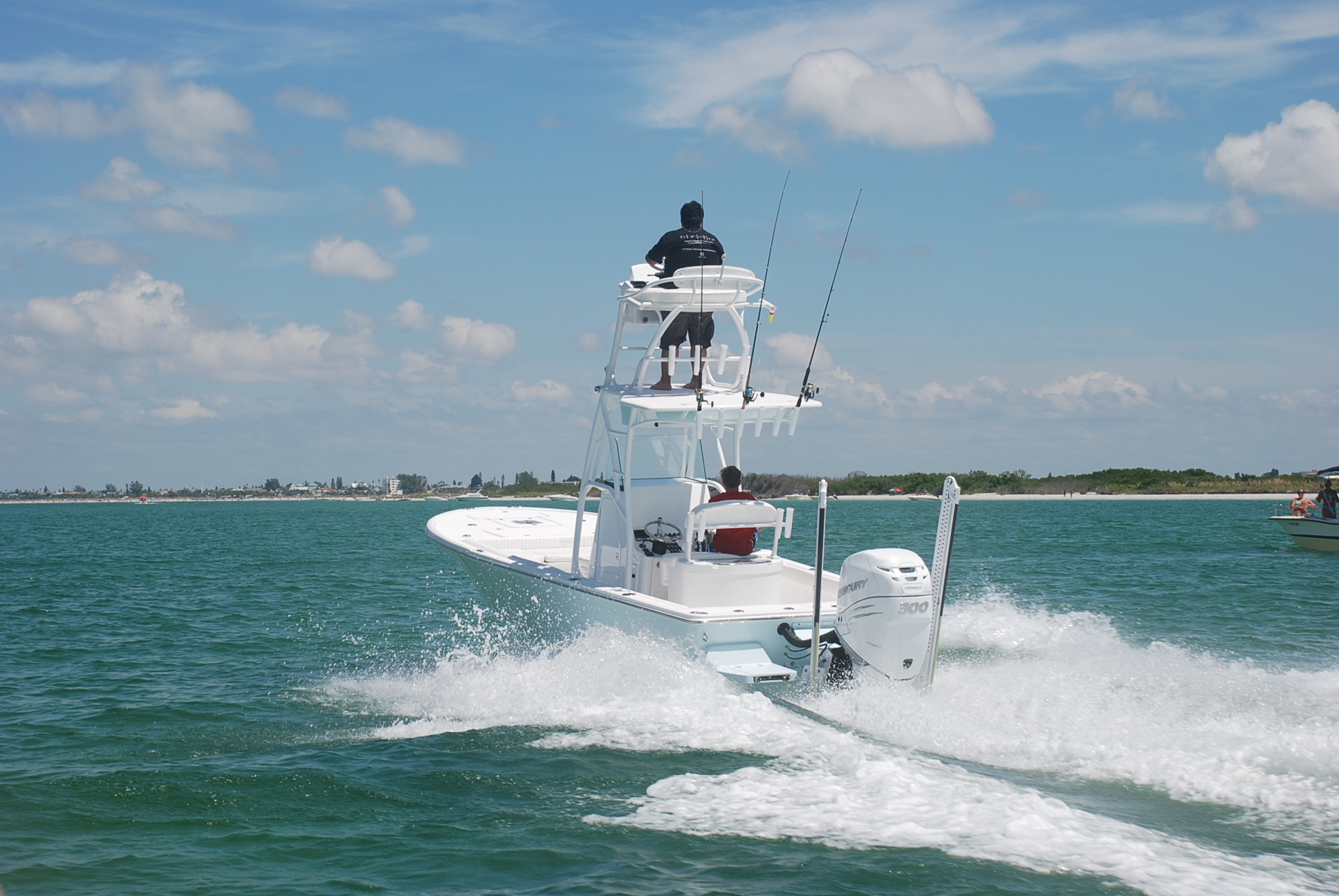
A hybrid bay boat splits the difference: more deadrise, freeboard and cockpit depth than a bay boat, but a shallower draft than an offshore center console. Pick a hybrid if you fish the flats and run offshore on good days. The Canyon Bay 28H drafts 15 inches with 18 degrees of deadrise and a 28-inch cockpit. For regular long runs, the Canyon Bay 35N is the real offshore boat.
| Bay boat draft | 12 in or less, typically |
|---|---|
| Hybrid draft | Over 12 in, typically |
| Canyon Bay 28H | 15 in draft, 18° deadrise, 150 gal |
| Canyon Bay 35N | 22 in draft, 325 gal fuel |
| Fuel planning rule | Thirds: out, back, reserve |
| Legal trailer width | 102 in (8 ft 6 in) |
What is a hybrid bay boat?
It's a boat that fishes most inshore water but can head offshore when the weather allows. Salt Water Sportsman notes there are no official rules for the category. Its working definition is useful, though: hybrids are usually 23 feet or longer, wider than 8 feet 6 inches, with more freeboard and bigger cockpits than bay boats.
The biggest differences are under the waterline. The same article puts bay boats at 15 degrees of deadrise or less with a foot or less of draft. Hybrids typically carry 15 degrees or more and draw more than a foot.
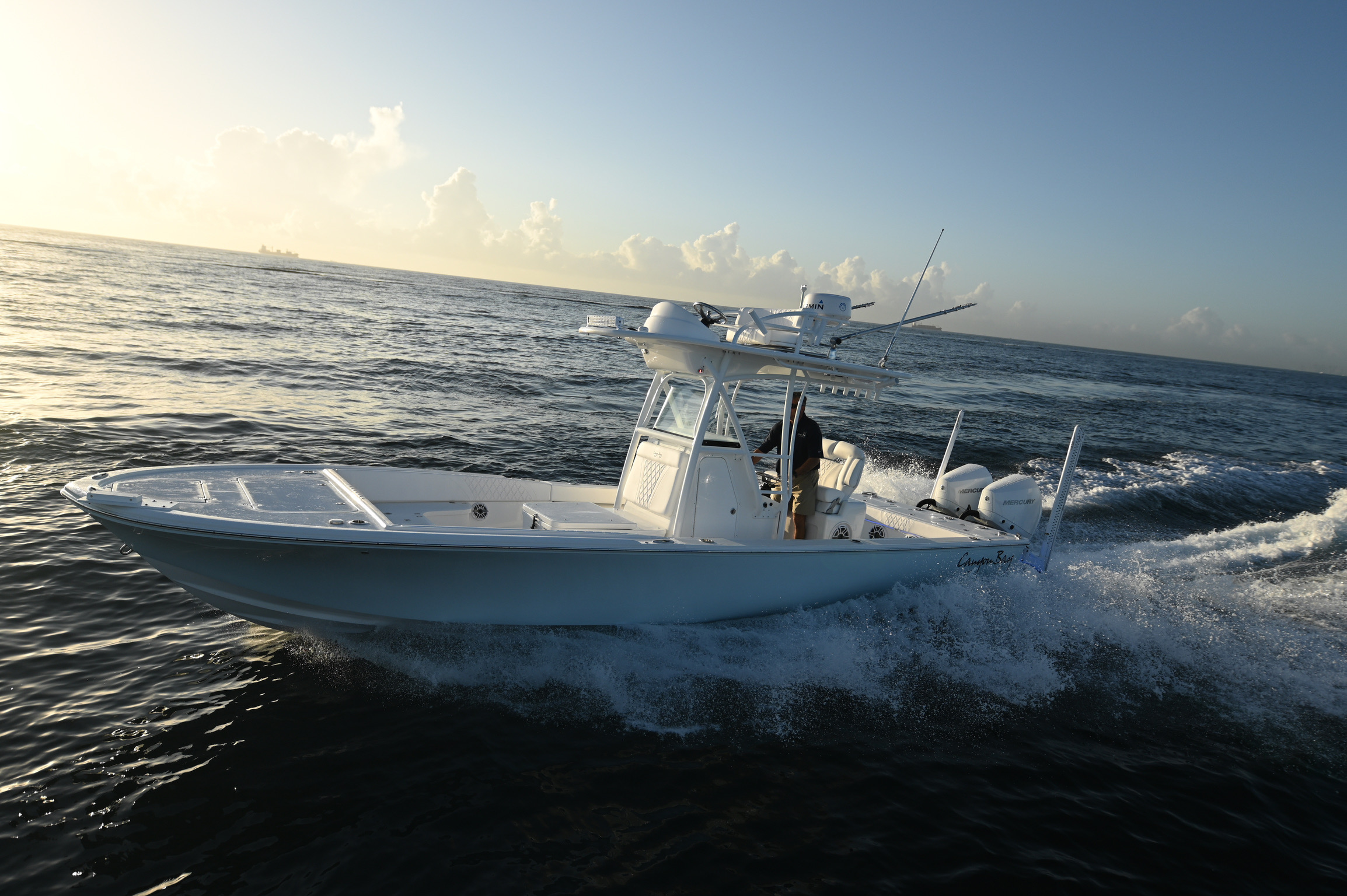
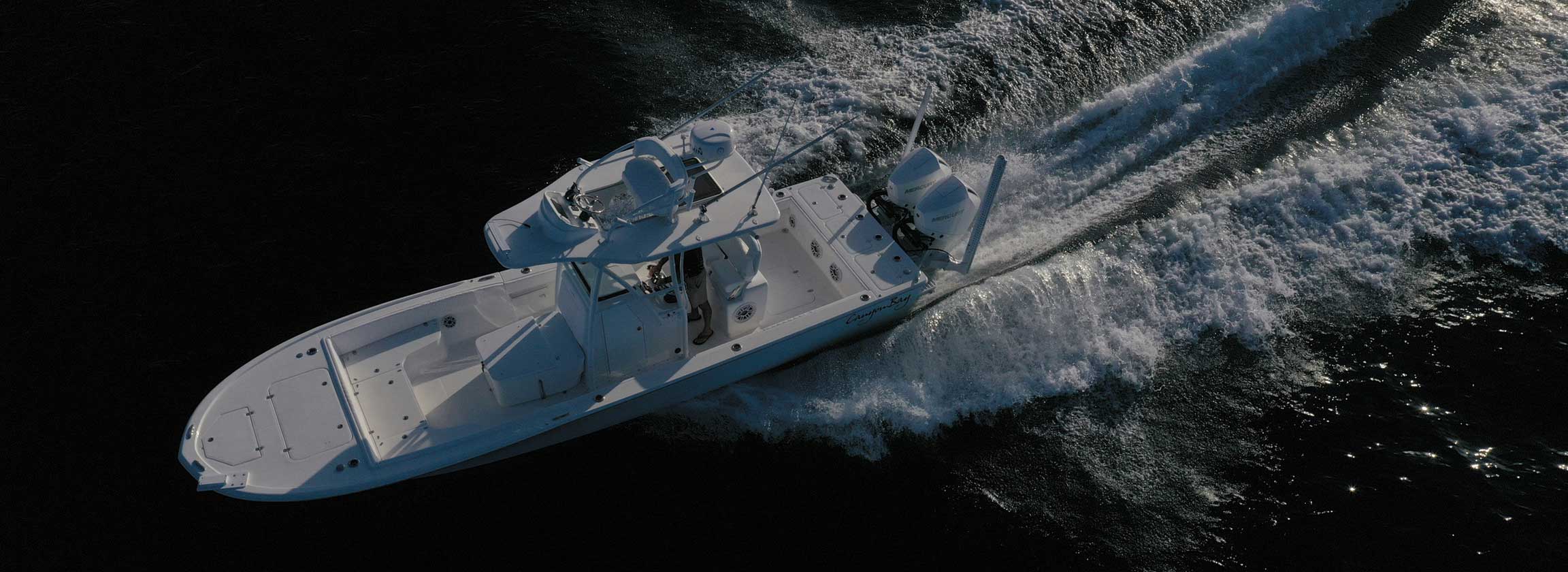
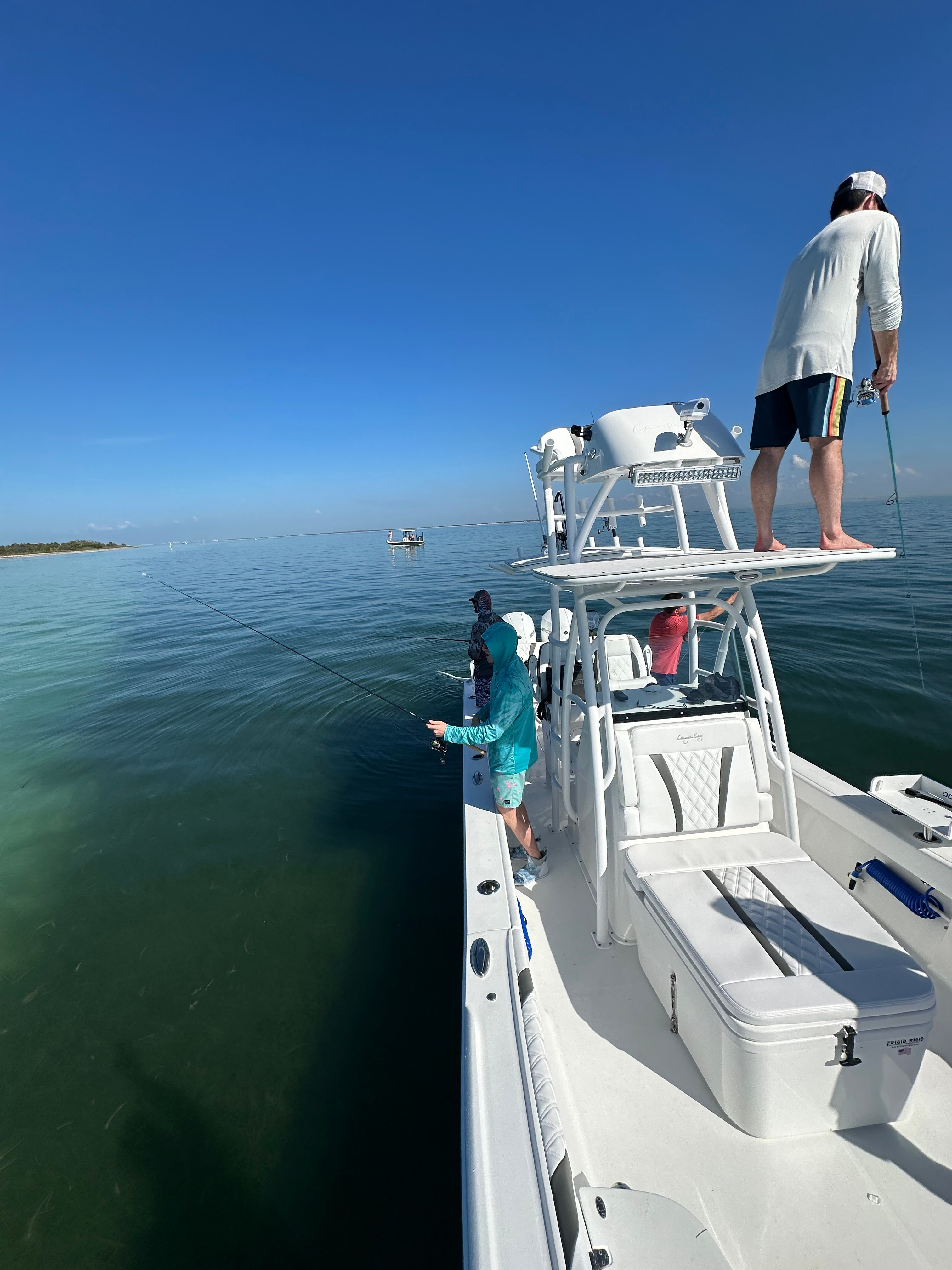
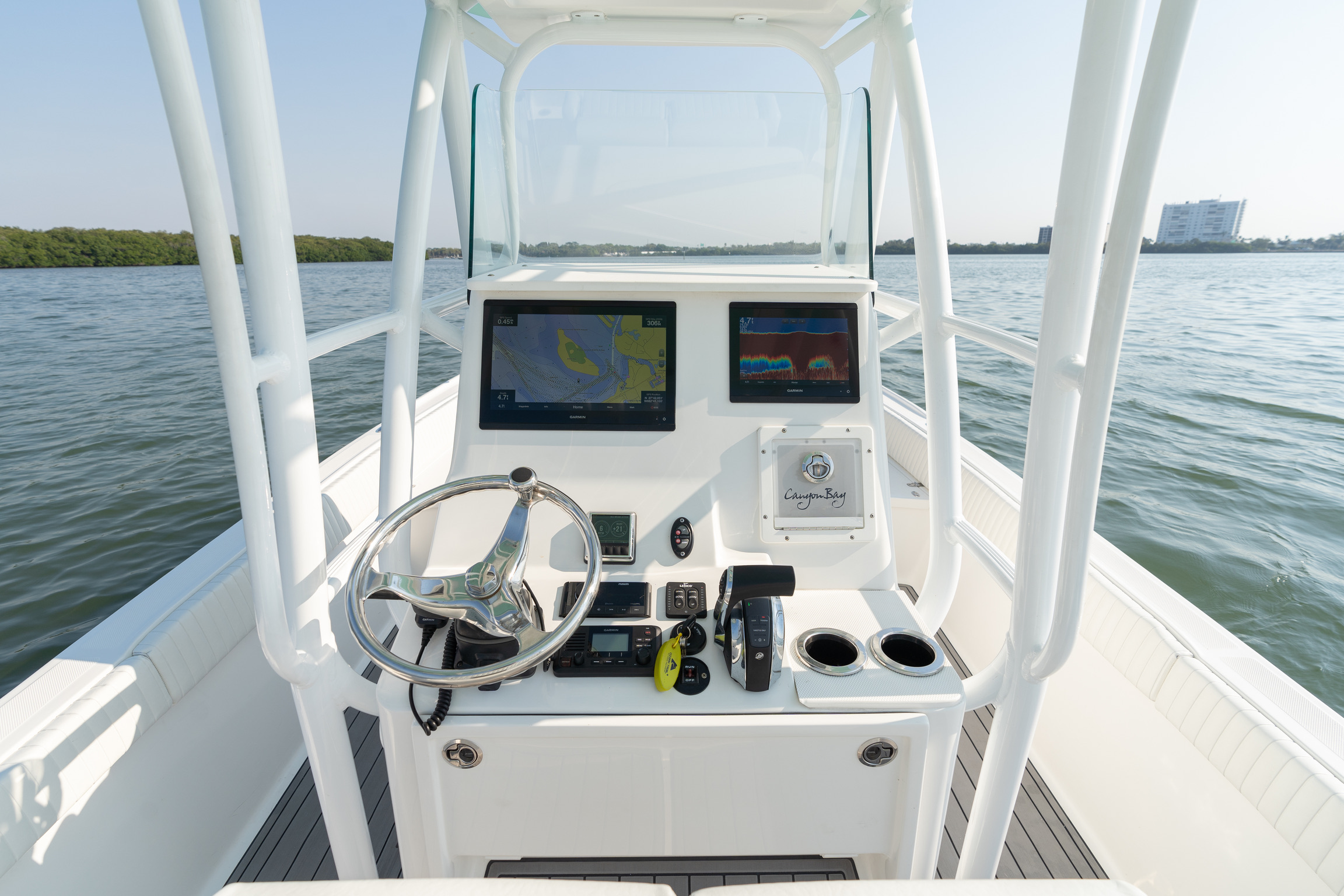
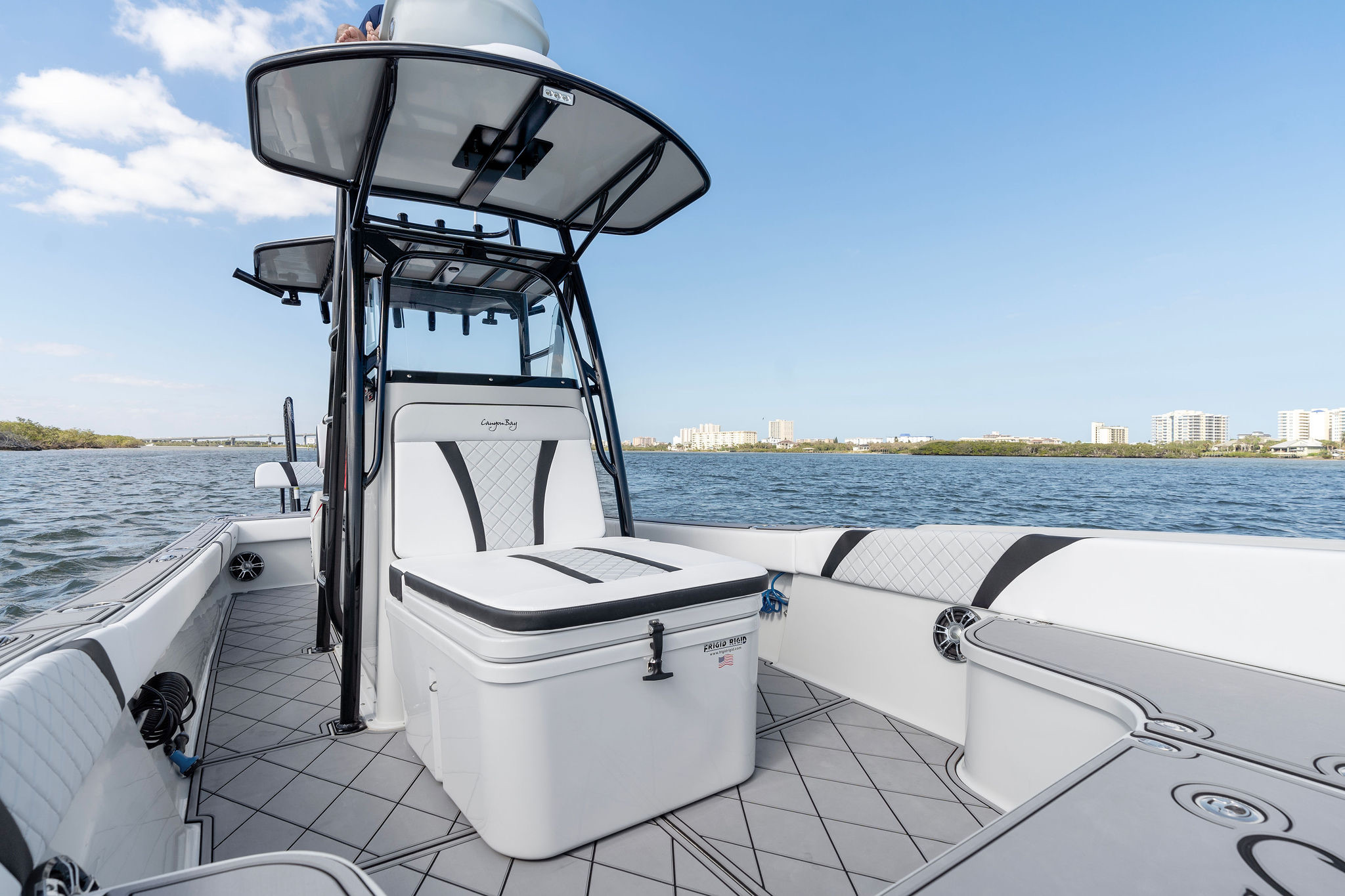
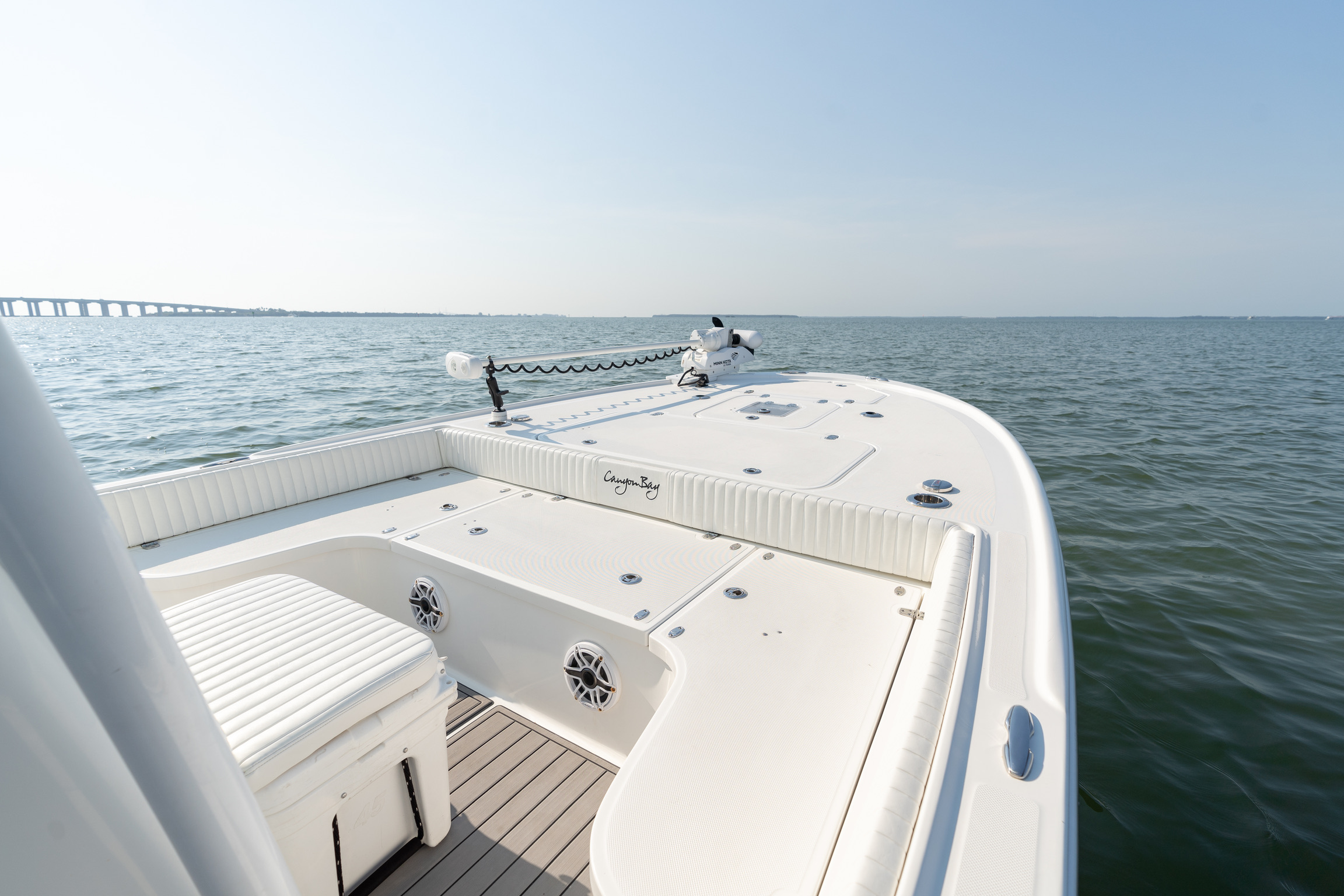
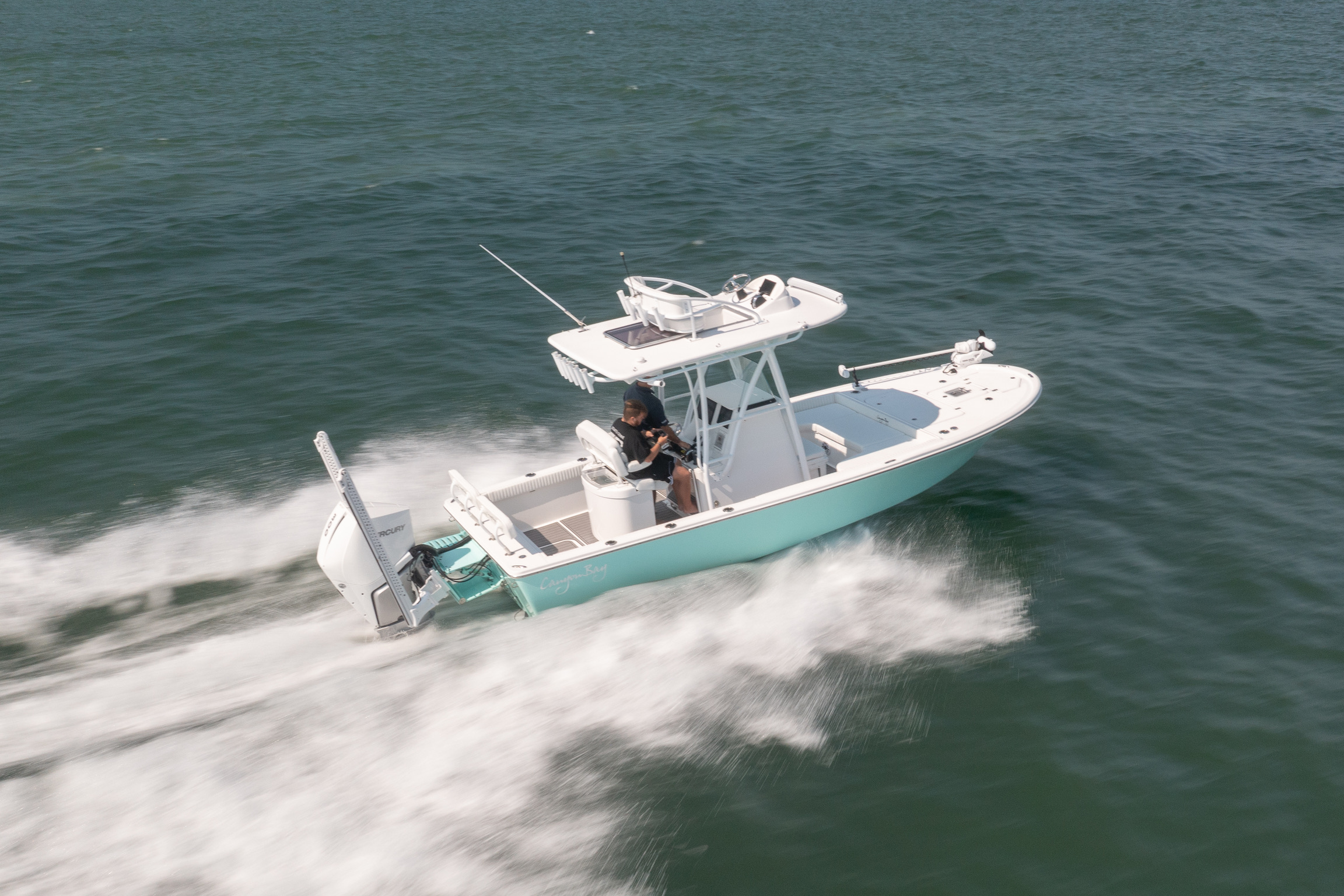
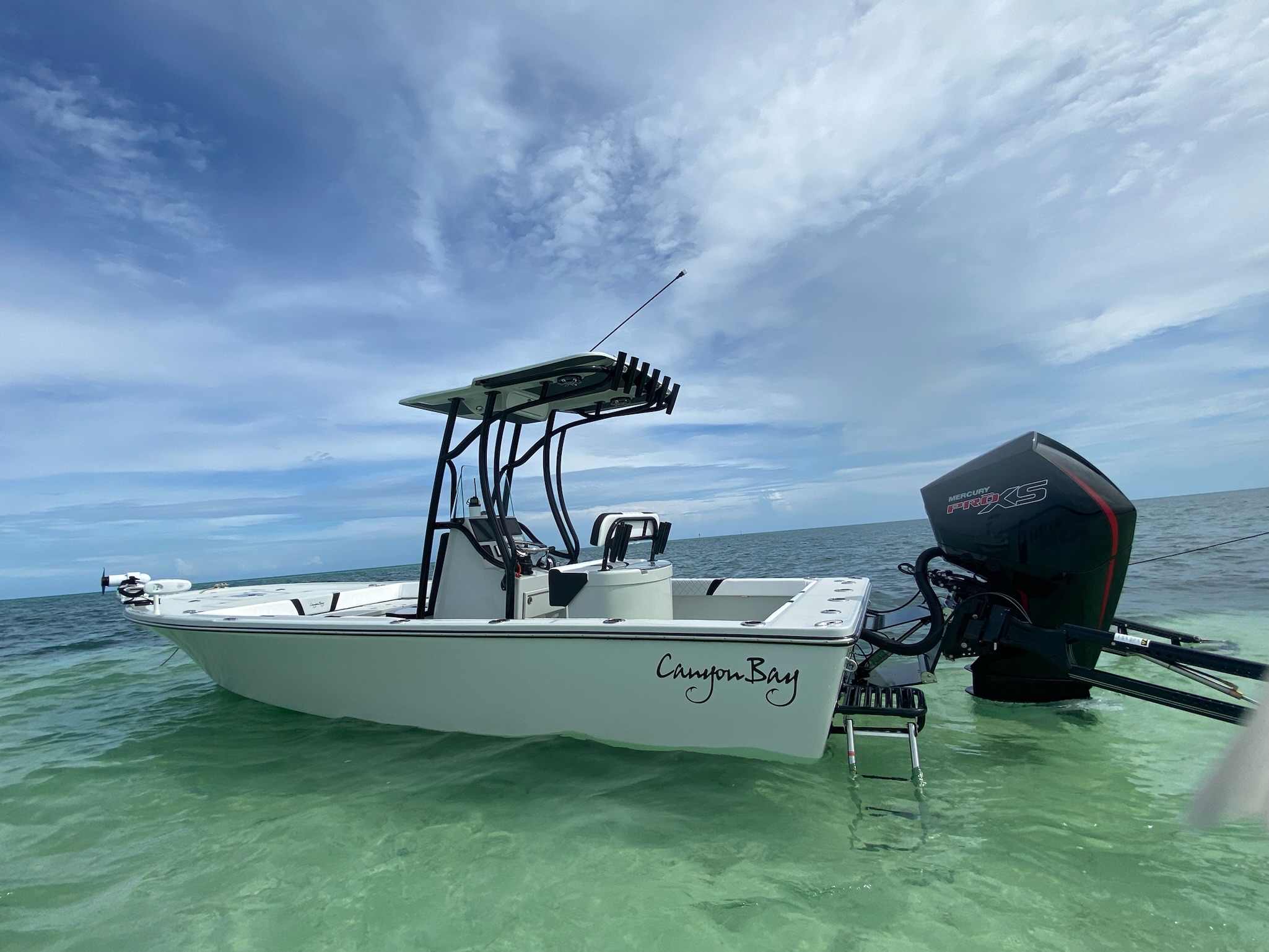
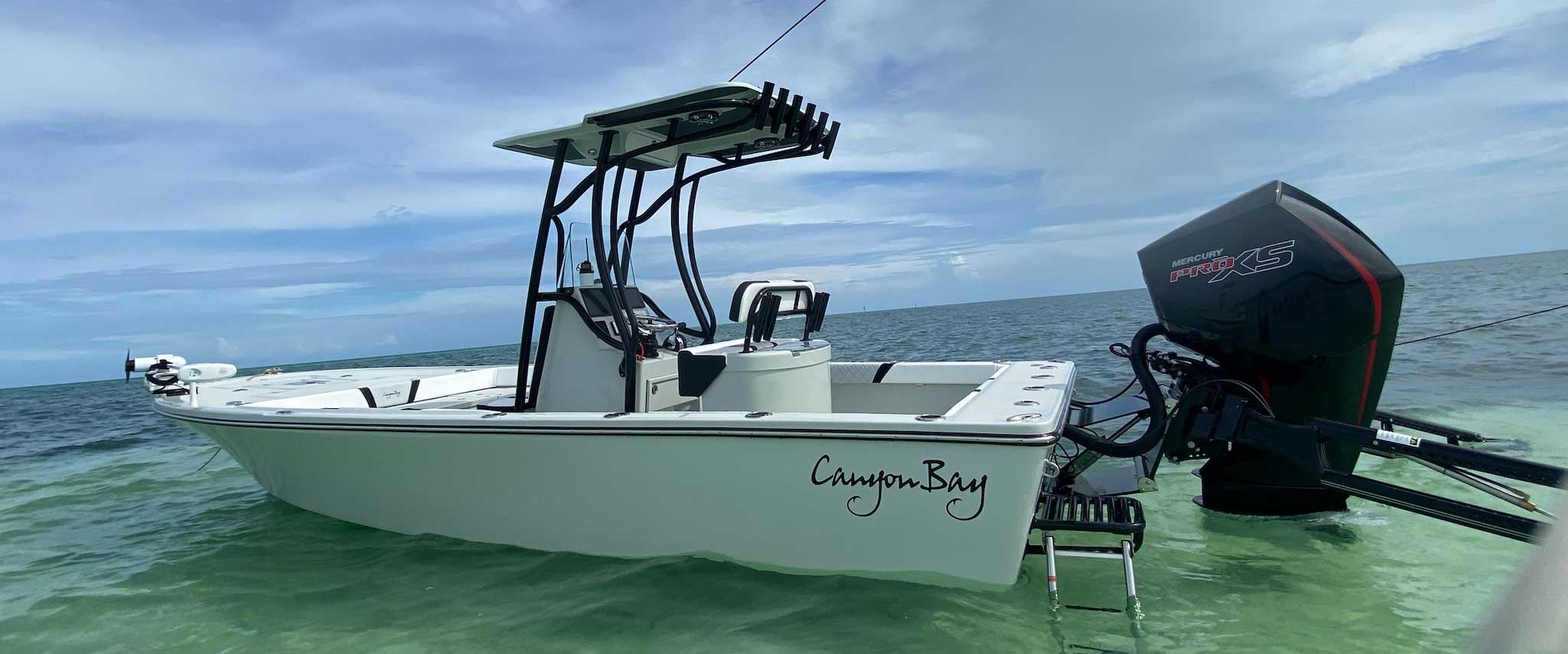
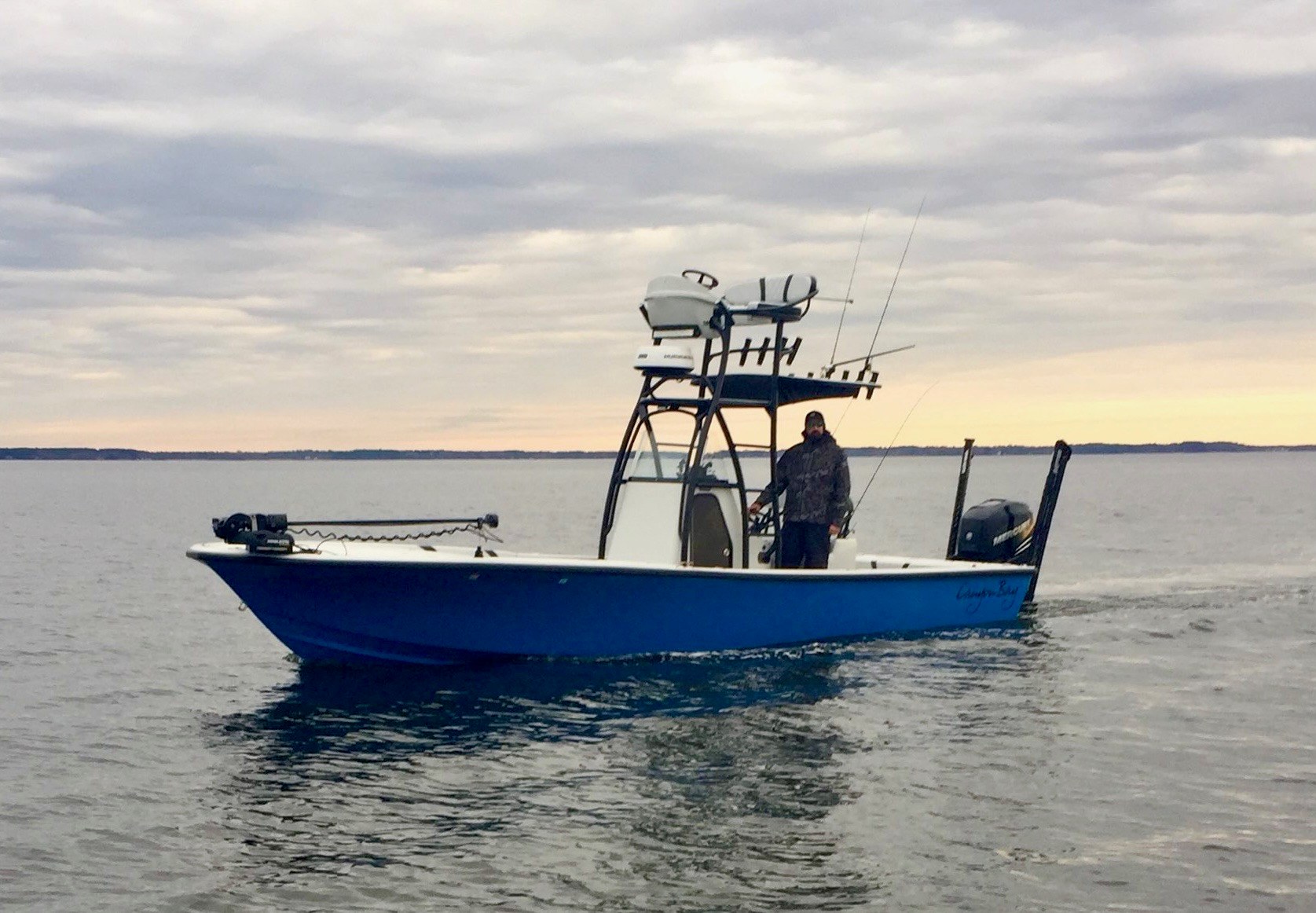
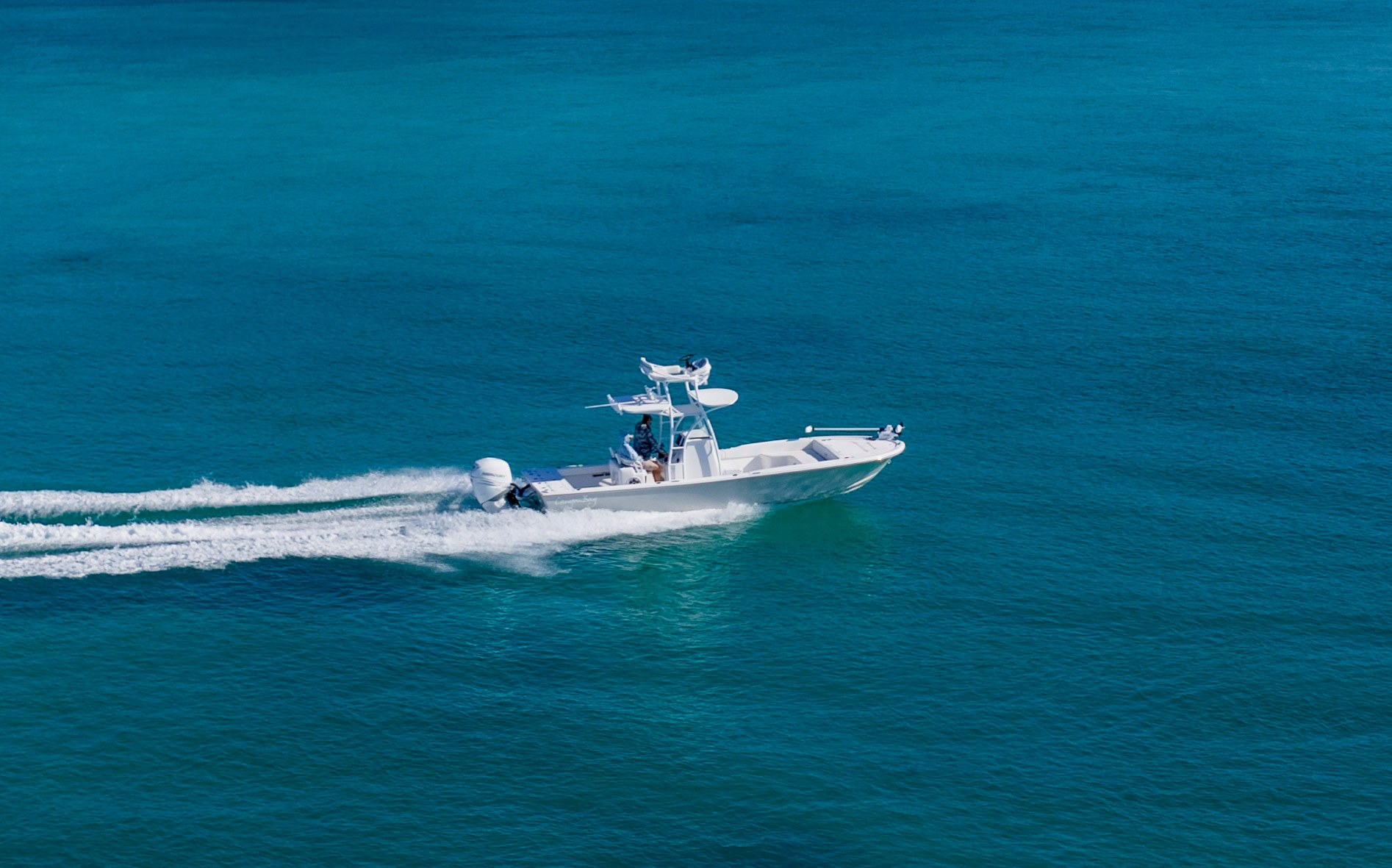
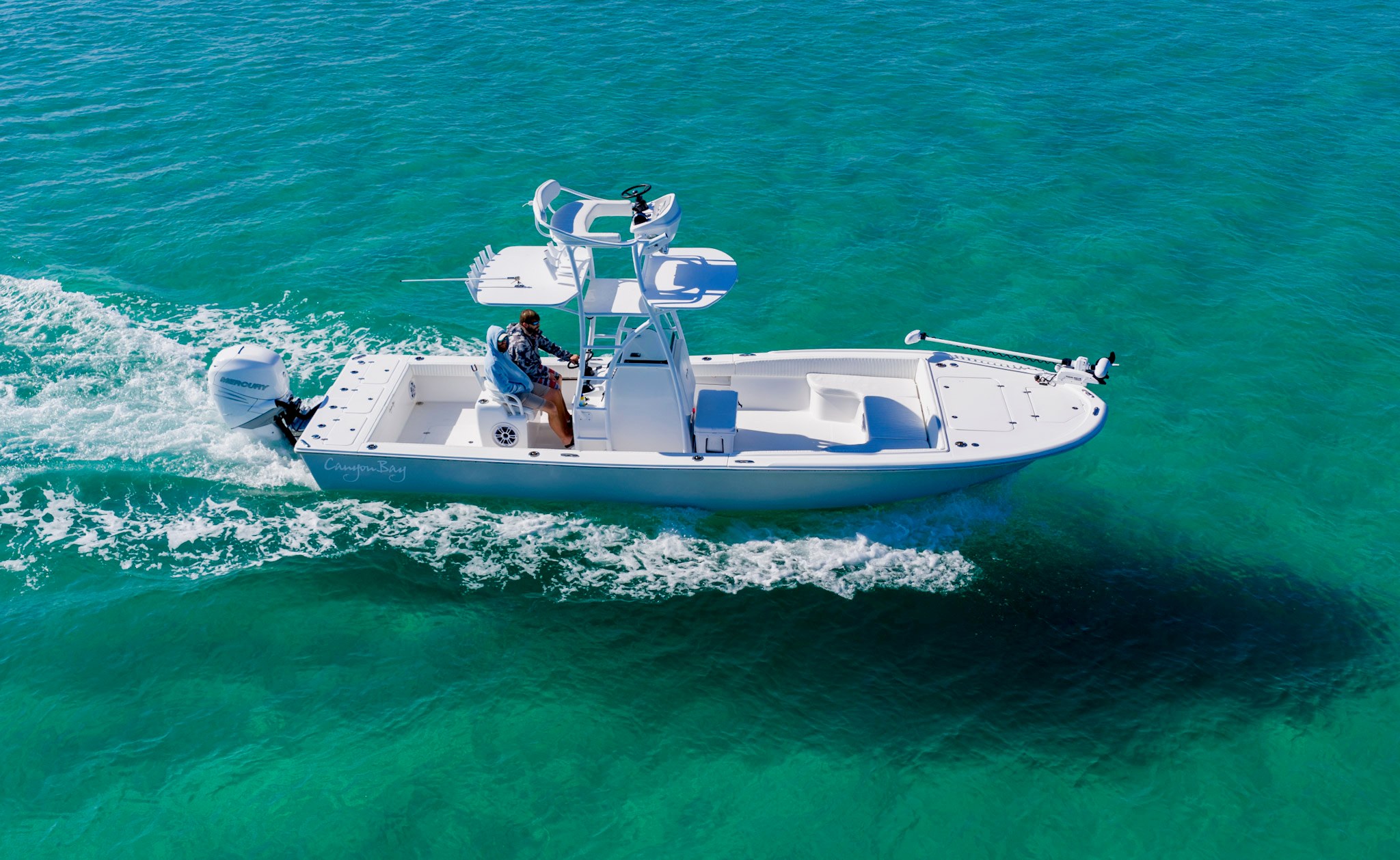
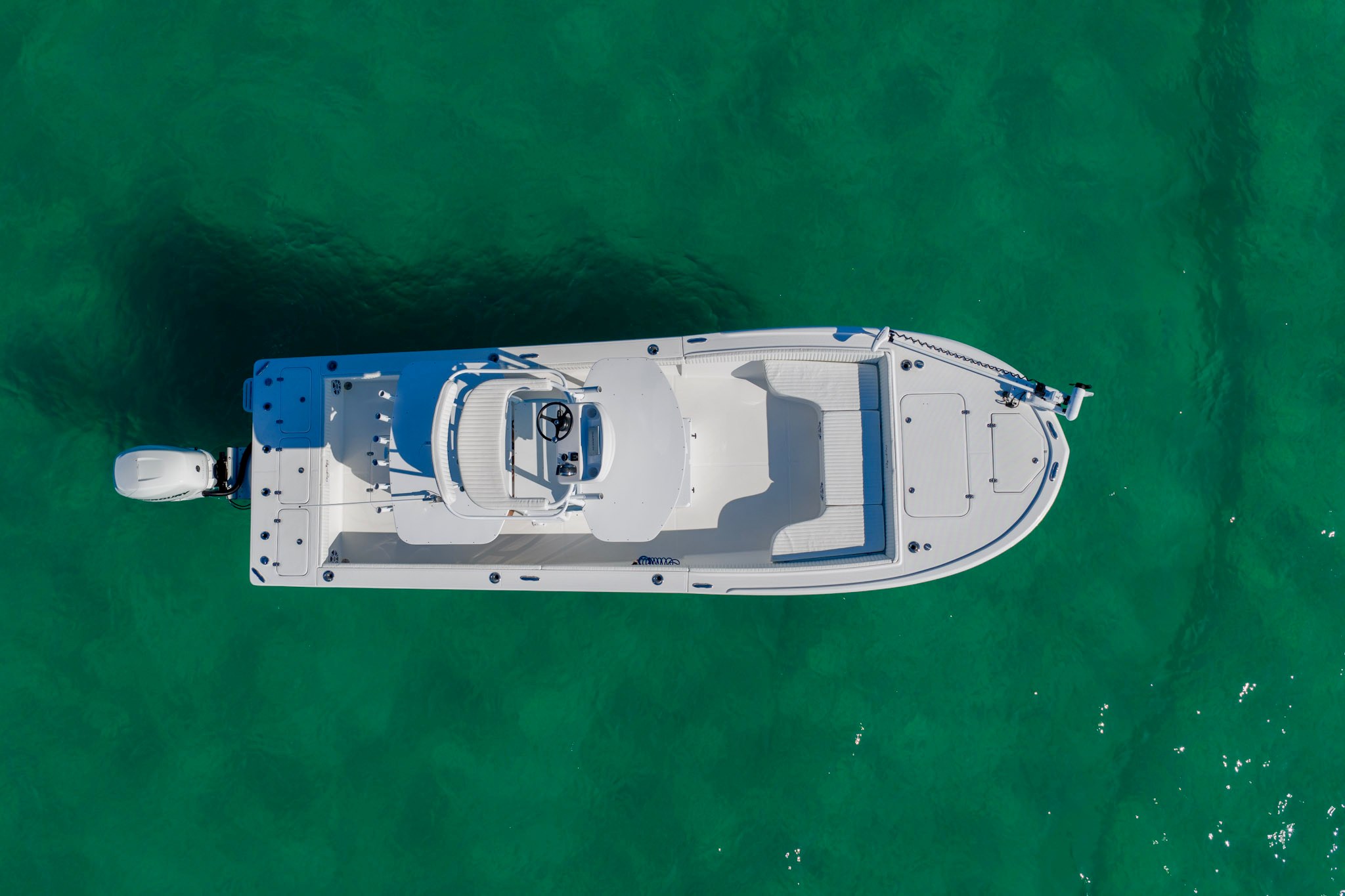
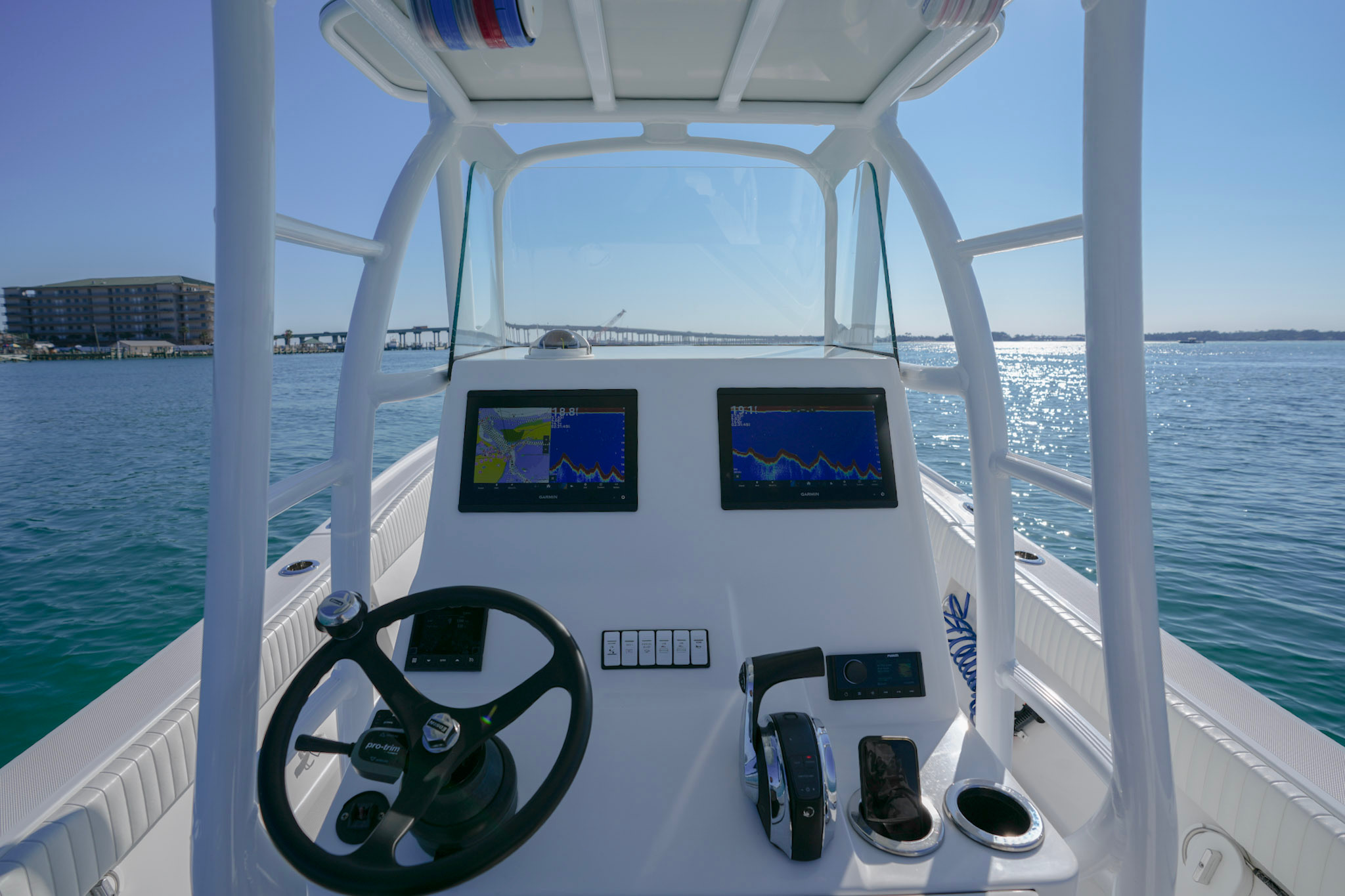
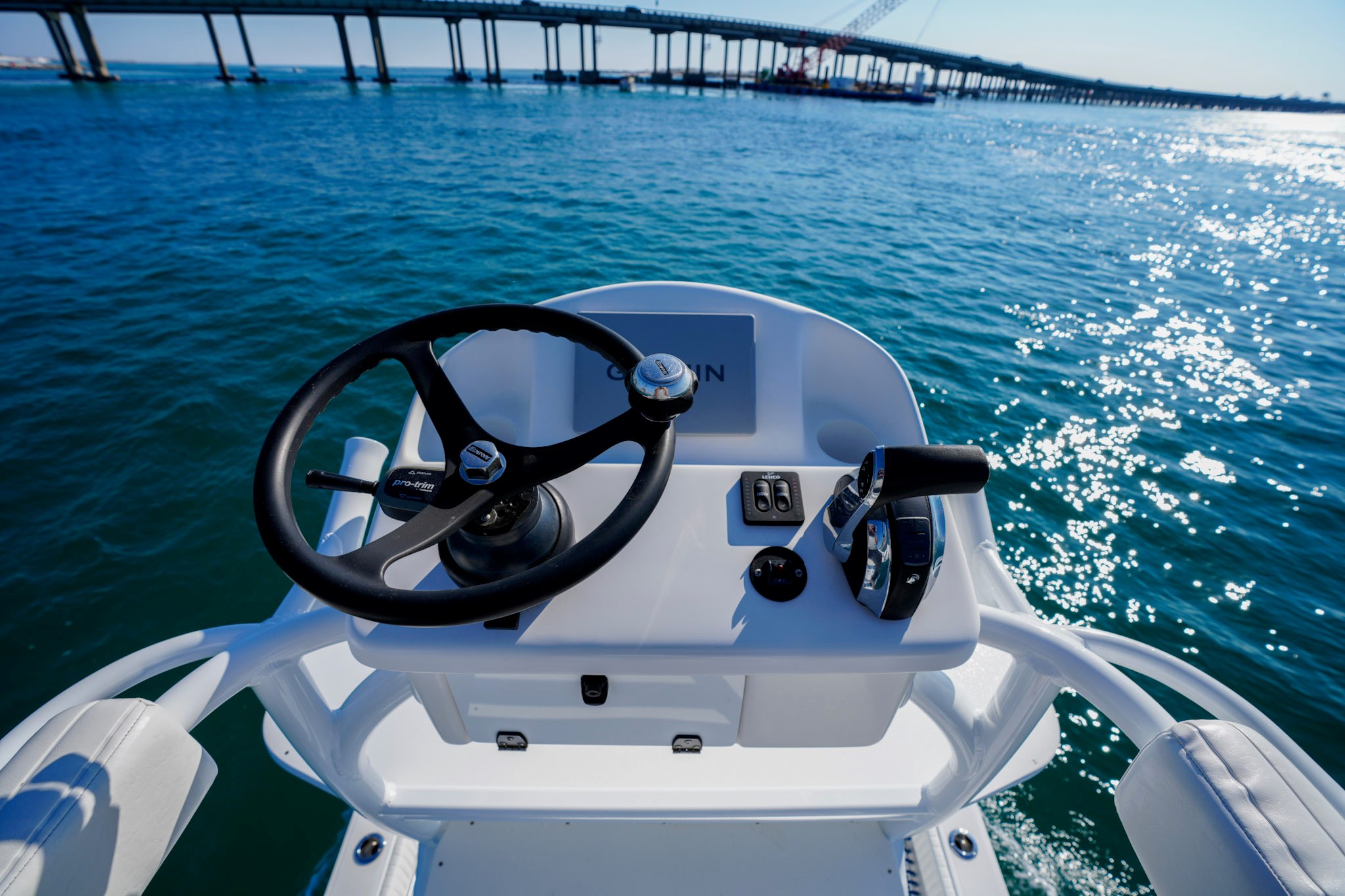
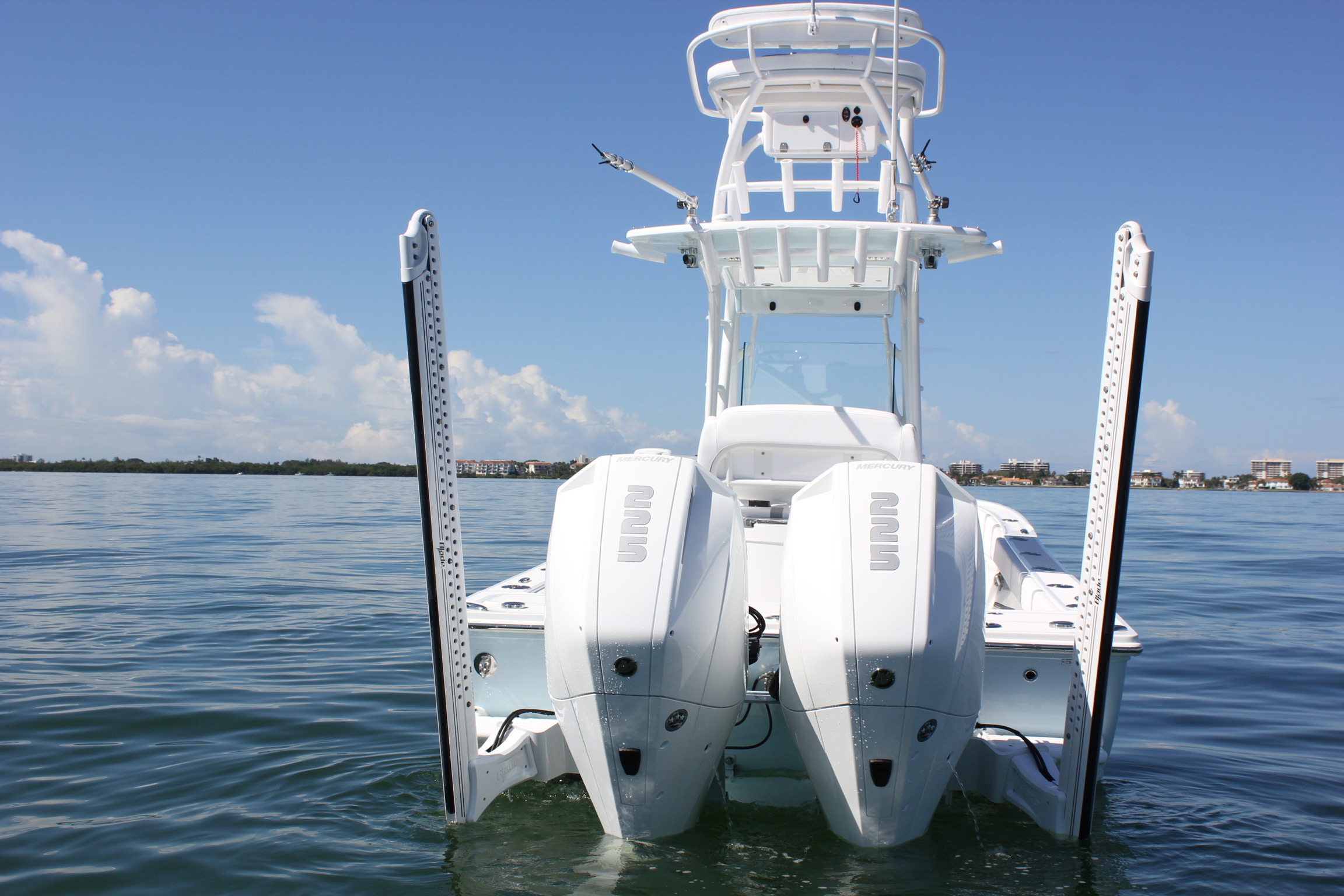
The Canyon Bay 28H is built right on that line. It's 28 feet long with a 9 foot 3 inch beam, 18 degrees of deadrise, a 28-inch-deep cockpit and a 15-inch draft. It carries a 55 sq ft casting deck, dual Power-Poles and a trolling motor up front, and outriggers and a tower with a second station for offshore.
How is a hybrid different from a bay boat and a center console?
The trade is draft against ride. Deadrise is the angle of the hull bottom. More deadrise cuts through waves for a smoother ride, but it pushes the hull deeper. Salt Water Sportsman makes the same point: boats with more deadrise draw more water but cleave waves better.
An offshore center console takes that all the way. Salt Water Sportsman's examples of offshore boats run about 20 to 24 degrees of deadrise and around 20 inches of draft. That's great in a head sea and no good on a shallow flat.
- Category ranges: Salt Water Sportsman, Bay Boat vs. Hybrid. Canyon Bay figures are from Canyon Bay spec sheets.
- The Canyon Bay 24B carries 18 degrees of deadrise, more than the typical bay boat, so it sits closer to the hybrid line than its draft suggests.
| Bay boat | Hybrid bay boat | Offshore center console | |
|---|---|---|---|
| Typical deadrise | 15° or less | 15° or more | About 20° to 24° |
| Typical draft | 12 in or less | More than 12 in | About 20 in or more |
| Built for | Bays, flats, nearshore on calm days | Flats plus offshore on good days | Regular offshore runs |
| Canyon Bay example | Canyon Bay 24B | Canyon Bay 28H | Canyon Bay 35N |
| Its length and draft | 23 ft 8 in, 13 in | 28 ft, 15 in | 35 ft, 22 in |
| Its fuel | 69 gal | 150 gal | 325 gal |
| Its max power | 400 HP | 600 HP | 900 HP |
Can a bay boat go offshore?
Yes, on the right day. Any boat can go offshore in good weather. Salt Water Sportsman puts it well: once the wind picks up, it becomes a question of safety and comfort.
Wave height alone doesn't tell you enough. Wave period, the time between crests, matters just as much. The National Weather Service office in Melbourne, Florida, explains that small craft are substantially affected by 4-foot waves at a 4 to 5 second period. The same 4-foot waves at a 13-second period are usually good conditions for small craft.
So read the forecast for both numbers. Check the NWS marine forecast and the nearest NOAA buoy for dominant period before you run out. Short, steep chop is where a bay boat's flatter bottom starts to pound.
A hybrid like the Canyon Bay 28H widens that window with its deeper vee and higher sides. It doesn't make every day a good day.
How far offshore can a bay boat or hybrid go?
As far as your fuel and the weather allow, with a reserve. The standard is the rule of thirds. Salt Water Sportsman describes it as one-third of your fuel for the ride out, one-third to get back and one-third kept in reserve.
Apply that to tank size and the difference between categories is plain. A Canyon Bay 24B with 69 gallons has about 23 gallons for the run out. A Canyon Bay 28H with 150 gallons has 50. A Canyon Bay 35N with 325 gallons has more than 100.
Turn those gallons into miles with your own measured fuel burn at cruise, for your engine and load. Burn changes with prop, weight and sea state, so don't plan a long run off a brochure number. Bad weather on the way home burns more fuel than the trip out did.
Which one fits how you fish?
Match the boat to the days you actually fish, not the trip you take once a year. Here's how the Canyon Bay lineup sorts out.
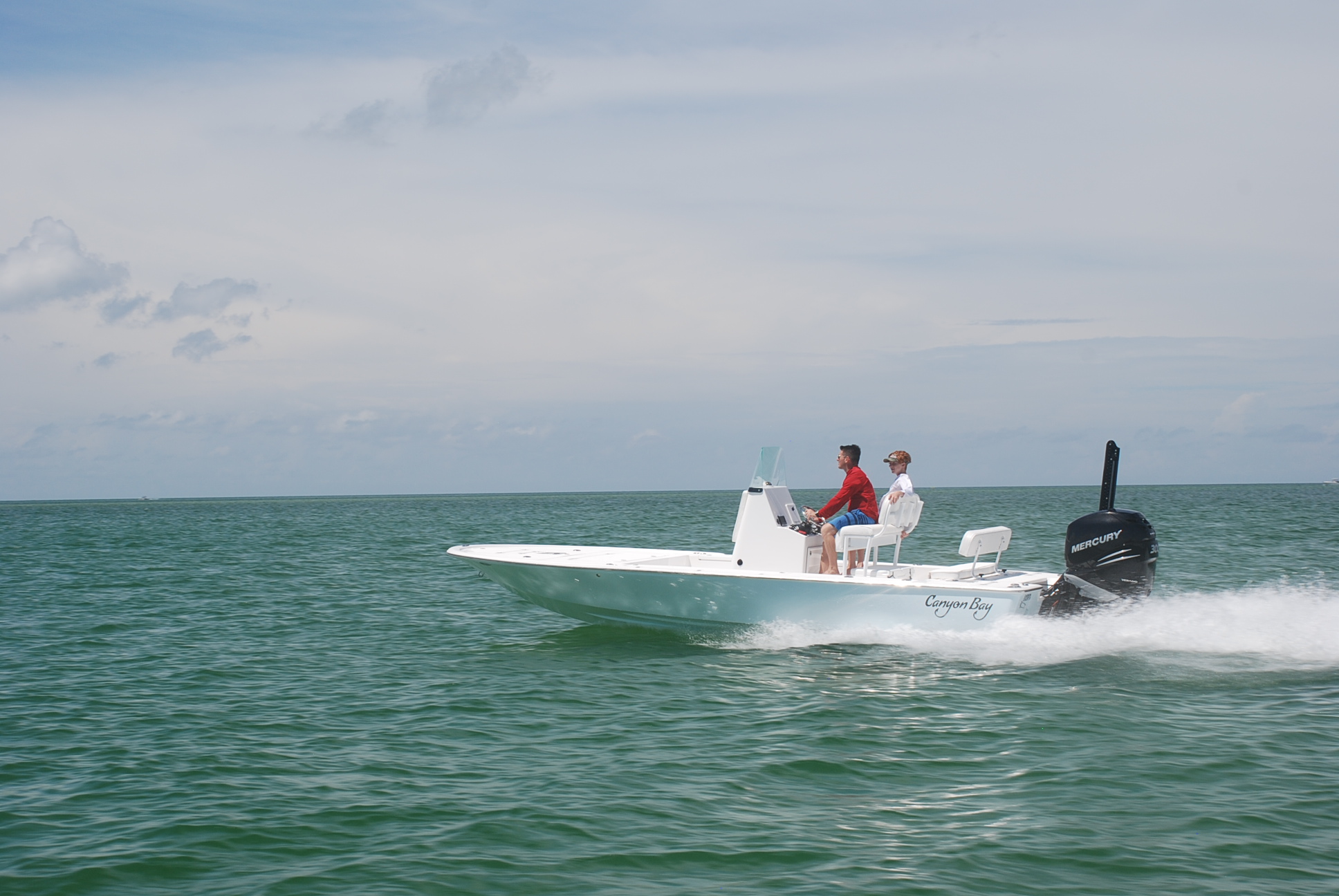
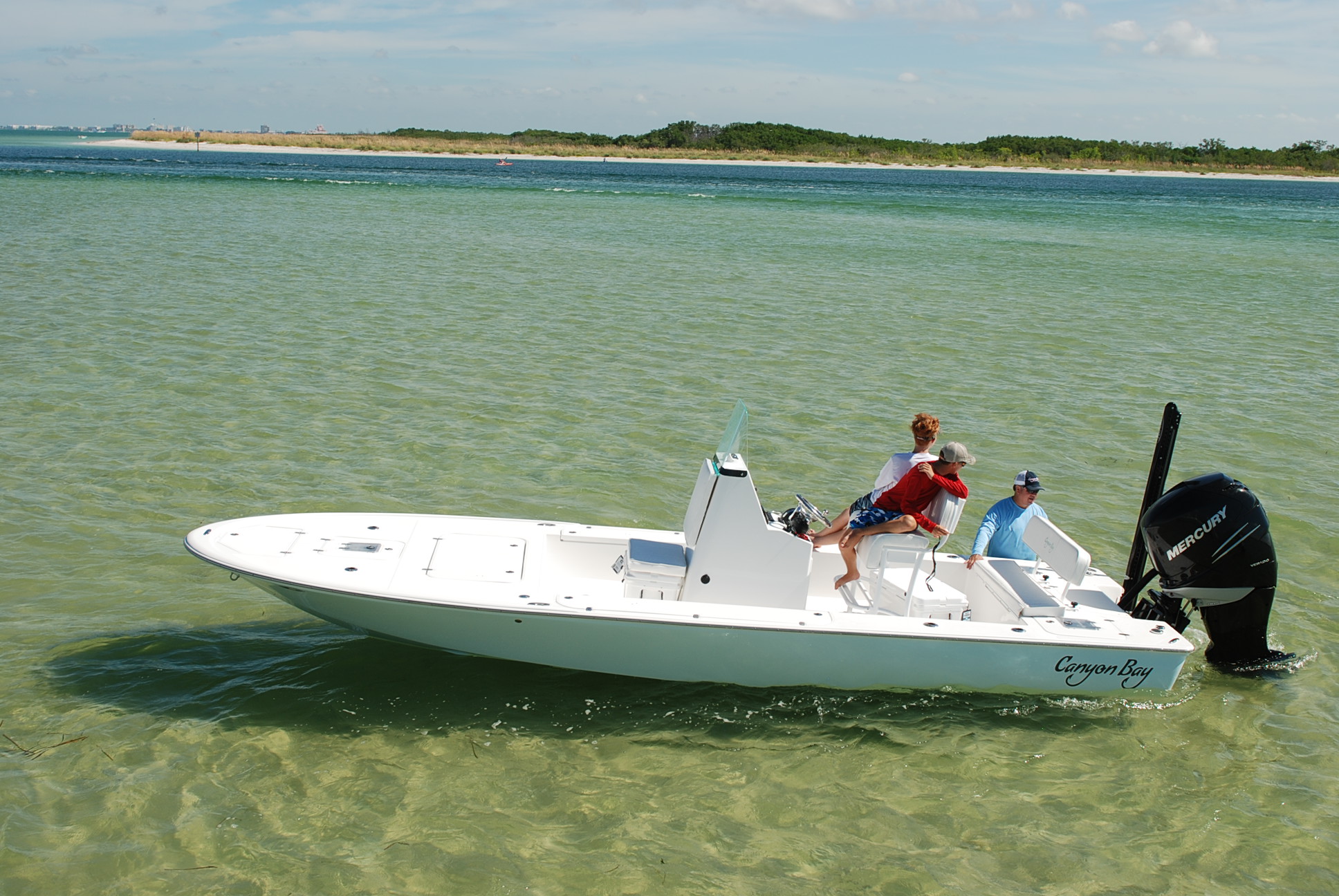
- Mostly inshore, some nearshore on calm days: Canyon Bay 24B. A 65 sq ft casting deck, a 13-inch draft and 2,500 lb dry weight make it a bay boat first.
- Flats in the morning, offshore in the afternoon: Canyon Bay 28H. The 15-inch draft keeps the shallows open, and the 28-inch cockpit and tower handle bluewater.
- Regular offshore runs, overnight trips or the Bahamas: Canyon Bay 35N. Twin outboards up to 900 HP, 325 gallons of fuel and a console big enough for a bed.
- Skinny backcountry water: Canyon Bay 18F. An 8-inch draft at 900 lb dry. It isn't an offshore boat.
What does a hybrid give up?
Every hybrid is a compromise, and the Canyon Bay 28H is no exception. Against the Canyon Bay 24B, it gives up 2 inches of draft and carries about 1,000 more pounds dry. That's less skinny water and more work if you pole it, though dual Power-Poles and a trolling motor with i-Pilot do a lot of that work.
Against the Canyon Bay 35N, the 28H gives up range, size and comfort. The 35N carries more than twice the fuel, a forward head and a console with room for a bed. If most of your days are offshore, the bigger boat is the honest answer.
Trailering is the other trade. Federal rules set a 102-inch (8 foot 6 inch) width limit on the national highway network. The 28H's 9 foot 3 inch beam and the 24B's 8 foot 8 inch beam both exceed it, so check your state's oversize permit rules before you plan to tow.
What makes a hybrid ride well offshore?
Deadrise, freeboard and weight in the right places. A sharper entry and 15 to 18 degrees of deadrise soften the slap of chop. Cockpit depth keeps people and gear inside the boat when it rolls. A stiff, light hull responds faster in the seas.
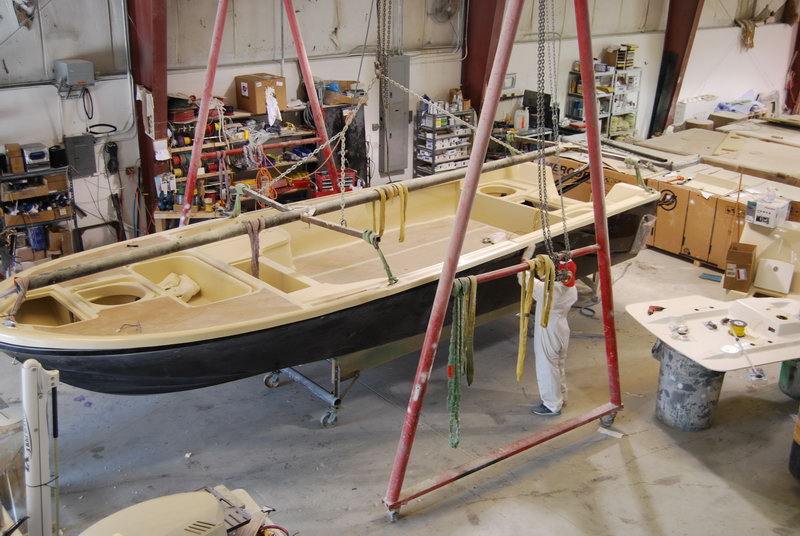
The Canyon Bay 28H combines 18 degrees of deadrise with a 28-inch cockpit, and its Kevlar hull and carbon fiber sides and deck keep it at 3,500 lb dry. One 28H owner, Lucas M., put it simply in his review: "Well built and rides very good in a chop."
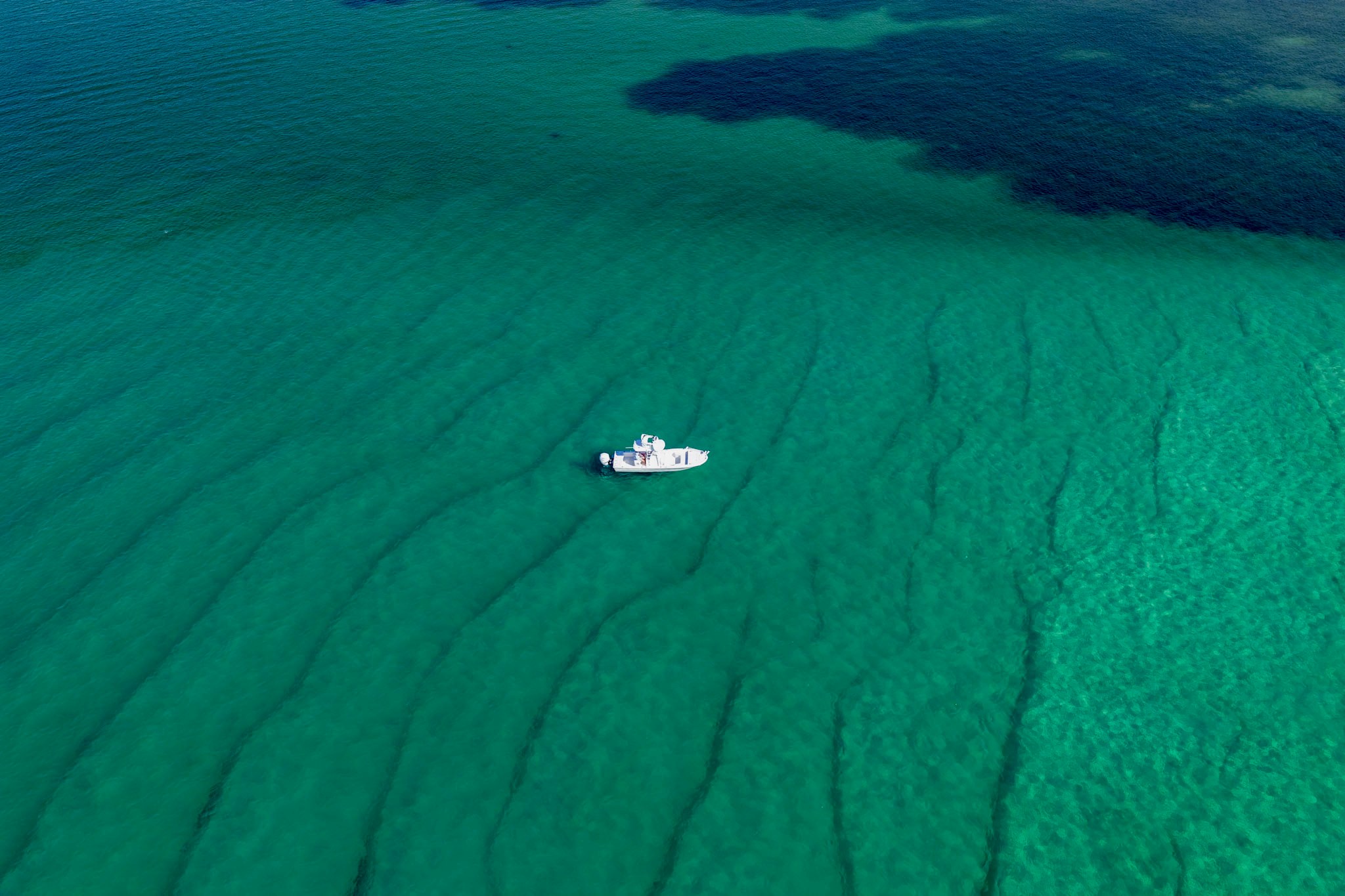
Canyon Bay pro-staff captains run the boats in Tampa Bay and Ruskin, St. Augustine and Charleston, where a day can start on a grass flat and end at a nearshore wreck. That's the mixed fishing a hybrid is built for.
Common questions
What is a hybrid bay boat?
A hybrid bay boat is built to fish inshore water and run offshore on good days. It usually has more deadrise, freeboard and cockpit depth than a bay boat, with a draft just over a foot. The Canyon Bay 28H, with 18 degrees of deadrise and a 15-inch draft, is one example.
Can a bay boat go offshore?
Yes, in the right conditions. Watch both wave height and period: the NWS says 4-foot waves at a 4 to 5 second period are rough for small craft, while 4-foot waves at 13 seconds are usually fine. Plan fuel by the rule of thirds.
How far offshore can a bay boat go?
It depends on fuel, burn and weather, so there's no single number. Use the rule of thirds: a third of your fuel out, a third back, a third in reserve. On a Canyon Bay 24B's 69 gallons, that's about 23 gallons for the outbound run.
What is the best bay boat that can go offshore?
A hybrid is the best fit if you want one boat for the flats and offshore. Look for 15 degrees or more of deadrise, a deep cockpit and enough fuel for your runs. The Canyon Bay 28H offers 18 degrees, a 28-inch cockpit, 150 gallons and a 15-inch draft.
Is a center console better than a hybrid for offshore fishing?
Yes, if most of your fishing is offshore. A dedicated offshore center console has more deadrise, range and comfort in rough water. A hybrid wins when you also want shallow-water access. Canyon Bay builds both: the 28H hybrid and the 35N offshore sportfisher.
Sources
- Salt Water Sportsman: Bay Boat vs. Hybrid (Alan Jones, 2023)
- Salt Water Sportsman: Following the Rule of Thirds Could Save Your Life
- National Weather Service Melbourne: marine newsletter on dominant wave period
- National Weather Service: Marine forecasts
- NOAA National Data Buoy Center
- eCFR: 23 CFR 658.15, vehicle width