Is a Bay Boat a Good Great Lakes Boat? Lake Michigan and Erie
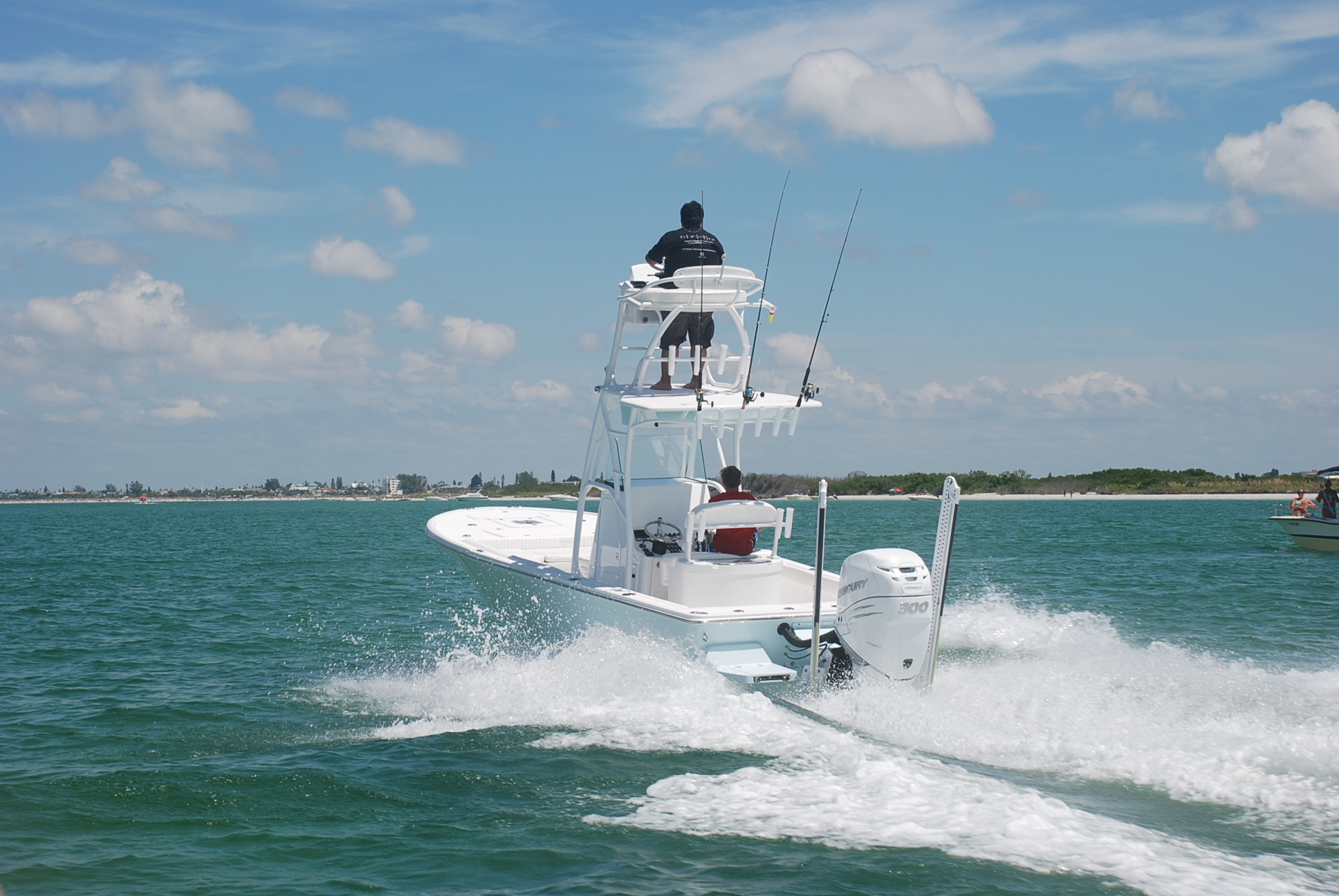
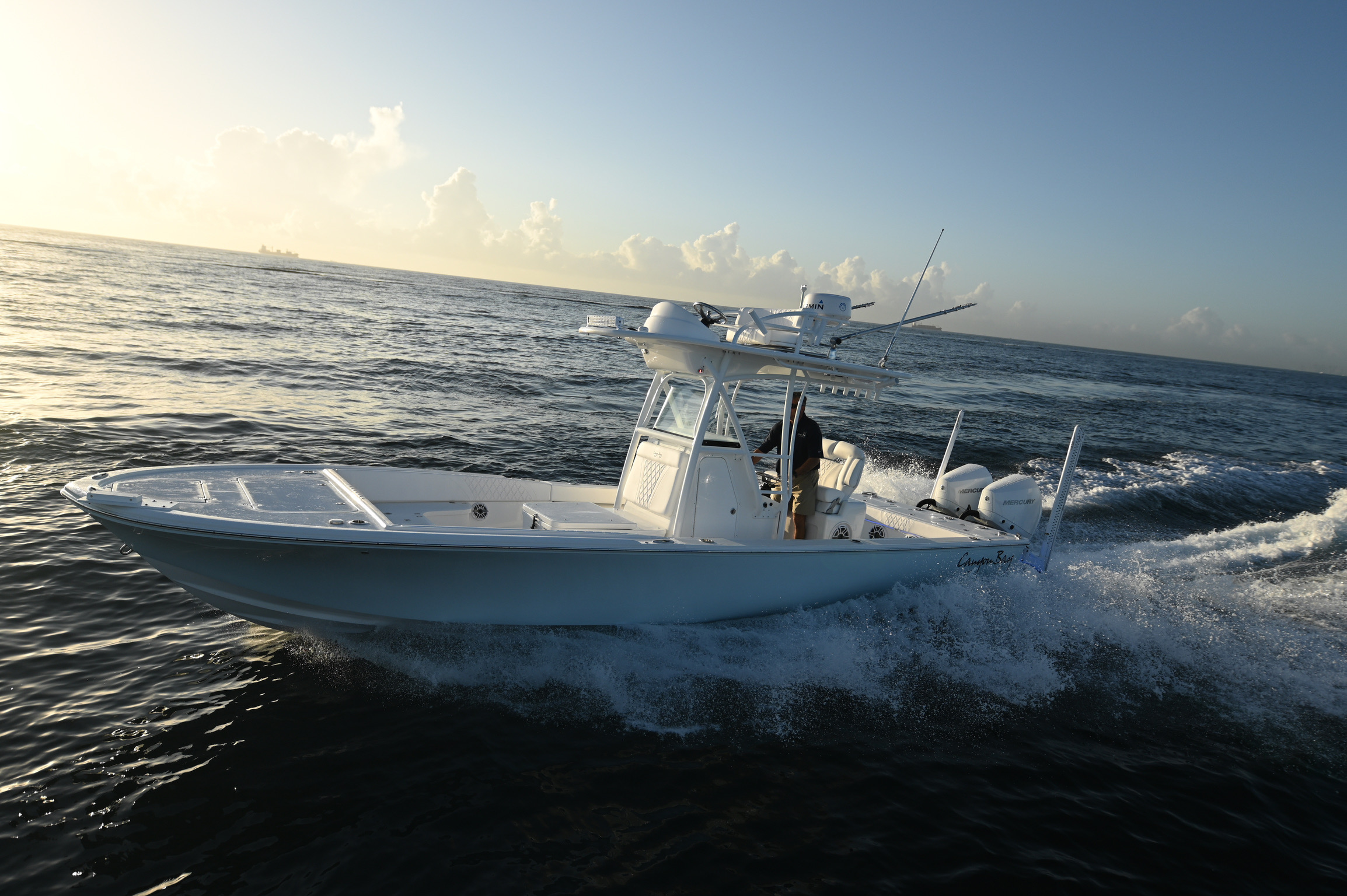
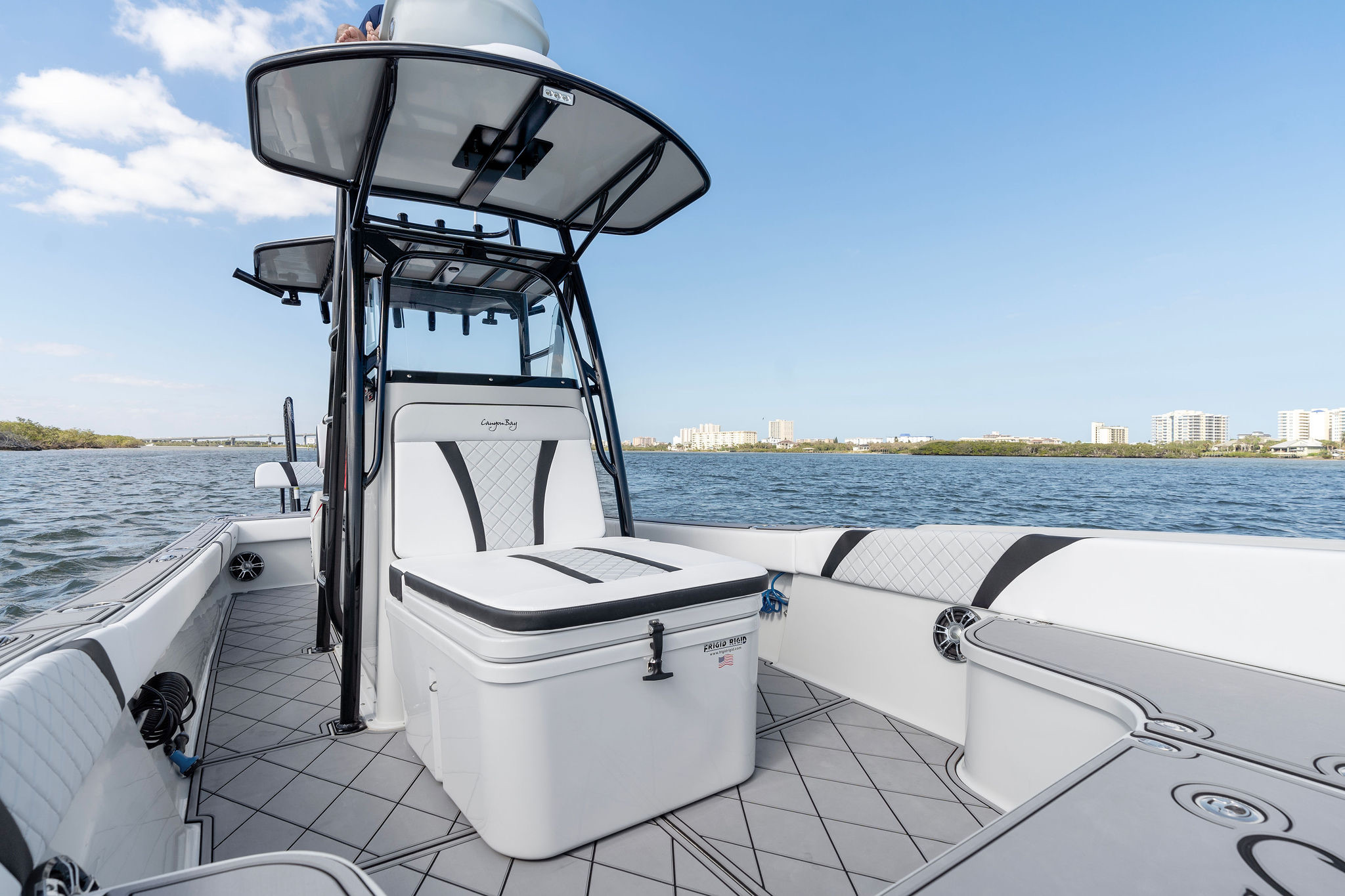
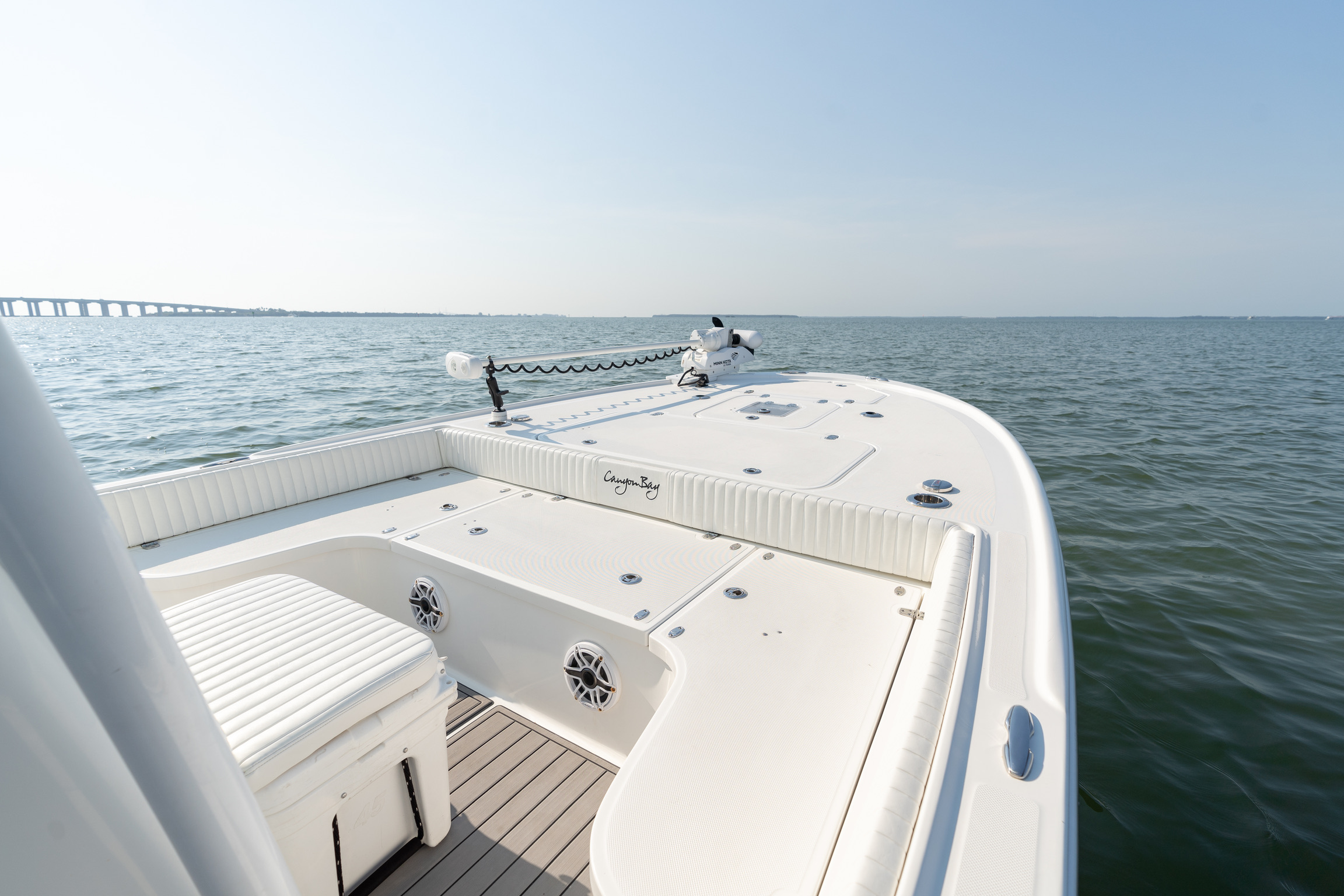
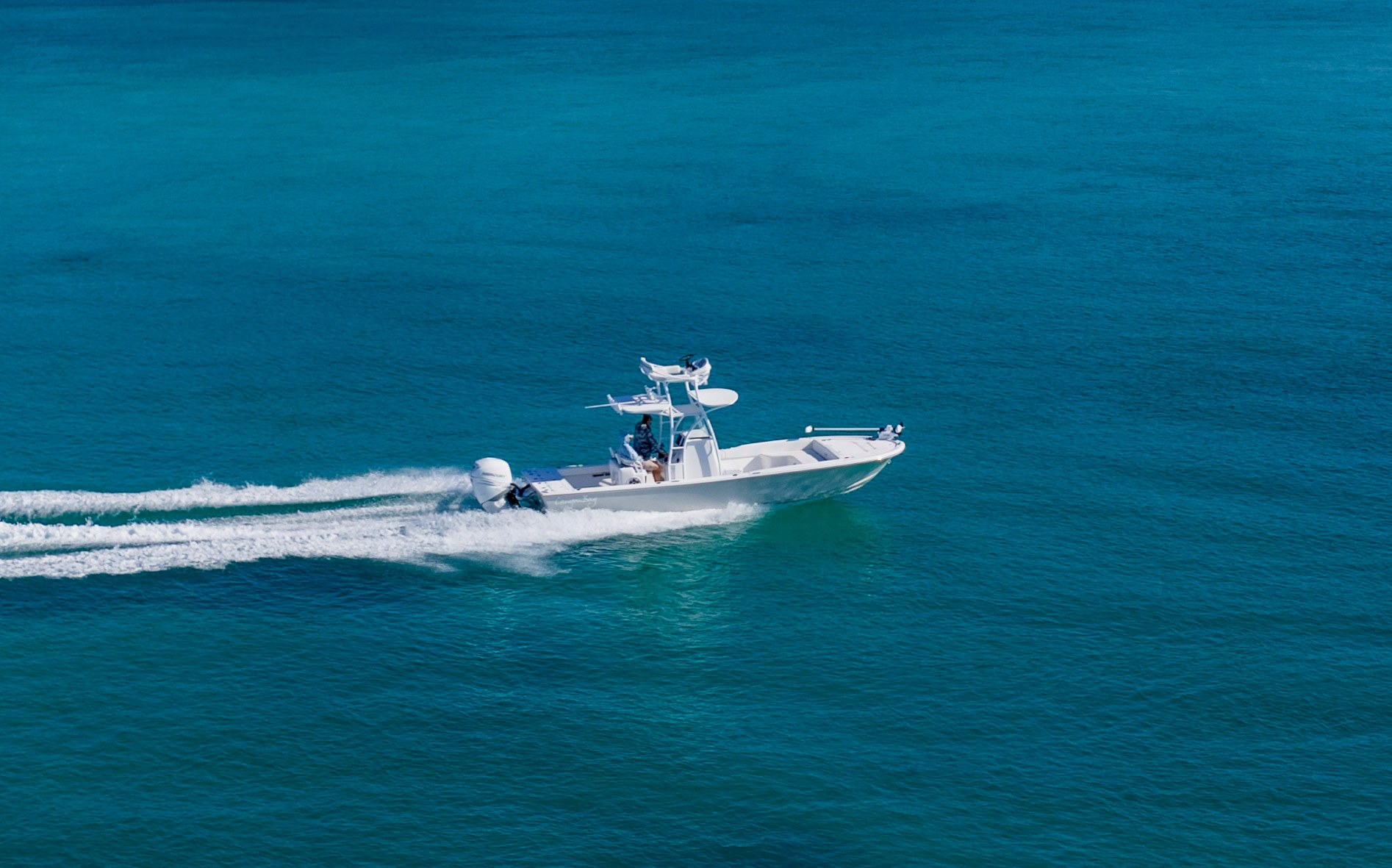
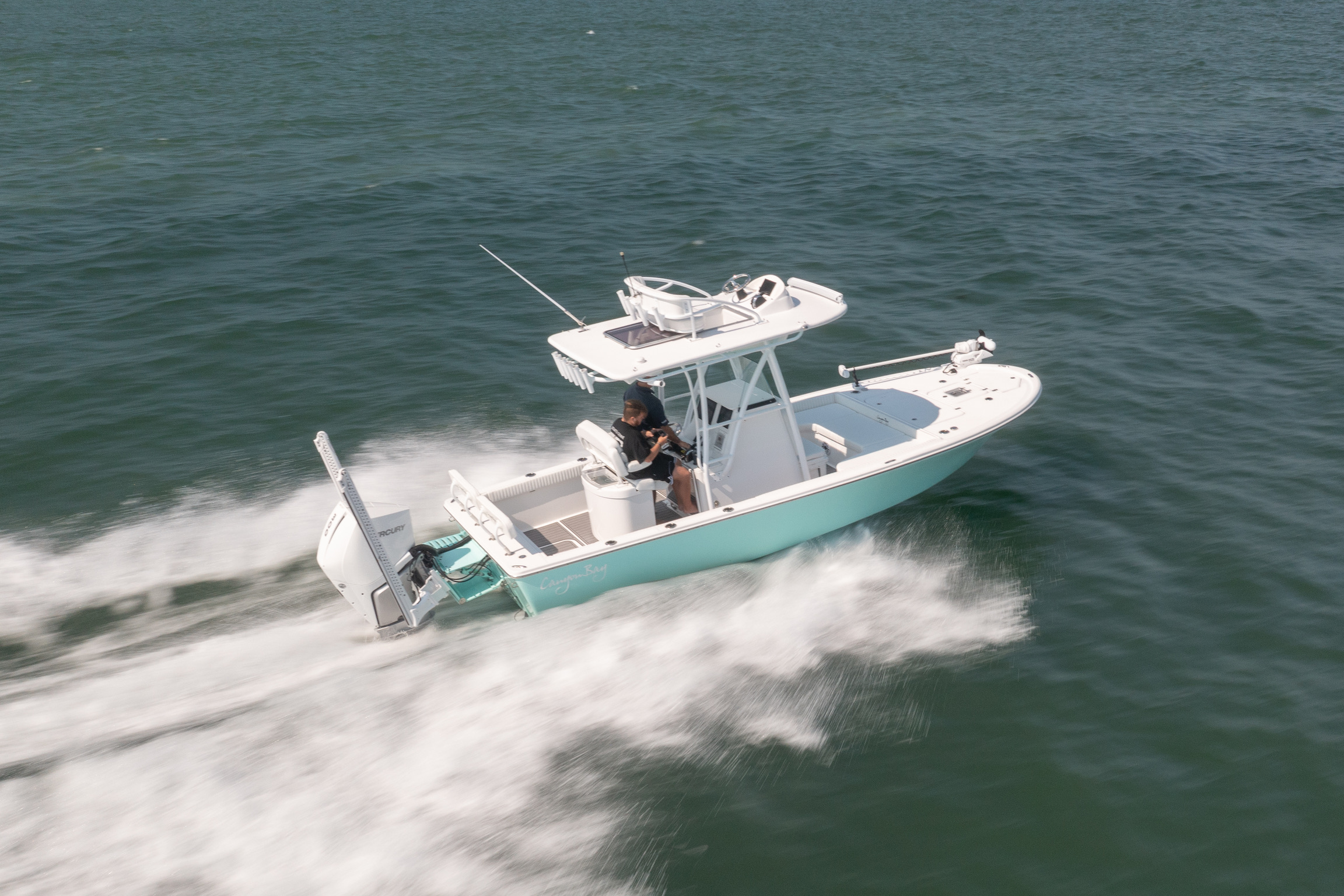
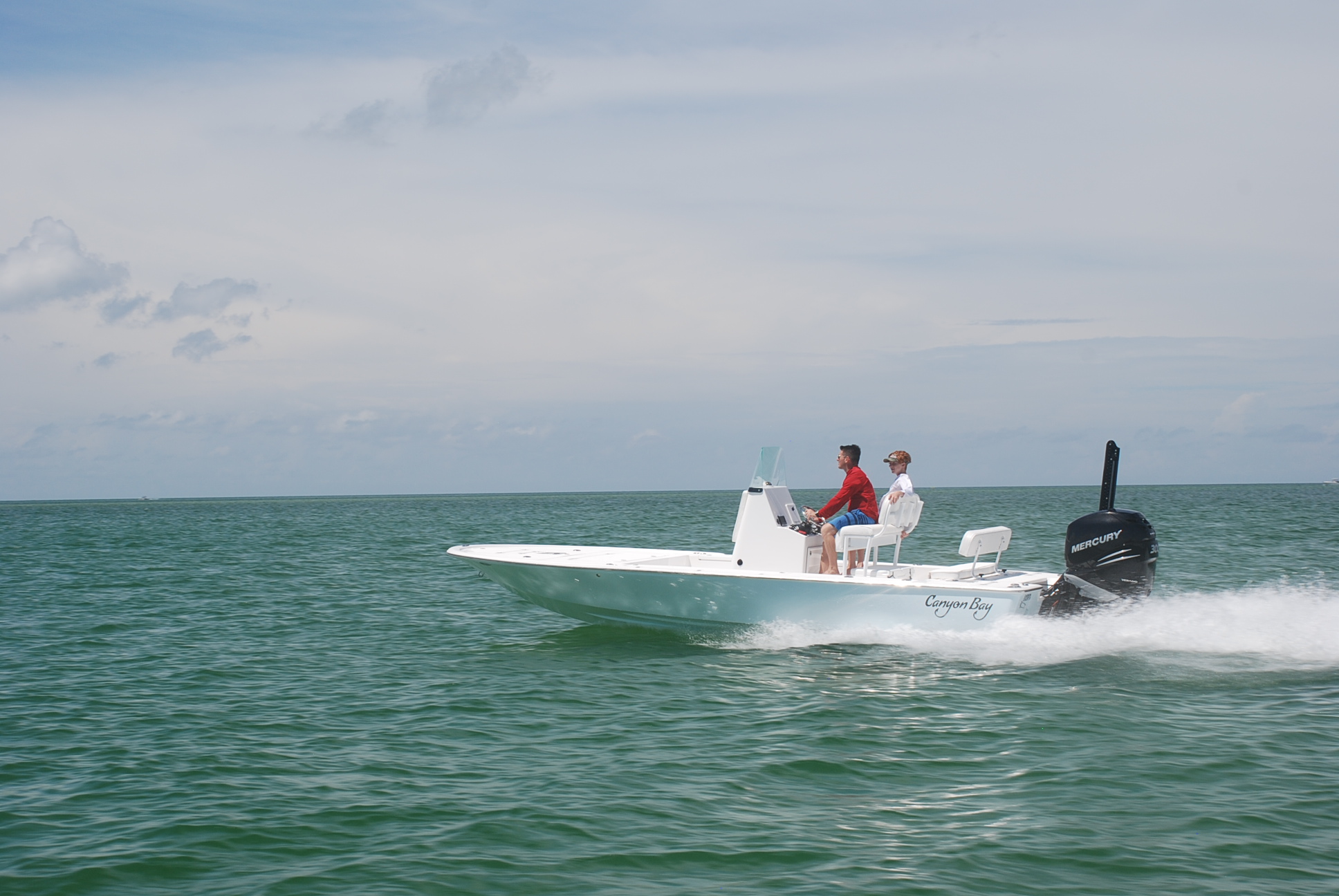
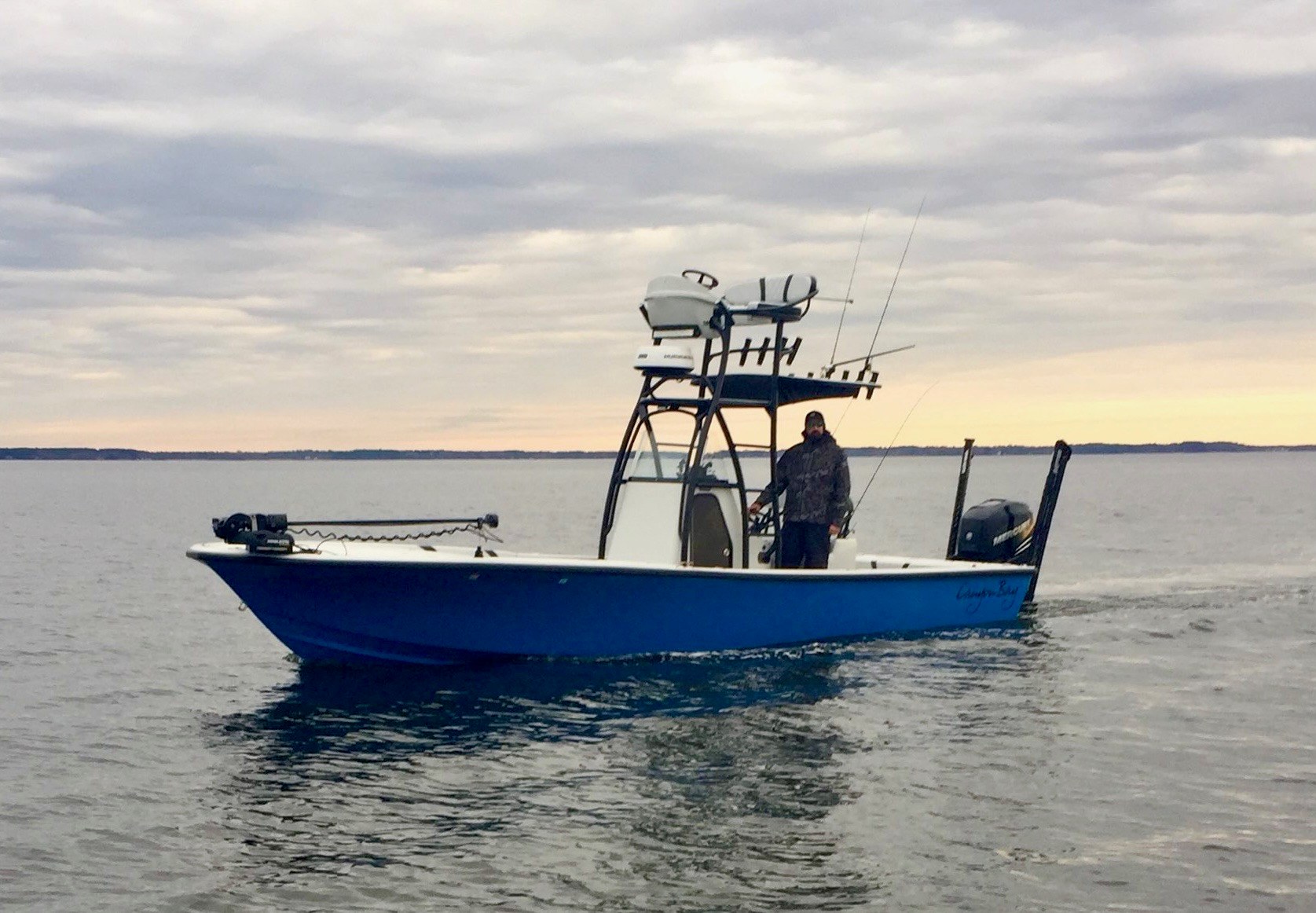
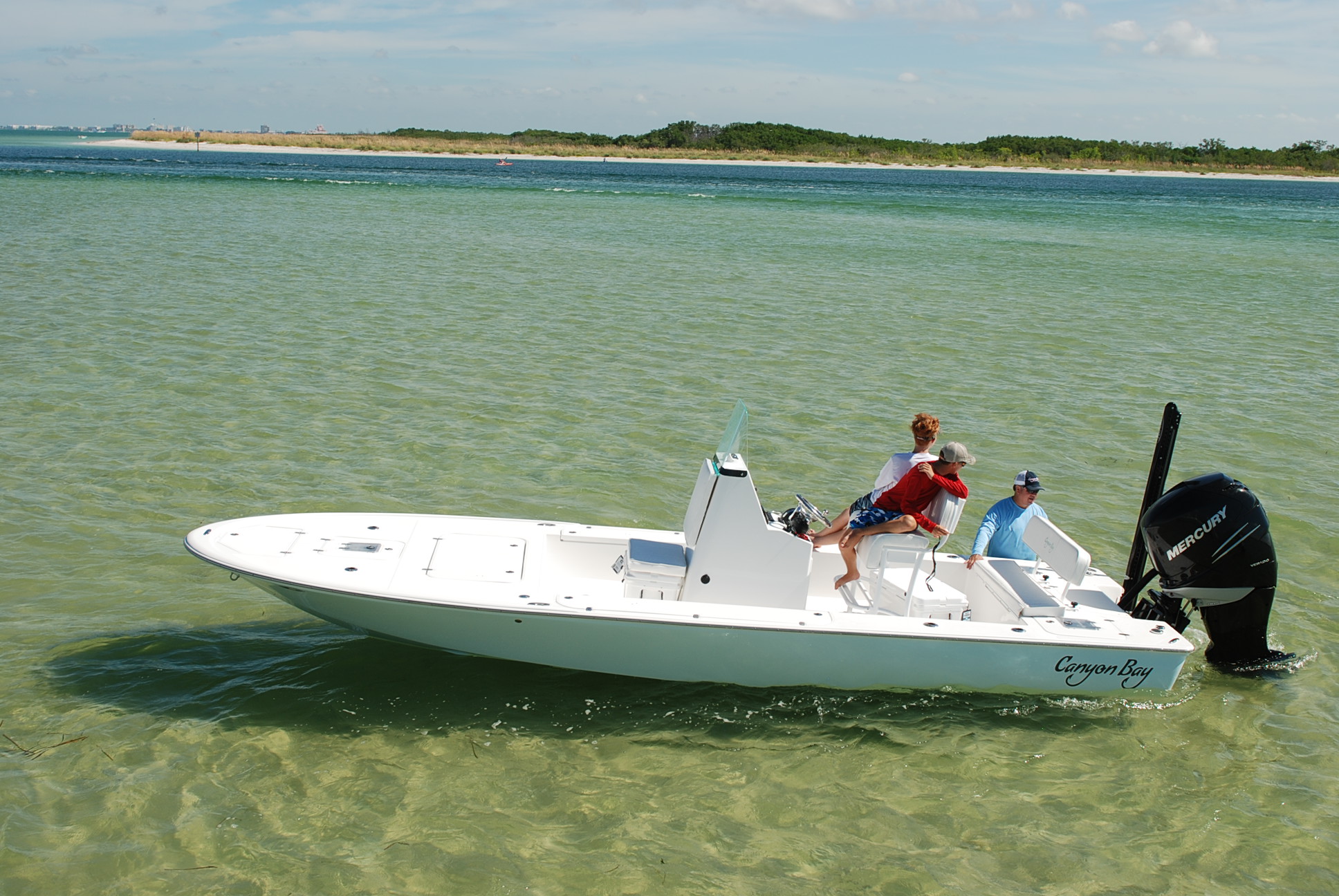
Mostly no. An open, low-sided bay boat isn't a good open-water boat for Lake Michigan or Lake Erie, where short, steep waves build fast and most anglers run deep-V boats with windshields or hardtops. A Canyon Bay 24B or 22B fits protected water like Lake St. Clair and Sandusky Bay. The Canyon Bay 28H works on settled summer days, not three seasons.
| Lake Michigan average depth | 279 ft (max 925 ft) |
|---|---|
| Lake Erie western basin average | About 24 ft |
| Open-lake verdict for a bay boat | Mostly no |
| Protected-water fit | Canyon Bay 24B or 22B |
| Summer big-water fit | Canyon Bay 28H, picked days |
Can a bay boat go on Lake Michigan?
A bay boat can go on Lake Michigan, but it's the wrong main boat for the open lake. Lake Michigan is 307 miles long and about 118 miles wide, averages 279 ft deep and reaches 925 ft, according to the Great Lakes Commission. That's an inland sea with 22,300 square miles of surface.
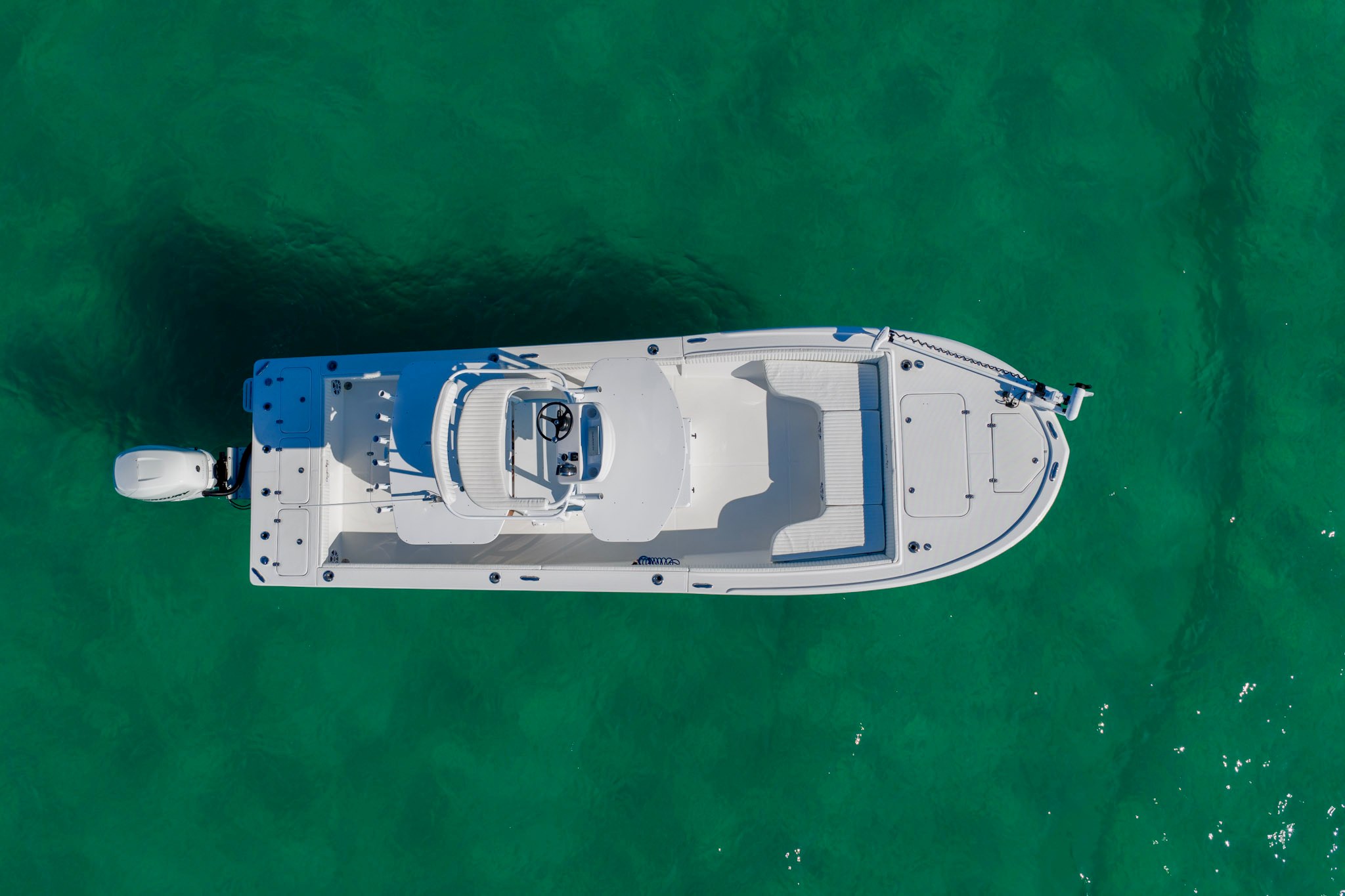
Bay boats are built around shallow water. They have low sides so you can land fish and step around a big casting deck. They have moderate deadrise so they float in a foot of water. Those are the right choices for a grass flat. They're the wrong choices for a building wind chop on the open lake with cold water coming over the bow.
We build bay boats, so we'll say it straight. If your plan is trolling for salmon miles off Ludington or Milwaukee from April to October, a bay boat isn't your boat. Buy something with a windshield, a cabin or a hardtop and more freeboard.
What do Great Lakes anglers actually run?
Most Great Lakes anglers run deep-V boats with some kind of weather protection. On Lake Michigan, trollers favor 22 to 30 foot walkarounds, cuddies and hardtops. On Lake Erie, walleye anglers favor deep-V fishing boats with windshields, often asking for around 20 degrees of deadrise because of the short, steep wave period (The Hull Truth).
The weather protection matters as much as the hull. Spring and fall fishing on the lakes is cold and wet. One Hull Truth poster summed up center consoles on the Great Lakes this way: "with a CC you had better like getting wet" (The Hull Truth).
That's not a knock on the anglers who fish open boats up there. It's a description of what the lake does to you in May.
| Boat type | Open Lake Michigan | Lake Erie western basin | Protected bays and Lake St. Clair |
|---|---|---|---|
| Deep-V walkaround, cuddy or hardtop (22 to 30 ft) | Good, three seasons | Good, three seasons | Good, more boat than needed |
| Deep-V walleye boat with windshield | Fair, smaller sizes limited | Good, the local standard | Good |
| Large center console or hybrid (28 ft and up) | Summer days | Summer days | Good |
| Bay boat (21 to 24 ft) | Poor, near-shore calm days only | Poor to fair, settled weather only | Good |
| Flats skiff | No | No | Calm days in sheltered water |
Is a bay boat a good Lake Erie walleye boat?
A bay boat is a poor open-lake walleye boat on most Lake Erie days. The western basin averages only about 24 ft deep, with a maximum of 62 ft near the Bass Islands. Because it's so shallow, it "experiences significant wave action even under light wind conditions" (Wikipedia).
The whole lake is shallow by Great Lakes standards. The Great Lakes Commission puts Lake Erie's average depth at about 62 ft and its maximum at 210 ft. Shallow water stacks waves close together. That's the steep, short chop that makes Erie anglers ask for deep-V hulls.
The fishing itself happens in modest depths. A western basin charter report from June 2, 2026 described an average water depth of 21 to 24 ft, targeting 13 to 16 ft down (Sir Walleye Charters). A bay boat can troll that water fine on a calm day. The trouble is the ride home when the wind comes up out of the west.
So the honest answer for Ohio and Michigan walleye anglers: a deep-V walleye boat with a full windshield is the better primary boat.
Where does a Canyon Bay bay boat actually fit on the Great Lakes?
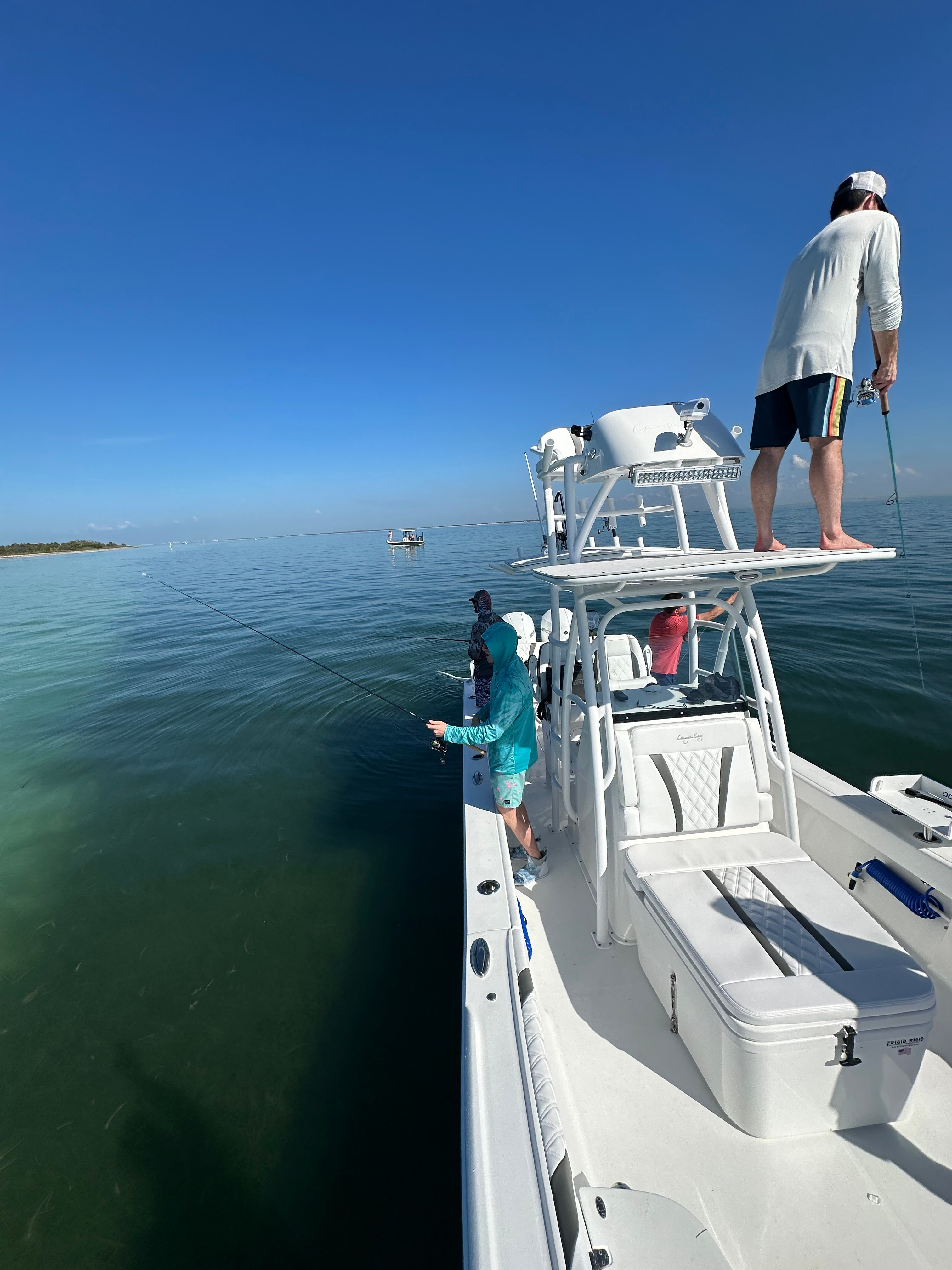
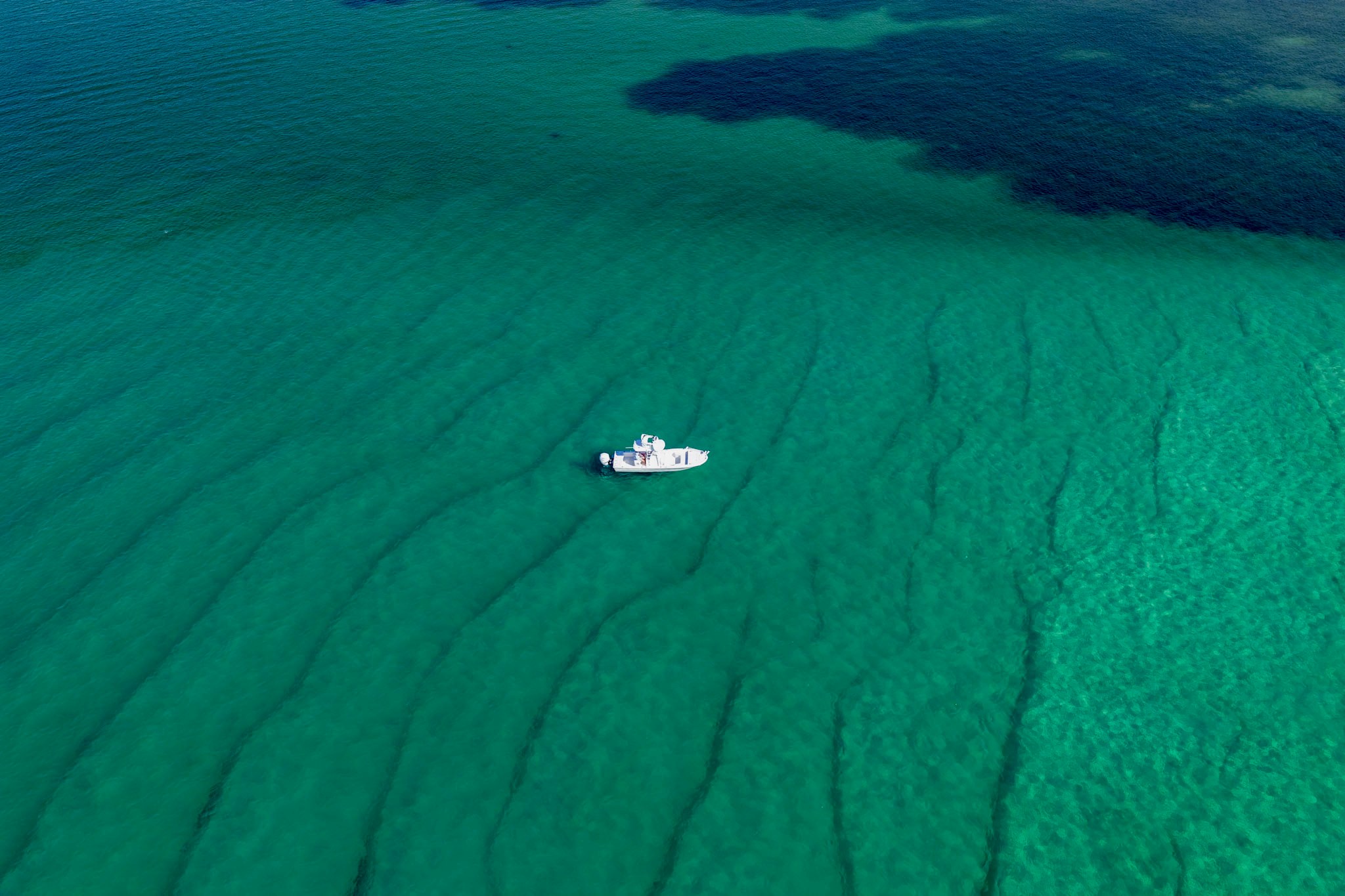
A Canyon Bay 24B or Canyon Bay 22B fits the protected, shallow corners of the Great Lakes system, and fits them well. Lake St. Clair averages about 11 ft deep with a natural maximum of about 23 ft (Wikipedia). That's bay boat water, and a big casting deck makes sense there.
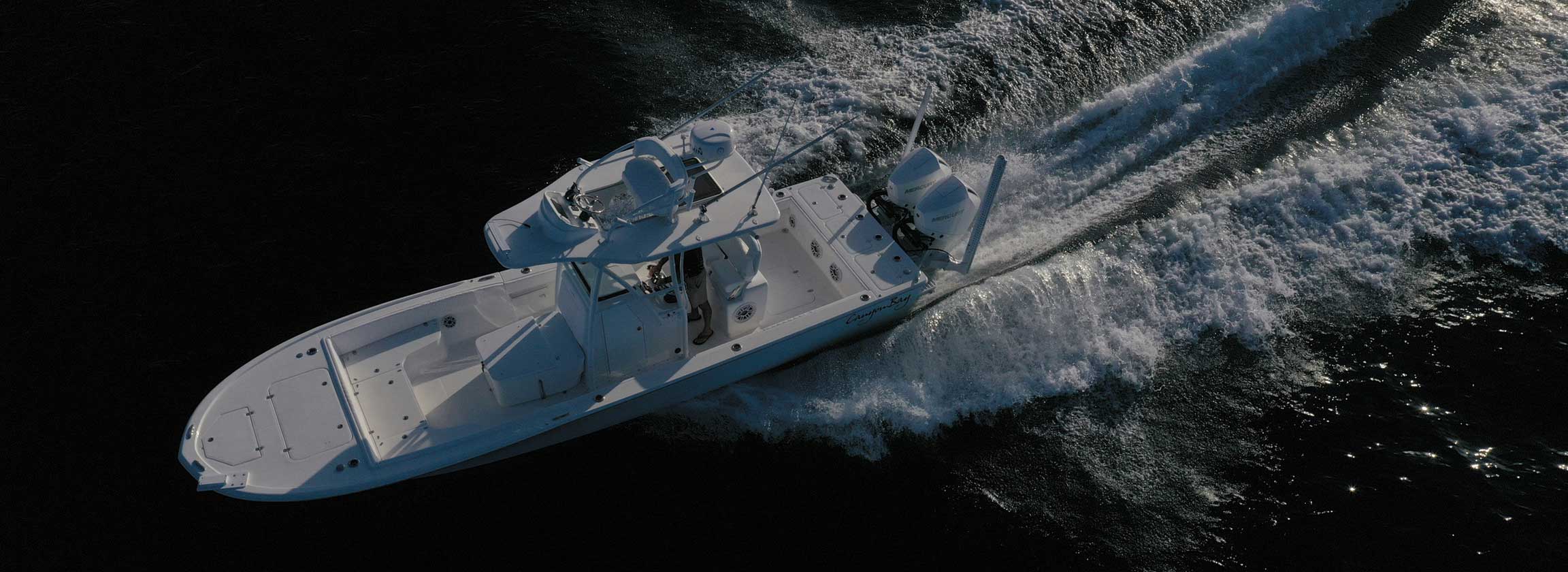
The Canyon Bay 24B drafts 13 inches with the engine up, carries a 65 sq ft forward casting deck and weighs 2,500 lbs dry. The Canyon Bay 22B drafts 12 inches and weighs 2,000 lbs. Both suit casting shorelines, weed edges and shallow flats in sheltered water.
Sandusky Bay and the Lake Erie islands area in settled weather fit the same boats. So do protected parts of large bays on a calm forecast. In each case the rule is the same: stay where you can get off the water quickly when the wind changes.
Freshwater use isn't new for these boats. One owner, Daniel K., told us: "I sure do love my Canyon Bay. She is perfect for my smallmouth and striper charters in Tennessee." Those are big reservoirs, not the Great Lakes, but the casting layout carries over to smallmouth water in Michigan and Ohio.
Can the Canyon Bay 28H handle Lake Michigan?
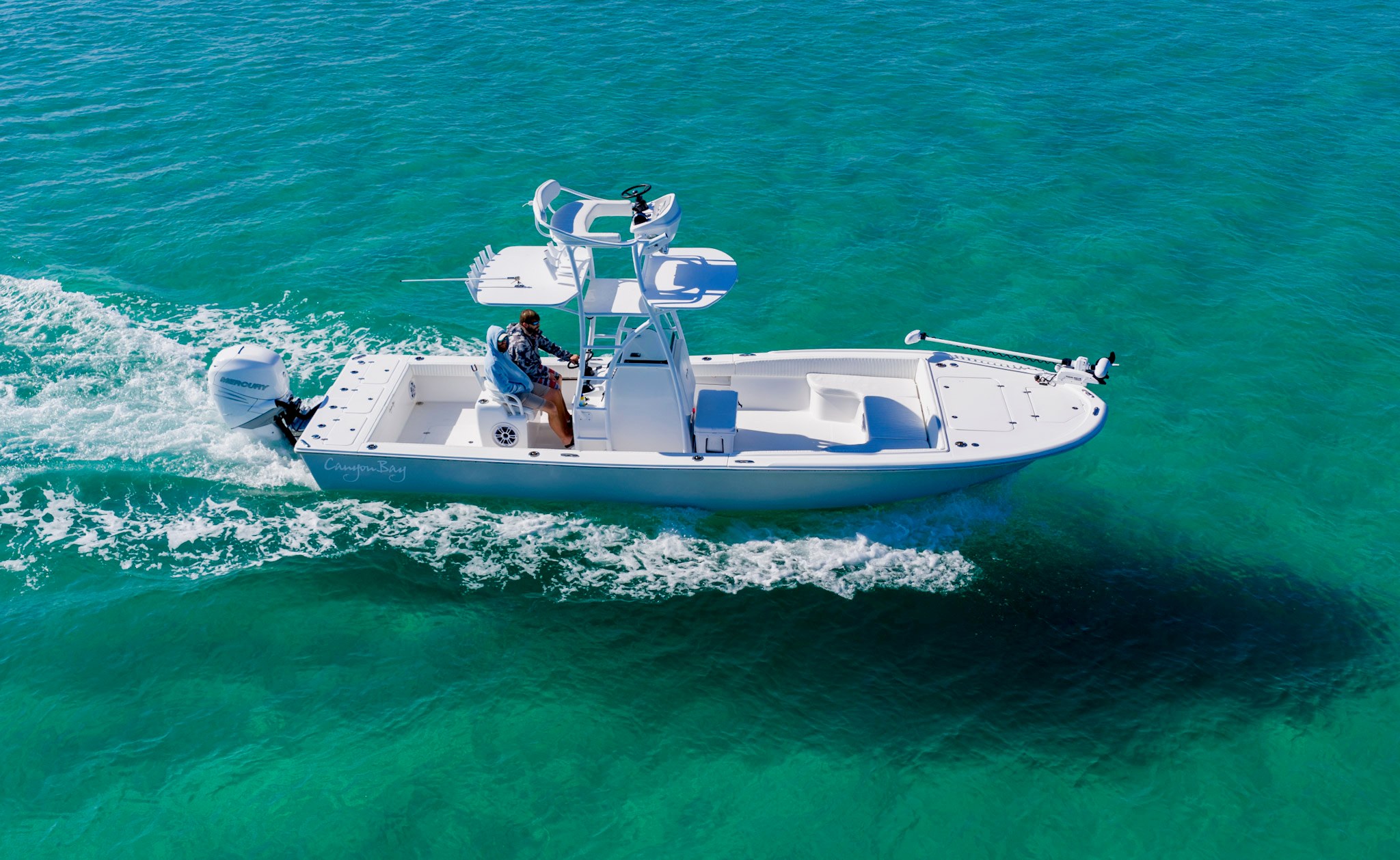
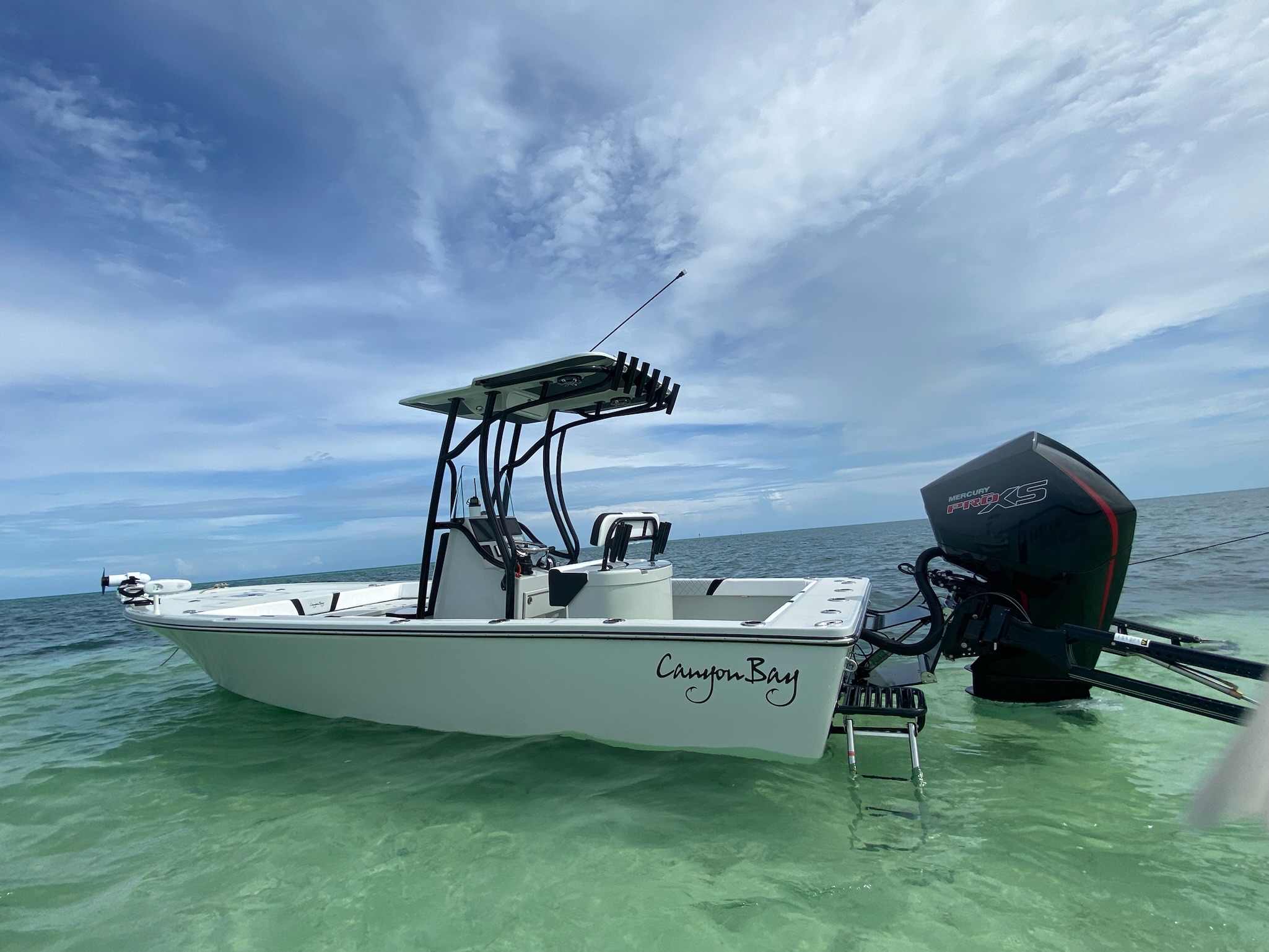
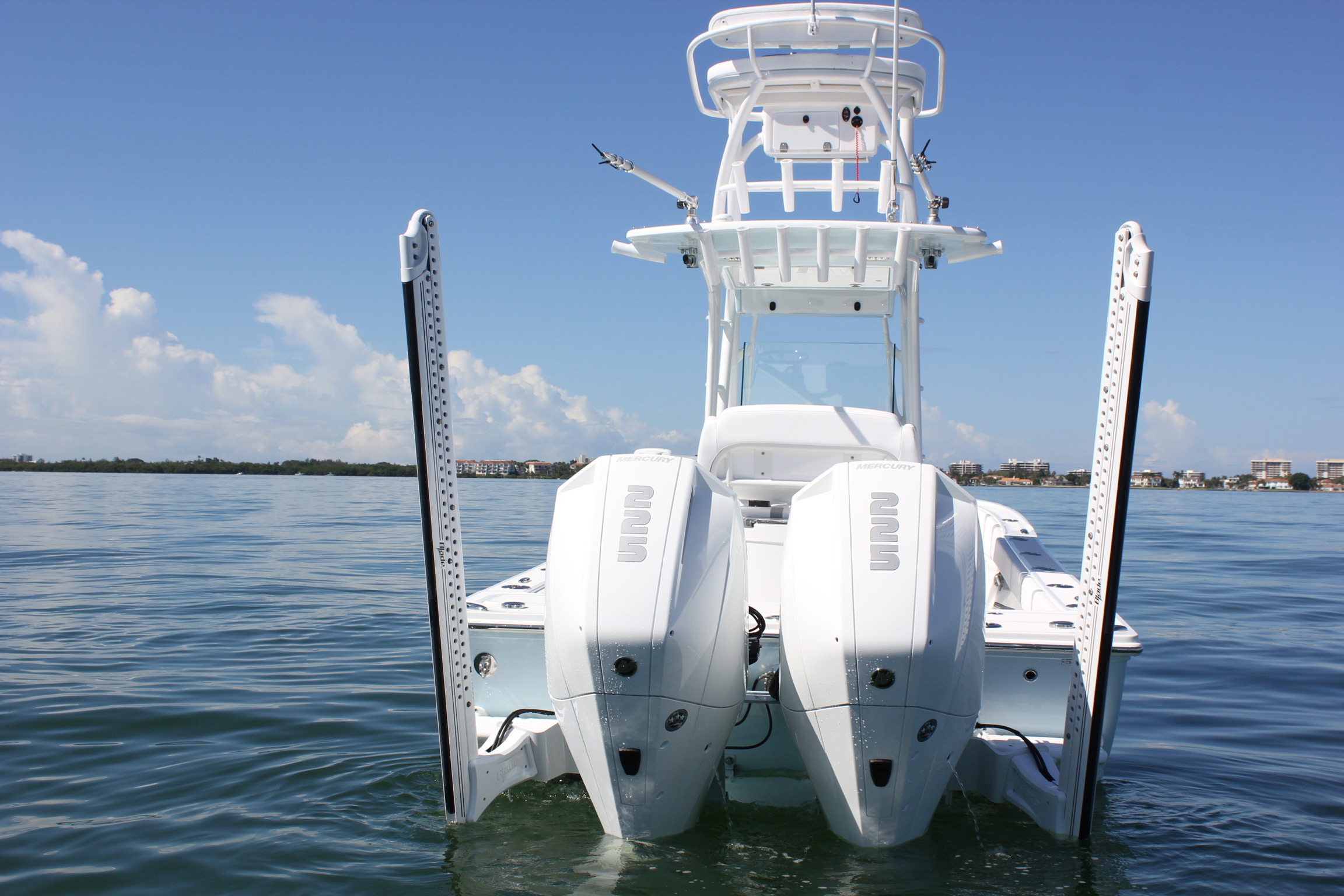
The Canyon Bay 28H can handle Lake Michigan on settled summer days, and that's the honest limit. It's 28 feet with a 9-foot-3-inch beam and an 18-degree deadrise. It has a 28-inch-deep cockpit, a 150-gallon tank and twin outboards up to 600 HP.
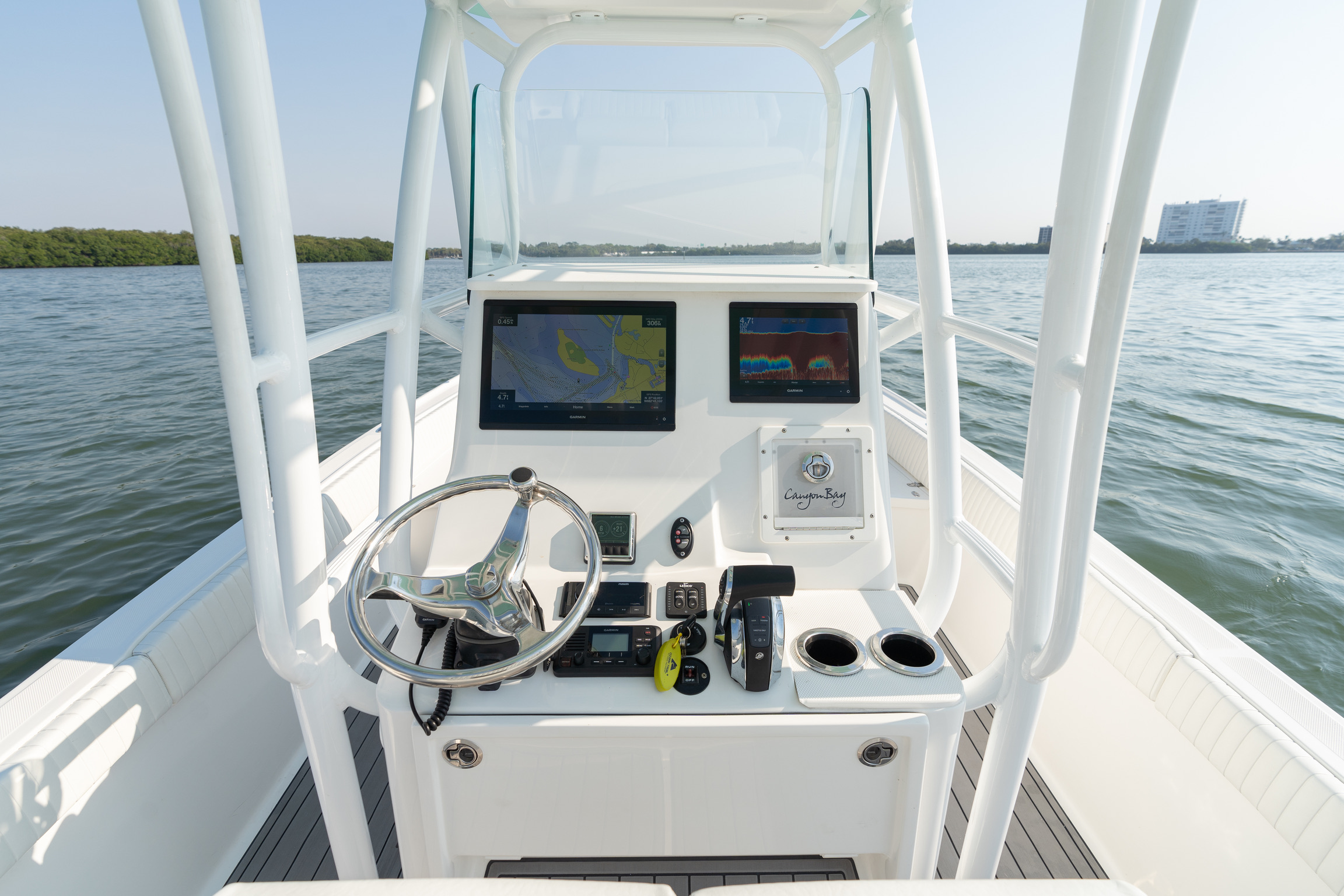
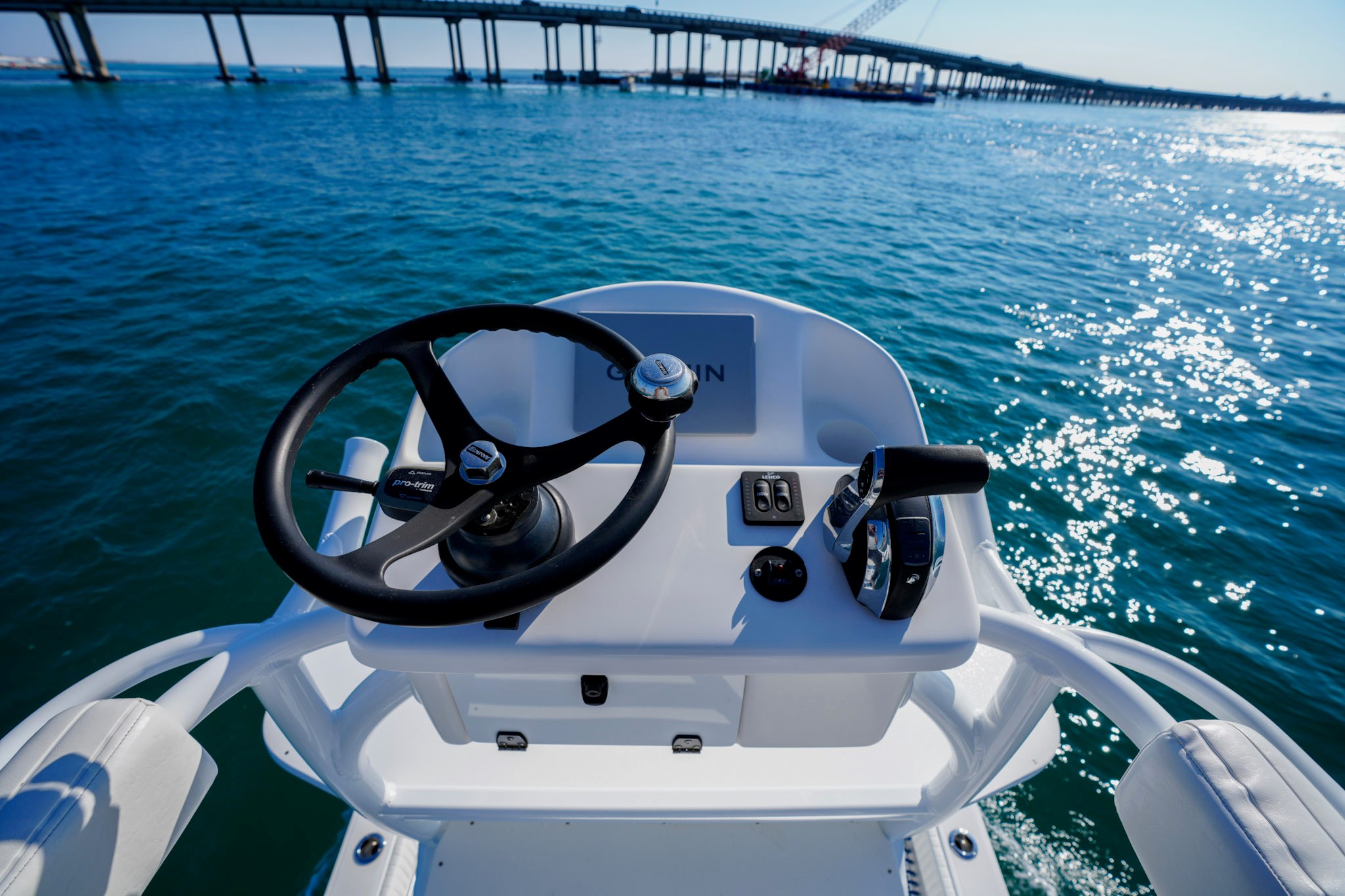
That's more boat than any bay boat. It's still an open hybrid, built to run offshore and pole a flat in the same hull. It has a tower with a second station, not an enclosed helm.
Lake Michigan's king salmon months are July and August, according to Visit Ludington, with mature salmon massing off the river mouths in September. Pick the calm mornings inside that window, and a Canyon Bay 28H owner can troll the lake and still cast the shallows in the afternoon.
The 18-degree deadrise is a bit flatter than the roughly 20 degrees many Erie anglers ask for. We'd rather say that than pretend otherwise. Read the Canyon Bay 28H as a summer boat on the Great Lakes, not a three-season one.
What about the Canyon Bay 35N?
The Canyon Bay 35N is the most capable Canyon Bay for open Great Lakes water, but it's still an open sportfisher. It's 35 feet, takes up to 900 HP on twin outboards, carries 325 gallons of fuel and drafts 22 inches.
The size and options help on big water. Canyon Bay offers a Seakeeper stabilizer, Optimus 360 joystick steering, radar and SiriusXM weather on the Canyon Bay 35N. There's a hardtop T-top and a forward head.
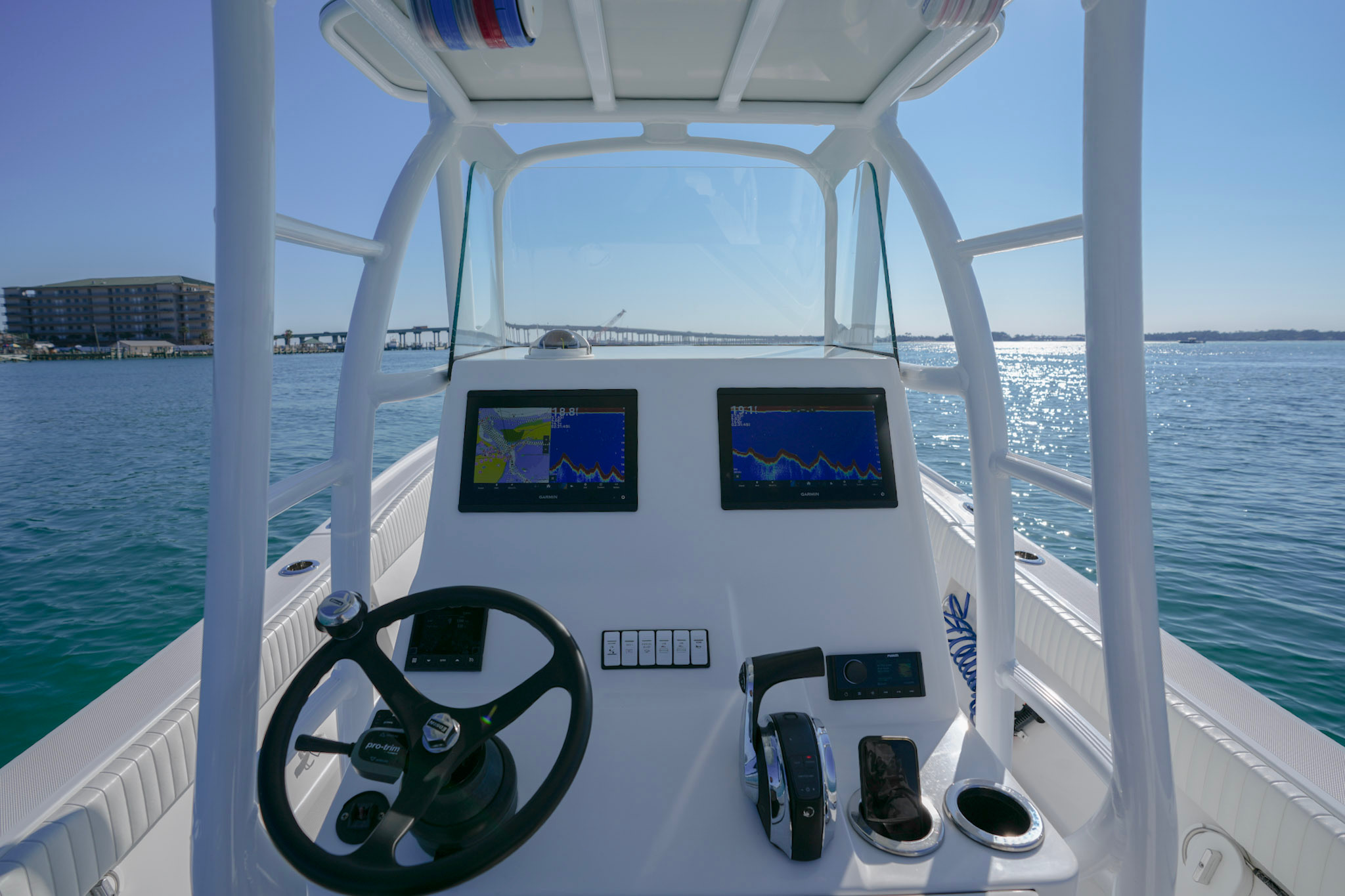
What it doesn't have in its published spec is an enclosed cabin or full windshield. If you want a dry helm for April and October, a walkaround or pilothouse is still the better fit. If you fish summer weekends and want one big boat for both the lake and a trip south in winter, the Canyon Bay 35N is worth a look.
What size boat do you need for Lake Erie or Lake Michigan?
For open water, most anglers on both lakes run 20 to 30 feet, and size matters less than hull shape and protection. A 22-foot deep-V with a windshield often rides better on Erie than a 24-foot bay boat. On Lake Michigan, the 22 to 30 foot walkaround and cuddy range is common among trollers.
Whatever you buy, watch the marine forecast and the buoys, not the sky. The National Weather Service Great Lakes marine page carries nearshore and open-lake forecasts. The National Data Buoy Center posts live wave heights from lake buoys in season.
On shallow Erie, "light wind" and "flat water" aren't the same thing. Plan your return trip for the wind you'll have at 2 p.m., not the wind you had at dawn.
So should a Great Lakes angler buy a bay boat at all?
Buy a bay boat for the Great Lakes only if most of your fishing is in shallow, protected water. If your season centers on Lake St. Clair smallmouth, Sandusky Bay, or the shallow corners of big bays, a Canyon Bay 24B or Canyon Bay 22B fits that water and fishes it better than a cuddy does.
If your season centers on open-lake salmon trolling or western basin walleye in spring and fall, buy a deep-V boat with a windshield or hardtop. That's the right tool, and we'd tell you the same thing at the dock.
If you split your year between the Great Lakes in summer and salt water in winter, the Canyon Bay 28H is the one Canyon Bay that makes sense on both. Treat it as a summer boat up north and pick your days.
Common questions
Can a bay boat go on Lake Michigan?
Yes, on calm days near shore, but it's a poor main boat for the open lake. Lake Michigan averages 279 ft deep and builds big wind waves, and bay boats have low sides and little weather protection. Most Lake Michigan trollers run 22 to 30 foot walkarounds, cuddies or hardtops.
What is the best boat for Lake Erie walleye?
A deep-V fishing boat with a windshield is the local standard. The western basin averages about 24 ft deep and gets steep waves even in light wind, so anglers favor deeper deadrise, often around 20 degrees. A bay boat works only in settled weather.
Is a center console good on the Great Lakes?
A large center console works on summer days and is a cold, wet boat in spring and fall. Many Great Lakes anglers prefer cuddies, walkarounds or hardtops for that reason. A Canyon Bay 28H or 35N fits a summer program, not a three-season one.
What size boat do I need for Lake Erie?
Most Lake Erie anglers run 20 to 30 foot deep-V boats. Hull shape and a windshield matter more than length on Erie's short, steep chop. A 24-foot bay boat fits Sandusky Bay and the islands area in settled weather.
Where does a Canyon Bay fit in the Great Lakes region?
A Canyon Bay 24B or 22B fits protected shallow water like Lake St. Clair, which averages about 11 ft deep. The Canyon Bay 28H fits summer days on the big lakes for owners who also want to cast shallow water.
Sources
- Great Lakes Commission: Lake Michigan
- Great Lakes Commission: Lake Erie
- Wikipedia: Western Basin of Lake Erie
- Wikipedia: Lake St. Clair
- Visit Ludington: Fishing
- Sir Walleye Charters: Lake Erie fishing report, June 2, 2026
- The Hull Truth: Fishing boat for Lake Erie
- The Hull Truth: Great Lakes center console recommendation
- National Weather Service: Great Lakes marine forecasts
- National Data Buoy Center