Best Boat for St. Augustine and Northeast Florida (Inlets Included)
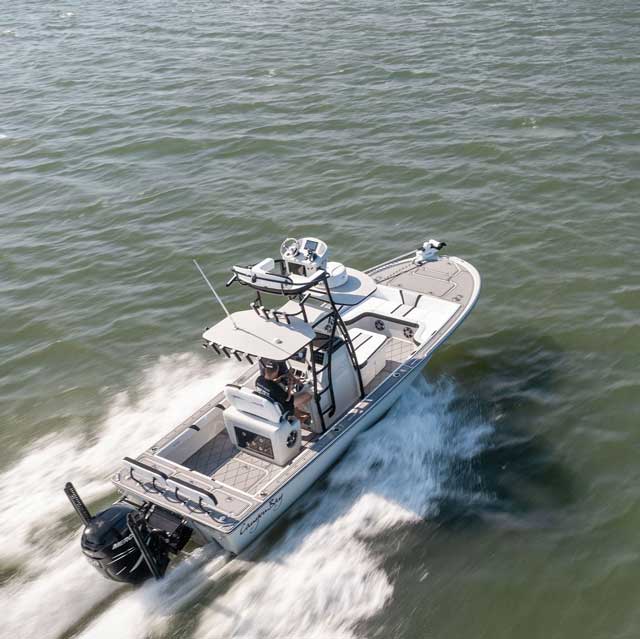
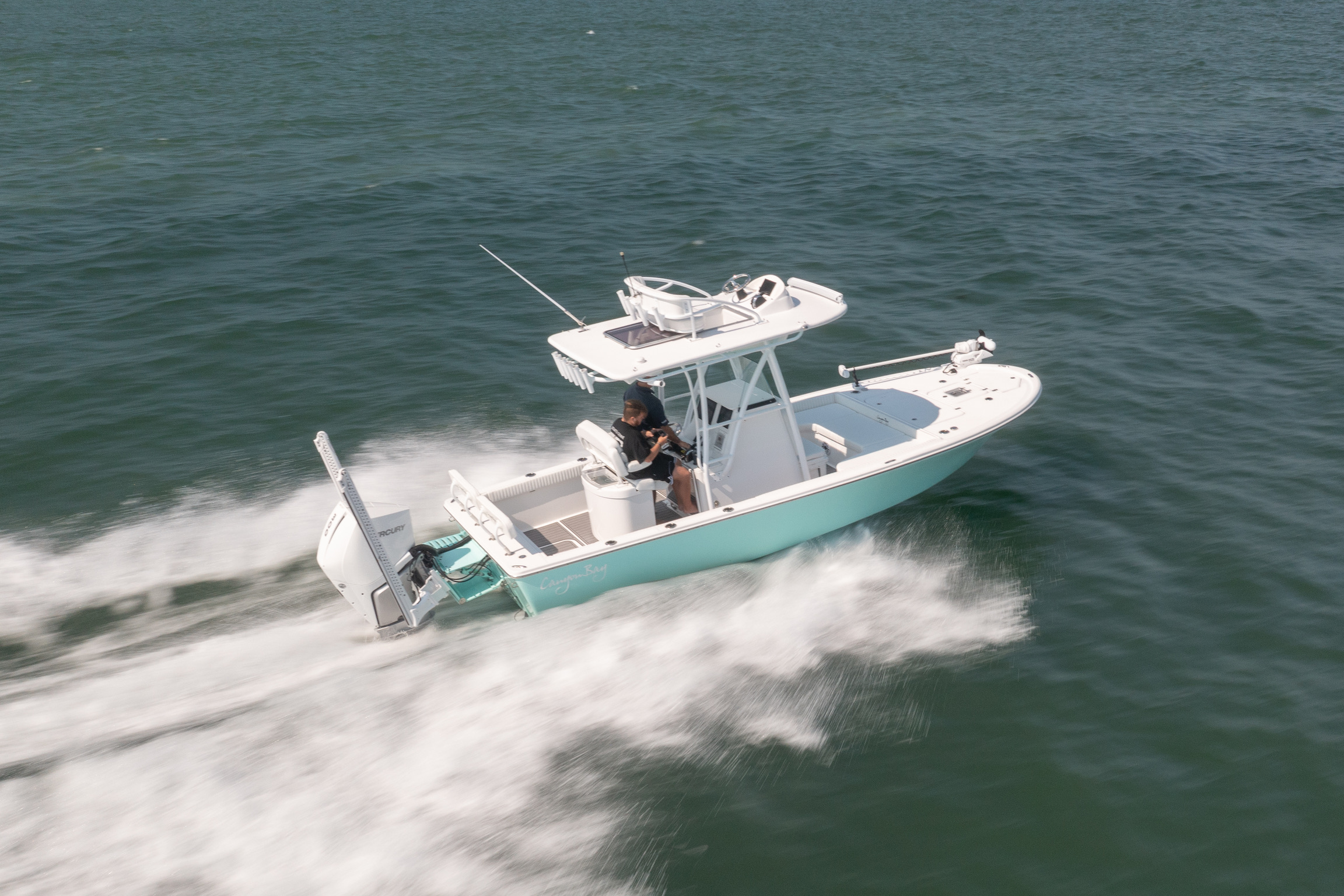
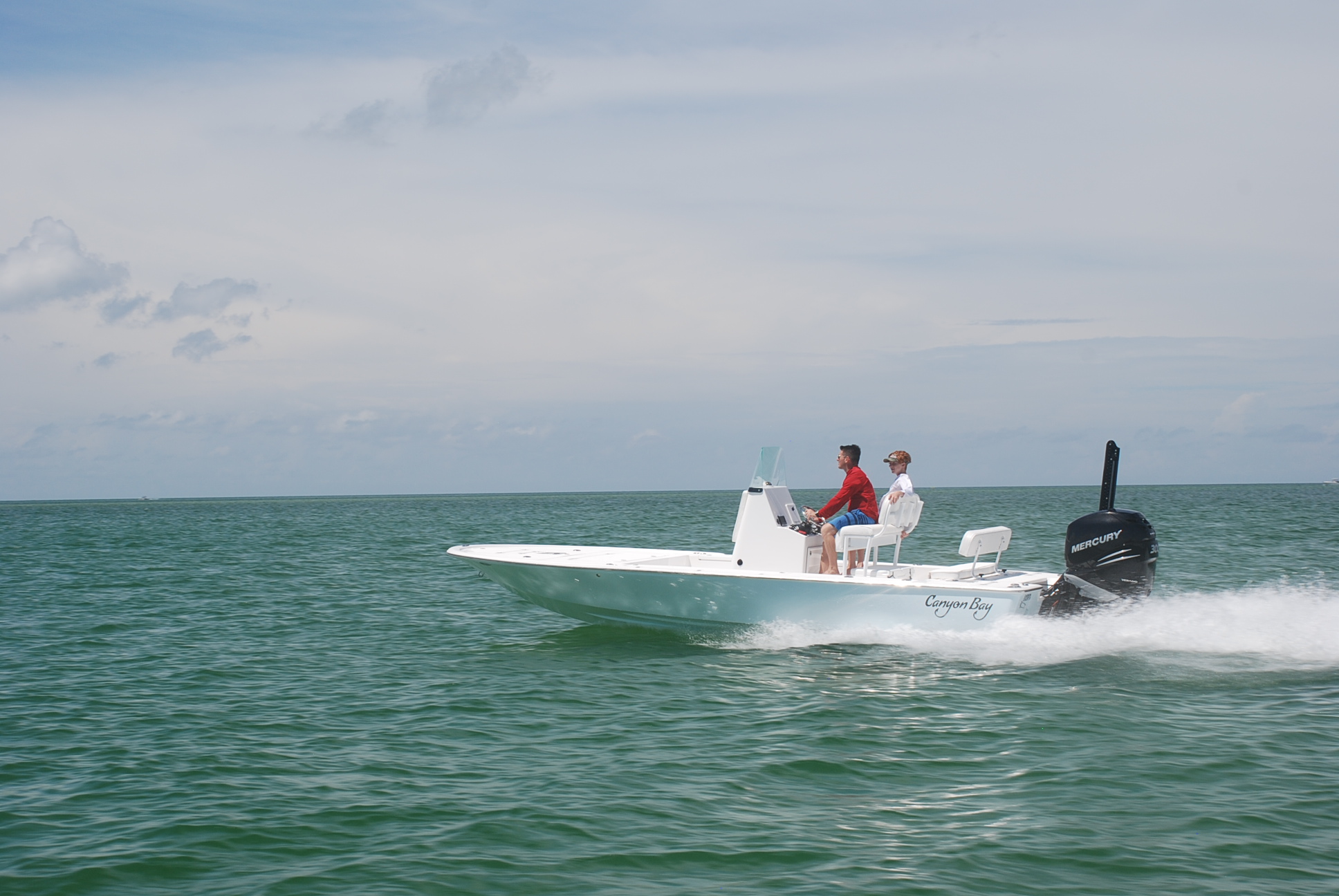
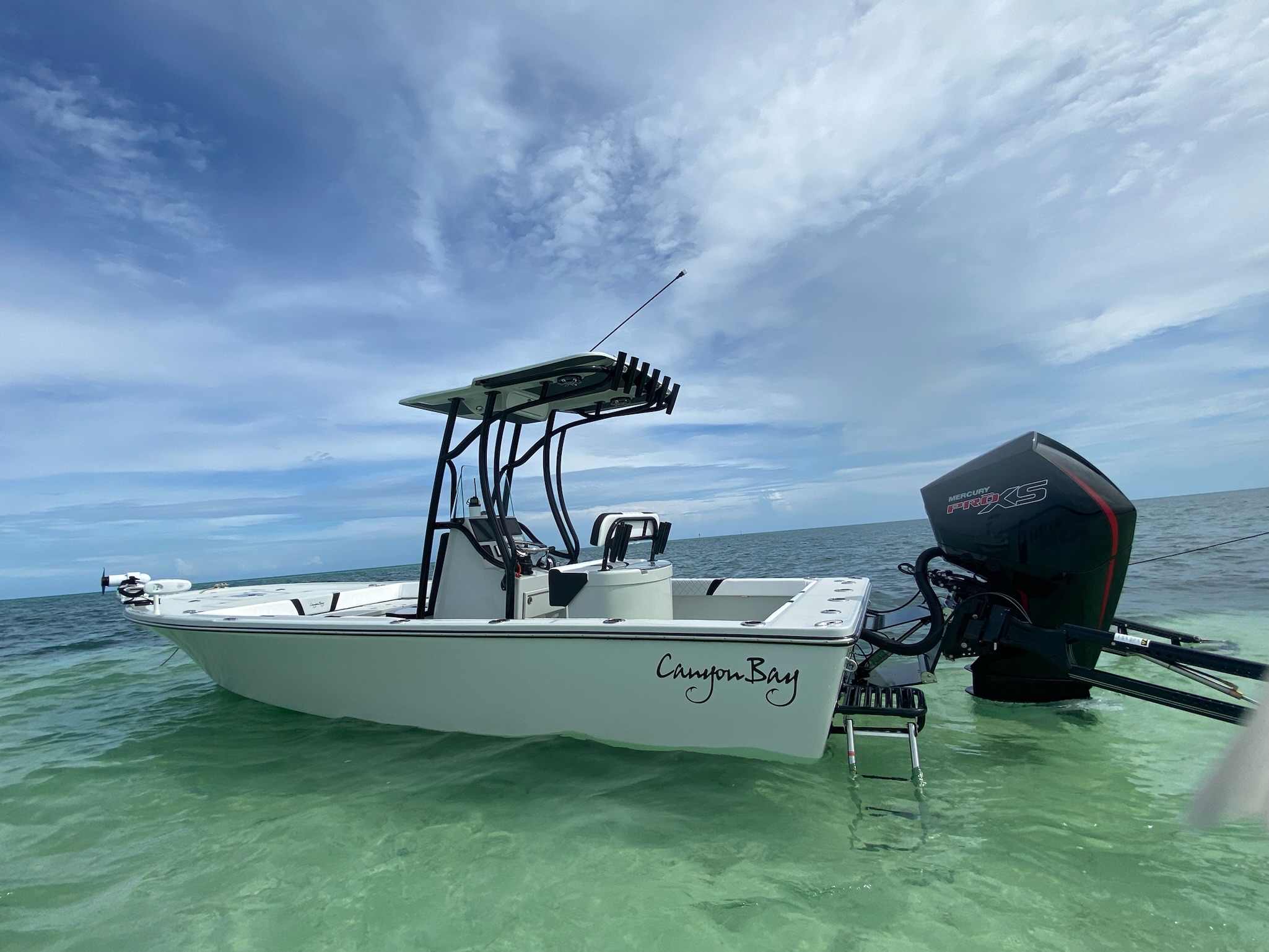
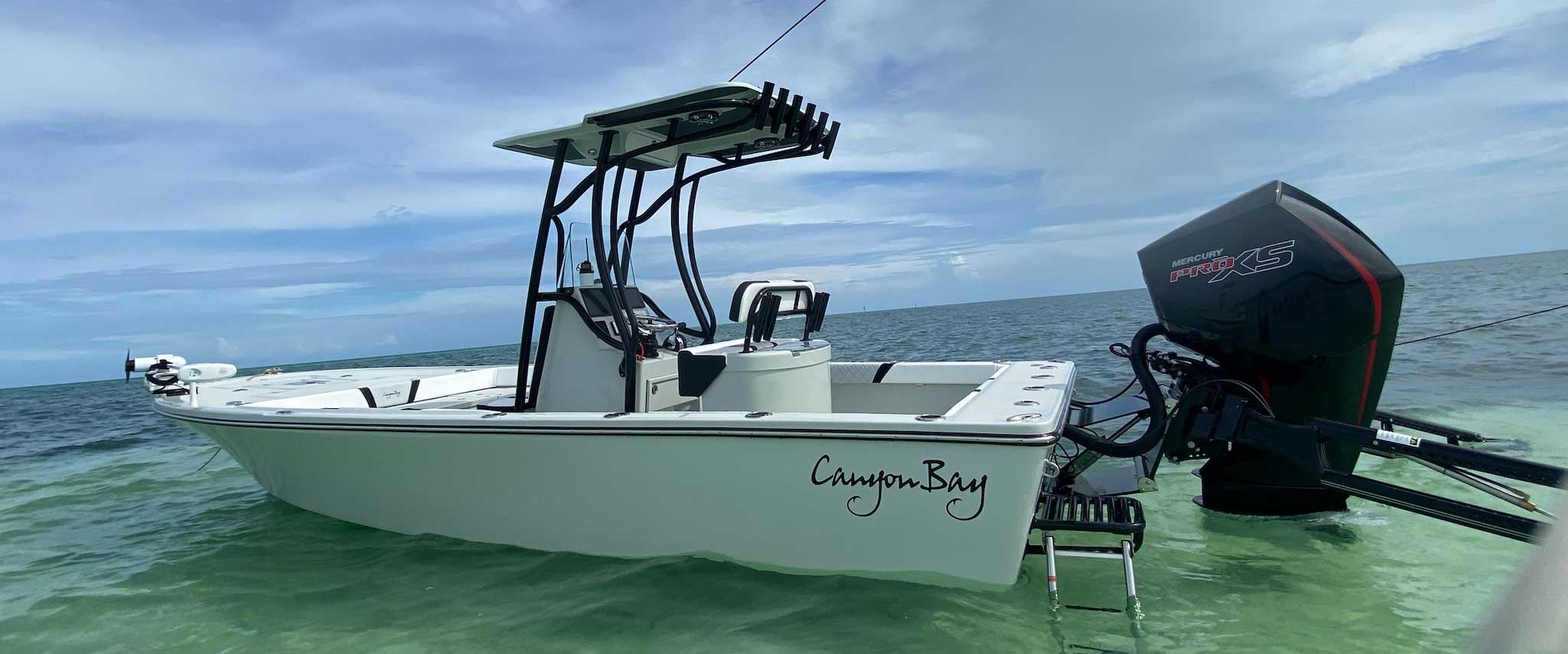
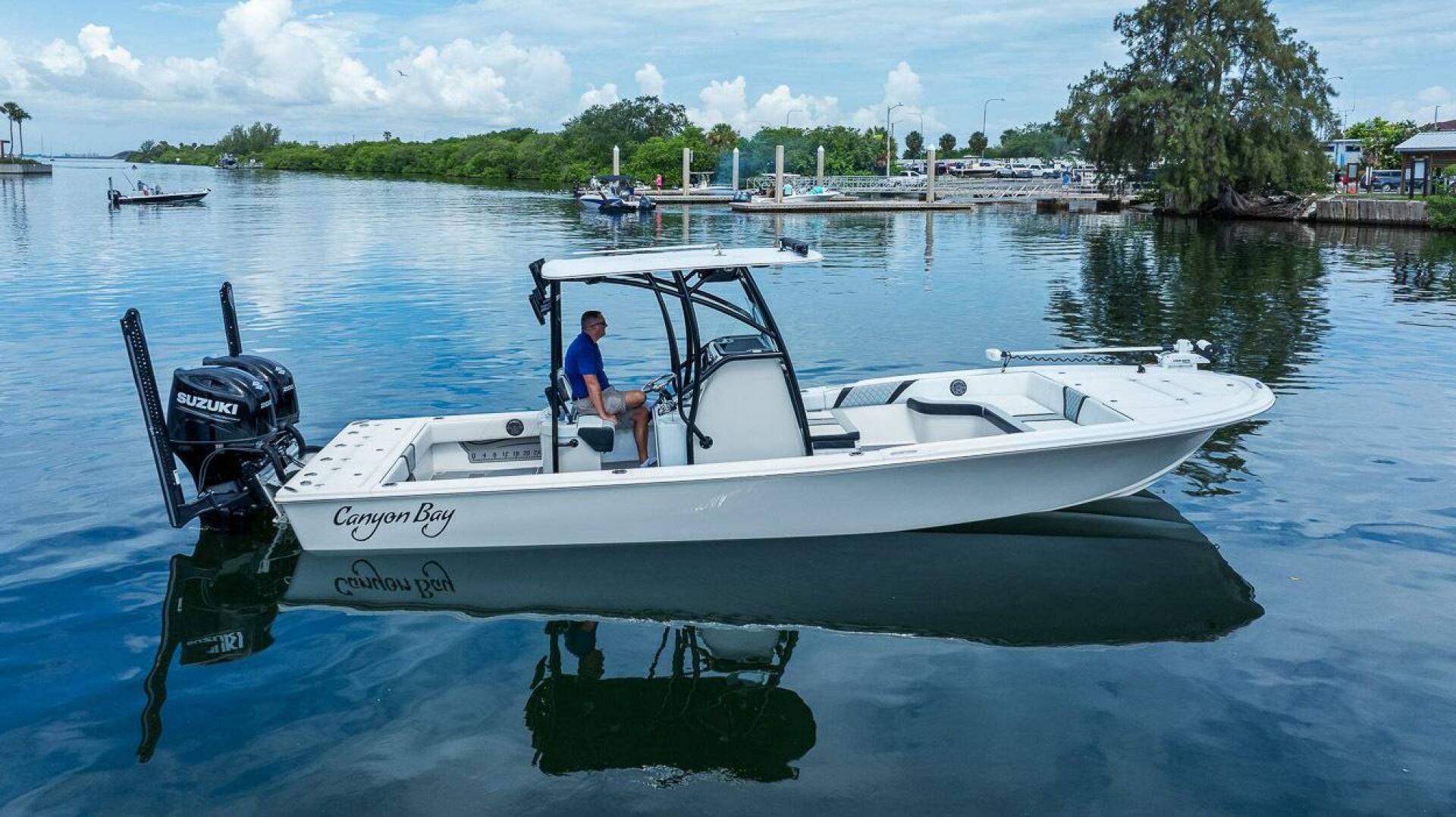
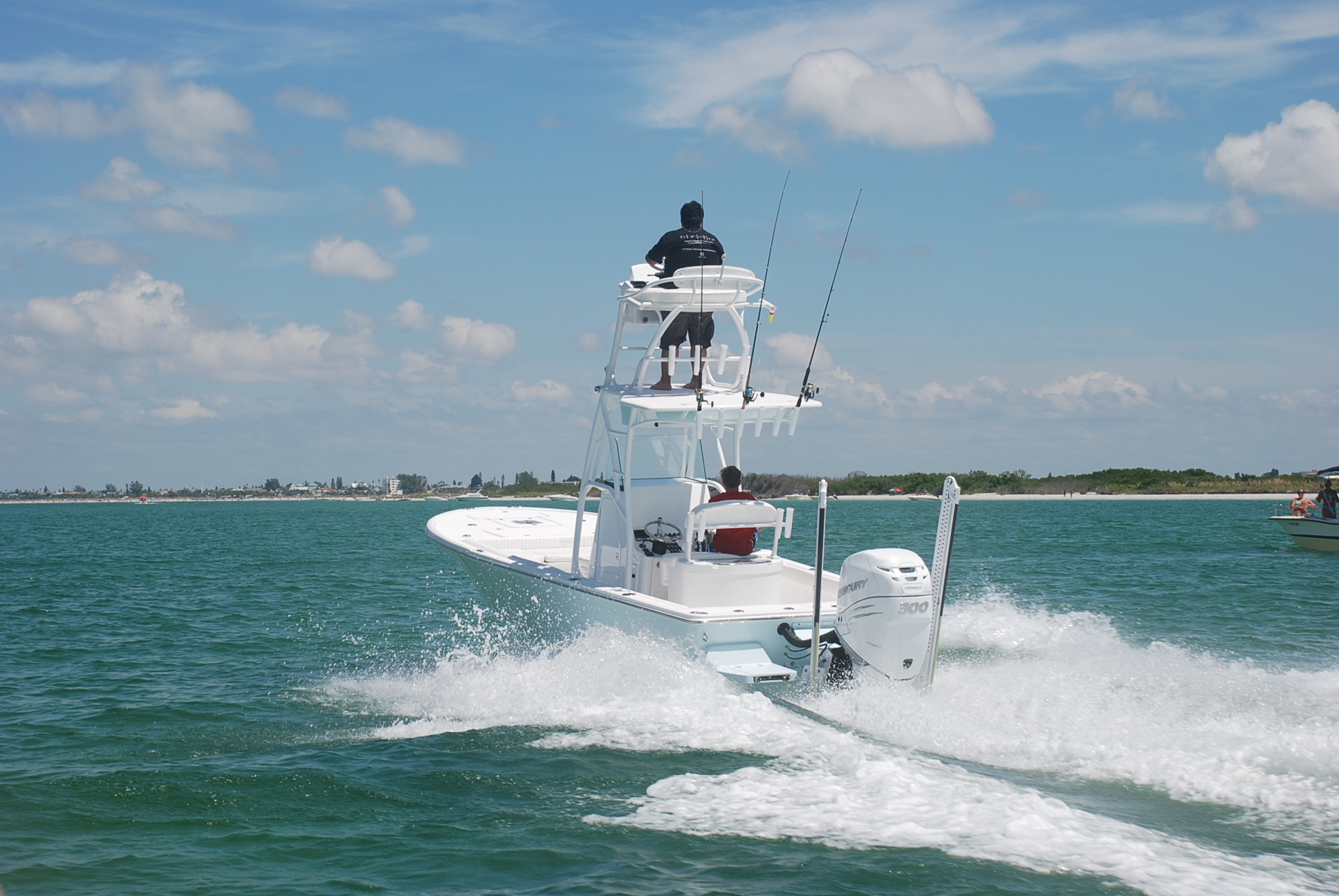
For St. Augustine and Northeast Florida, the Canyon Bay 24B handles the rivers, the marsh and the inlet on fair days, with 18 degrees of deadrise and a 13-inch draft. When the inlet is sloppy or you fish nearshore reefs often, the Canyon Bay 28H, with a 28-inch deep cockpit and 150 gallons of fuel, is the better inlet boat.
| Inlet hazard | Shifting shoals; outer markers moved often |
|---|---|
| Worst conditions | Wind against an outgoing current |
| Nine-Mile Reef | About 10 miles out |
| Fair-day inlet boat | Canyon Bay 24B |
| Sloppy-day inlet boat | Canyon Bay 28H |
| Inshore only | Canyon Bay 22B |
Is the St. Augustine inlet dangerous?
It can be, and it has a long history of catching boaters who don't know it. The inlet's sand moves, and the channel moves with it. The outside markers are the shallowest part, and they're uncharted because the Coast Guard moves them so often, according to the inlet listing on Marinas.com. Reviewers there also describe a shoal along the north side of the channel.
The local record backs that up. A Soundings report covered an 80-foot powerboat grounding on the bar and local officials asking the Coast Guard to move the buoys. A 2020 St. Augustine Port, Waterway and Beach District meeting record.pdf) notes the inlet is a low priority for Coast Guard buoy maintenance, since it doesn't serve large commercial or military ships. The same record says entering at night is unsafe without local knowledge.
Wind against current is when it turns ugly. Marinas.com calls the inlet "potentially hazardous during storm conditions when wind meets current." An east wind against an outgoing tide stands the waves up on the bar. That's the setup to avoid.
Can a bay boat run the St. Augustine inlet?
Yes, on fair days, with local knowledge and good timing. No bay boat should be pushed through a breaking inlet, and we won't pretend otherwise.
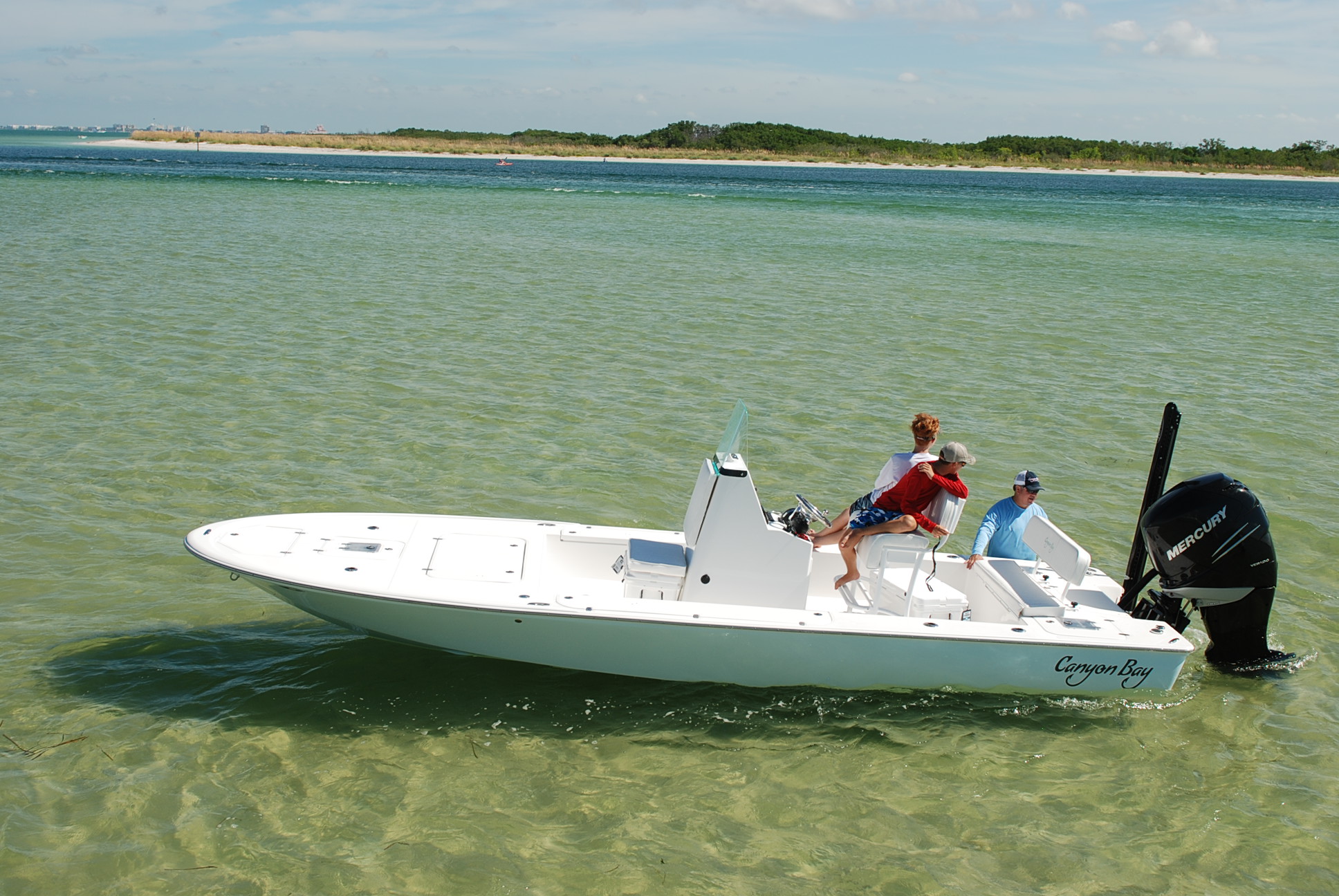
The Canyon Bay 24B is a capable fair-day inlet boat. It's 23 feet 8 inches with an 8-foot-8 beam, 18 degrees of deadrise and up to 400 HP. That's enough hull and power to run the channel and hold position in a following sea on a reasonable day.
What makes the difference is the routine, not the boat alone. A sensible routine looks like this:
- Run it in daylight until you know it well.
- Time it with the tide. A rising tide or slack water is far kinder than an outgoing tide against an east wind.
- Watch the bar from inside before you commit. If it's breaking across the channel, wait or fish inside.
- Don't trust your chart plotter's channel line. The markers move with the sand, so follow the buoys you can see.
- Check the Coast Guard's Local Notice to Mariners for buoy changes before you go.
Which Canyon Bay is the best inlet boat?
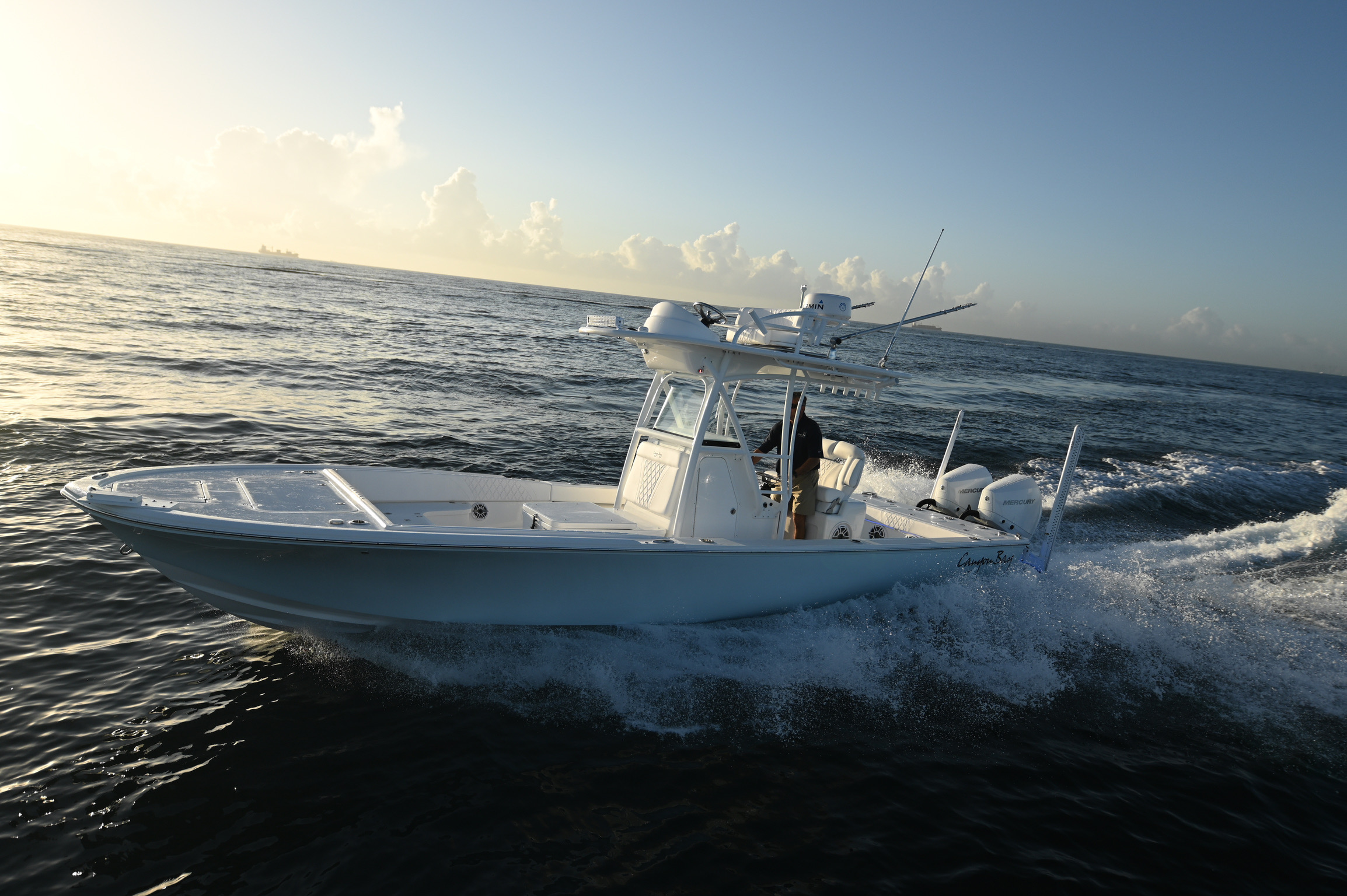
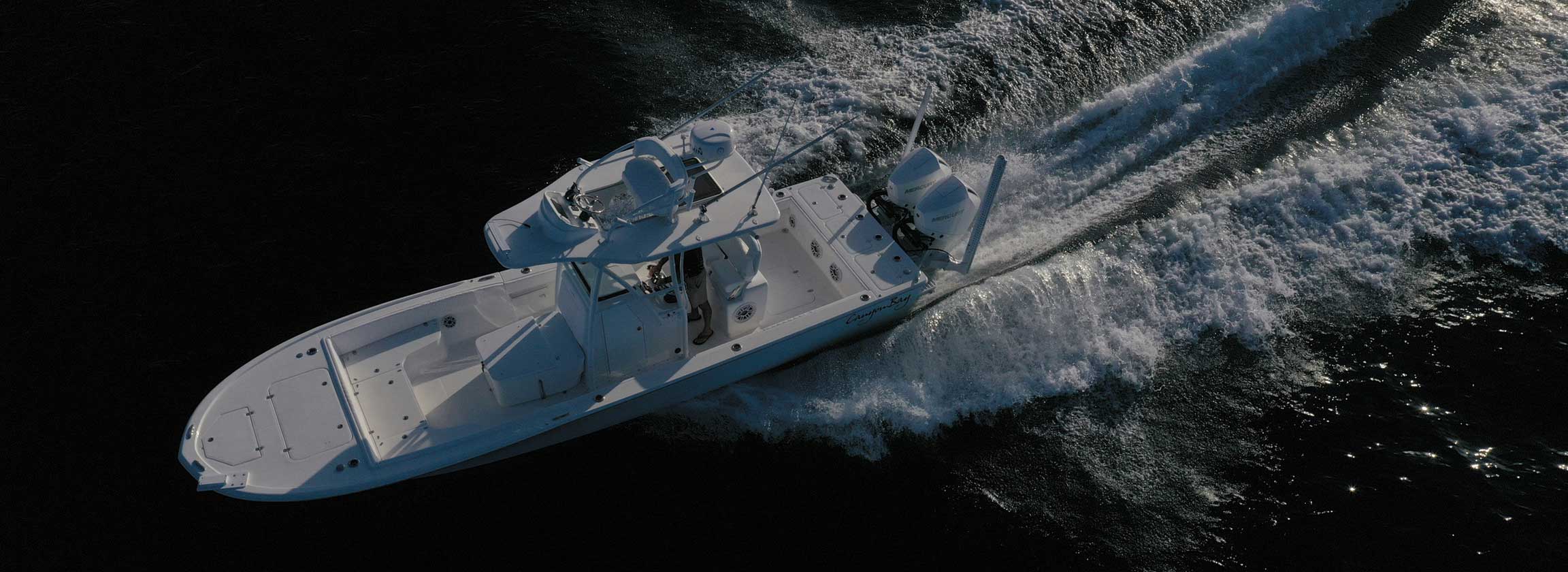
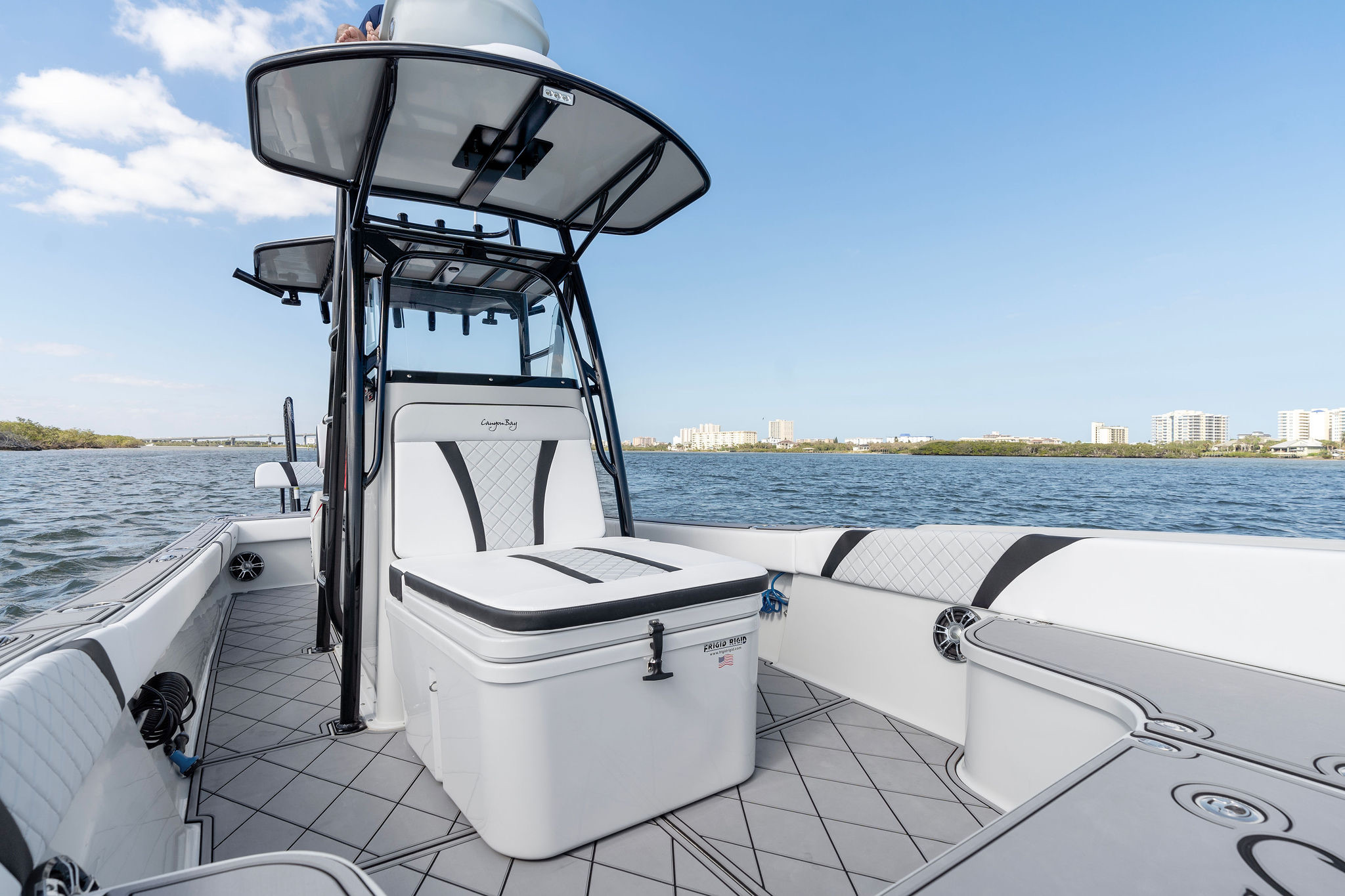
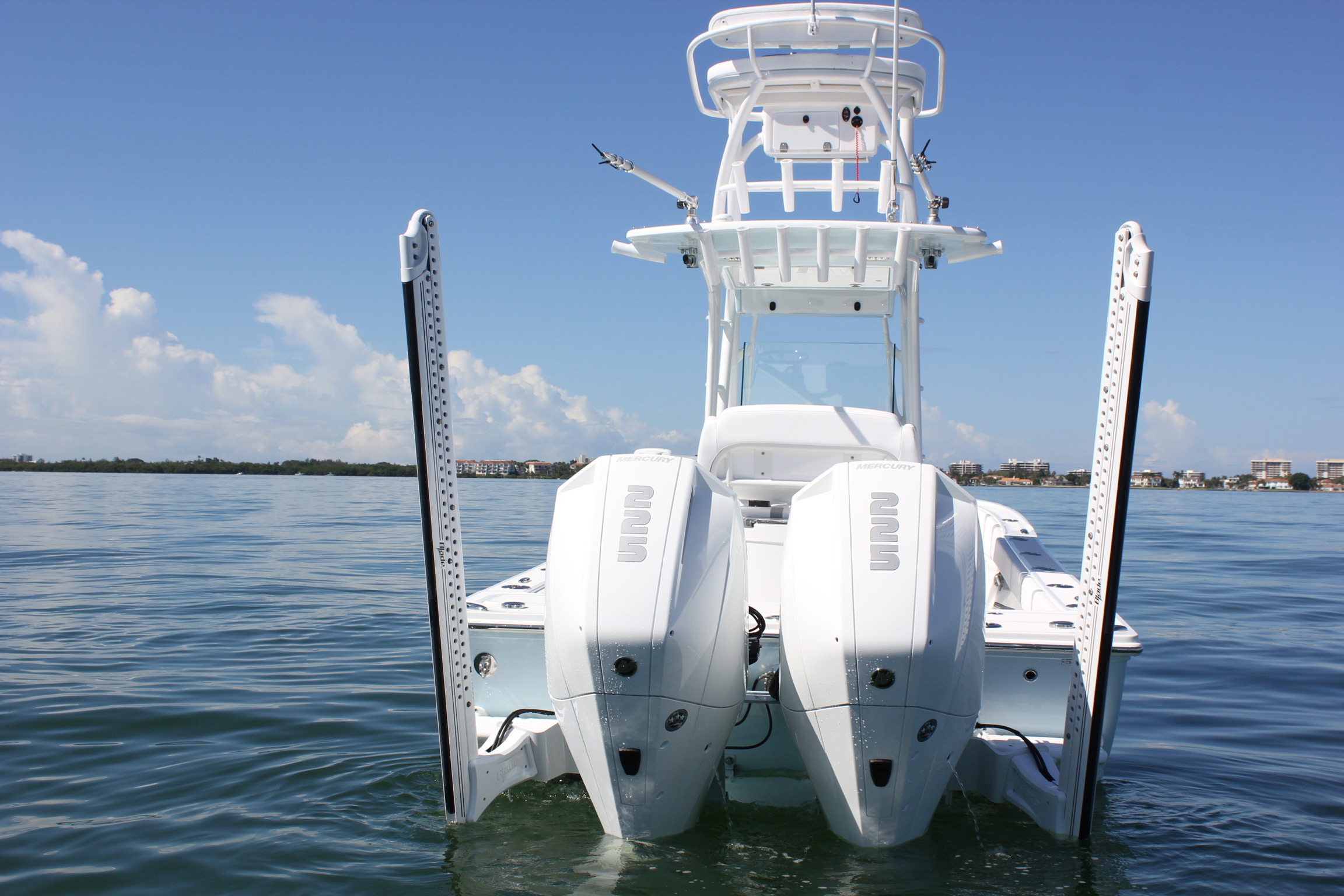
The Canyon Bay 28H is the better inlet boat when conditions are marginal. It's 28 feet with a 9-foot-3 beam, 18 degrees of deadrise and a 28-inch deep cockpit. It carries 150 gallons of fuel and takes a single 300 to 500 HP or twins from 450 to 600 HP.
A deeper cockpit keeps water and people where they belong when a wave slaps the bow on the bar. More length spans the short, steep inlet chop better. Twin engines, if you choose them, give you a backup in the worst place to lose power.
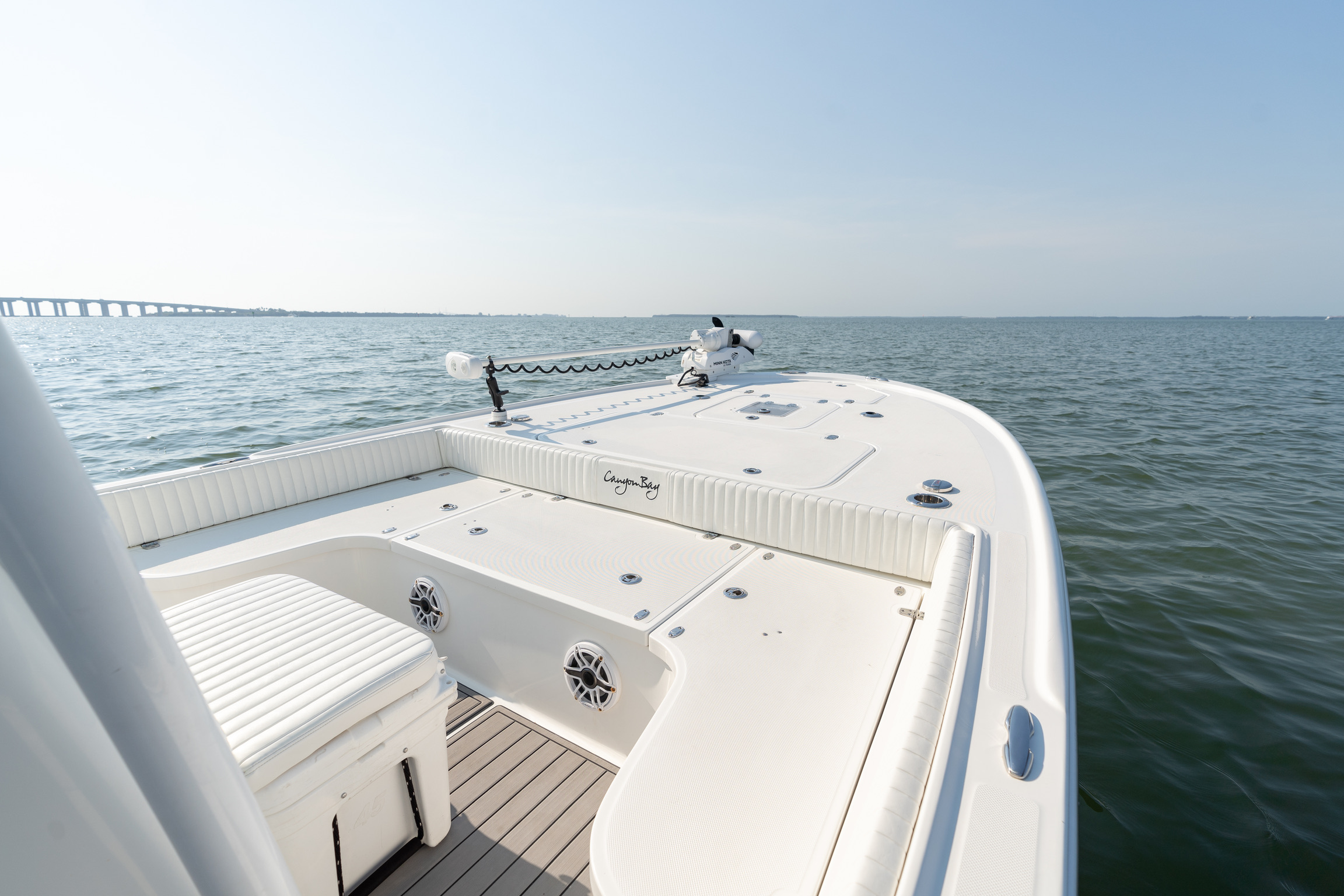
It still drafts 15 inches and has a 55 square foot casting deck with dual Power-Poles. So the Canyon Bay 28H can work the Matanzas flats in the morning and the nearshore reefs in the afternoon.
| Model | Length | Cockpit or deck | Draft | Fuel | Inlet verdict |
|---|---|---|---|---|---|
| Canyon Bay 22B | 21 ft 8 in | 18 in cockpit depth | 12 in | 65 gal | Inshore boat; stay inside |
| Canyon Bay 24B | 23 ft 8 in | 65 sq ft casting deck | 13 in | 69 gal | Fair days, with local knowledge |
| Canyon Bay 28H | 28 ft | 28 in cockpit depth | 15 in | 150 gal | Best Canyon Bay choice when it's sloppy |
Where do you fish inshore around St. Augustine?
The Matanzas, Salt Run and Guana rivers are the core inshore water, and redfish live there almost year-round, according to Anglers Booking. It's tidal marsh, oyster bars and creek mouths, and that's where a shallow-draft bay boat earns its keep.
Redfish fishing is best from fall through spring, especially during the mullet run, per Visit St. Augustine. The same source puts the best trout fishing from March to May and September to November.
For this water, the Canyon Bay 22B and 24B are both good fits. The Canyon Bay 22B drafts 12 inches and has a 45 square foot casting platform. Oyster bars are the real hazard in these rivers, so a hull with Kevlar below the waterline is a sensible place to start, but it's still no reason to run bars at speed on a falling tide.
How far offshore are the reefs and the cobia?
The closest named reef is Nine-Mile Reef, which Anglers Booking places about 10 miles off St. Augustine. Other reefs and wrecks sit farther out, and local sources disagree on typical distances, so ask a local captain or check your charts.
Cobia show up in spring, usually around March to May, and hang near buoys, wrecks and reefs, per Guidesly. Check FWC's cobia rules before you keep one, since the Florida Fish and Wildlife Conservation Commission (FWC) updates them.
A 10-mile run is within reach of the Canyon Bay 24B on a good day. If you'll fish beyond that regularly, the Canyon Bay 28H's 150 gallons and deeper cockpit match the trip better.
What is the best bay boat for Jacksonville?
The Canyon Bay 24B is the all-round answer for Jacksonville's rivers, creeks and marsh. The St. Johns River and the Intracoastal Waterway give you miles of protected water. A 13-inch draft gets you into the creeks, and 23 feet 8 inches handles the wider river when the wind is up.
If you'll regularly run out through the jetties at Mayport, treat it like any other Northeast Florida inlet and lean toward the Canyon Bay 28H. It's a big, busy ship channel, and the run home against the tide is where boat length counts.
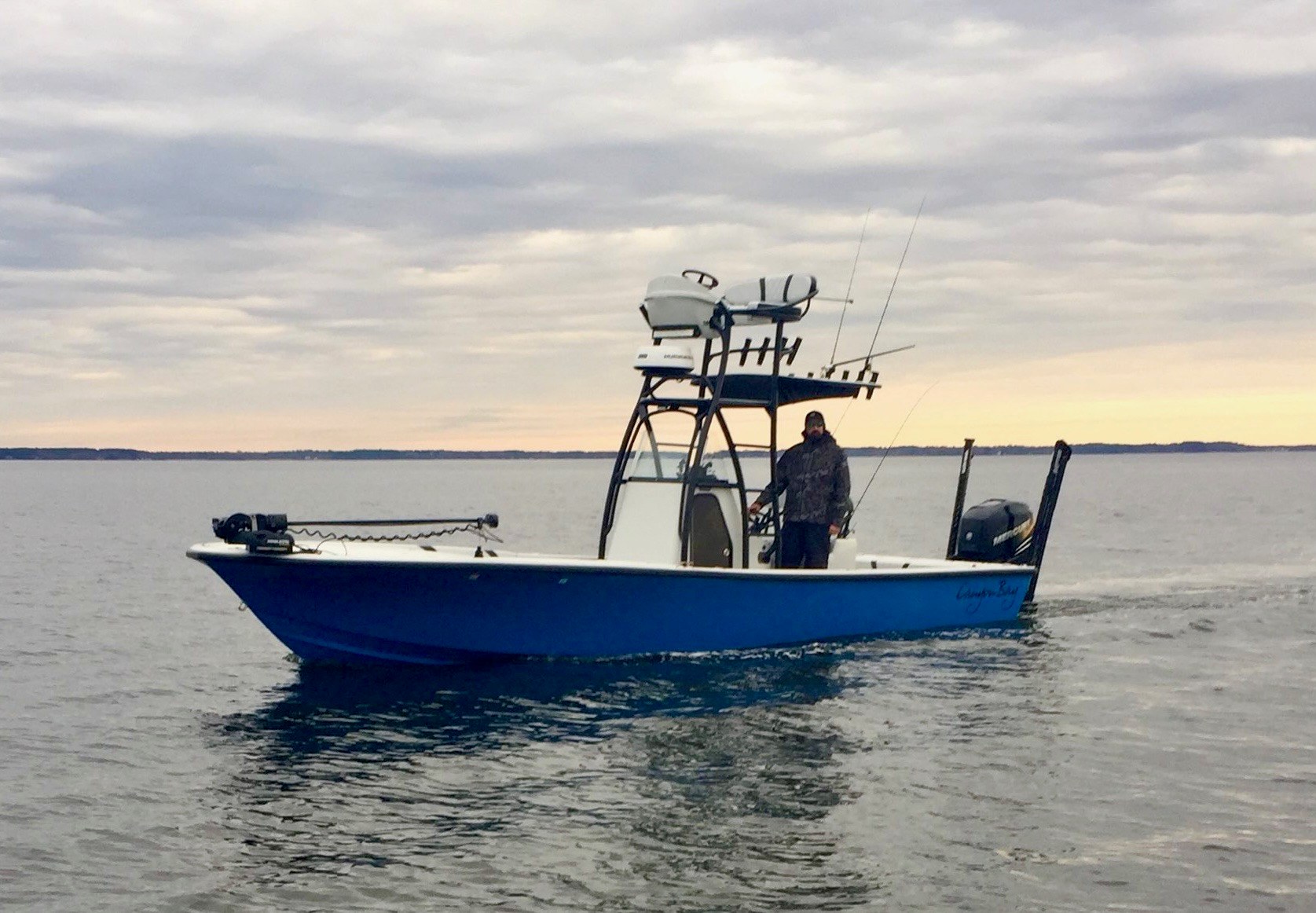
Canyon Bay has a pro-staff captain who runs a Canyon Bay out of St. Augustine. This is regular water for the boats, not an occasional trip.
When is a Canyon Bay the wrong boat for Northeast Florida?
The Canyon Bay 22B is the wrong boat for the St. Augustine inlet on anything but the calmest day. It's a good inshore boat with an 18-inch cockpit depth, and that's where it should stay.
No Canyon Bay is the right boat for a breaking inlet. If the bar is white across the channel, the answer is to wait or fish inside, whatever you're running.
Trailering is the other honest catch. The Canyon Bay 24B's 8-foot-8 beam and the 28H's 9-foot-3 beam are both over the 8-foot-6 width most states allow without a permit. If you'll keep the boat at a marina or on a lift, that's no issue. If you tow every trip, check your state's oversize rules first.
Common questions
Is the St. Augustine inlet dangerous?
Yes, it can be, mainly because of shifting shoals and wind against current. The outer markers are moved often as the sand moves, and local records say night entry is unsafe without local knowledge.
Can a bay boat run the St. Augustine inlet?
Yes, on fair days with good timing and local knowledge. A 24-foot bay boat like the Canyon Bay 24B handles it in reasonable conditions, but no bay boat should run a breaking inlet.
What is the best boat for the St. Augustine inlet?
A longer hull with a deep cockpit is best when conditions are marginal. The Canyon Bay 28H, at 28 feet with a 28-inch deep cockpit and 18 degrees of deadrise, is the better Canyon Bay choice when the inlet is sloppy.
What is the best bay boat for Jacksonville?
A 22- to 24-foot bay boat fits most of Jacksonville's rivers and marsh. The Canyon Bay 24B, with a 13-inch draft and 23 feet 8 inches of length, covers creeks and the open river.
How far offshore is Nine-Mile Reef from St. Augustine?
About 10 miles, according to Anglers Booking. Distances to other reefs and wrecks vary, so check charts or ask a local captain.